
REVIEW · JAPAN
Experience the Asakusa Kabuki Opera Show!
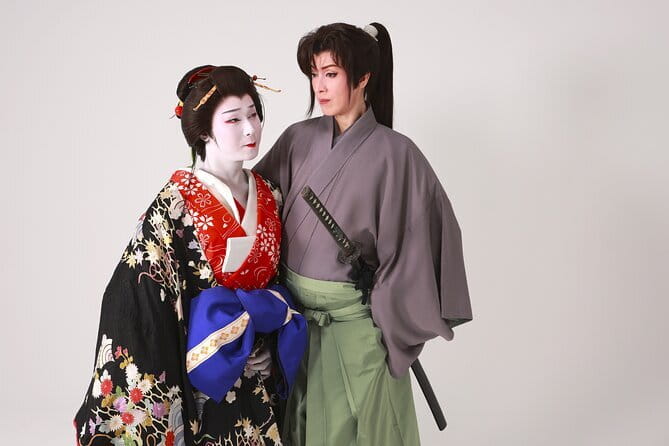
Carmen gets an Edo-period makeover. At Asakusa Kyugeki, Bizet’s famous opera becomes the story of Karume, an oiran in Yoshiwara, whose life echoes Carmen’s struggle for freedom. I like the clear English subtitles and the lively audience interaction, both of which make this 90-minute performance friendly to first-time Kabuki viewers. The main consideration is that the subtitles may not always match the action perfectly, so you may need to keep an eye on both the stage and the screen.
I also like the compact theater setting, where facial expressions, Kabuki gestures, costumes, and music are easy to appreciate. At $49.68, the ticket is a fair buy for an unusual cultural evening, though you should not expect a full traditional Kabuki production or a conventional opera.
Key points to know before booking
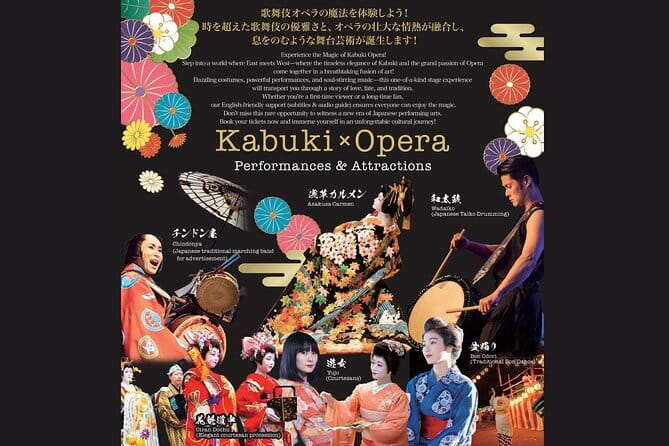
- Carmen becomes Karume: The familiar Spanish heroine is reimagined as an oiran living in Edo-period Yoshiwara.
- English subtitles are included: You can follow the story even without Japanese or Kabuki experience.
- Kabuki meets opera: Expect traditional Japanese movement, music, dance, drums, singing, and a Western dramatic structure.
- The audience is part of the fun: The performance includes interactive moments rather than keeping the action entirely behind an invisible wall.
- It lasts about 90 minutes: The short running time fits neatly into a day of sightseeing in Asakusa.
- The price includes refreshments: Your ticket covers the show, bottled water or one soft drink, and snacks.
Why this Carmen feels at home in Asakusa
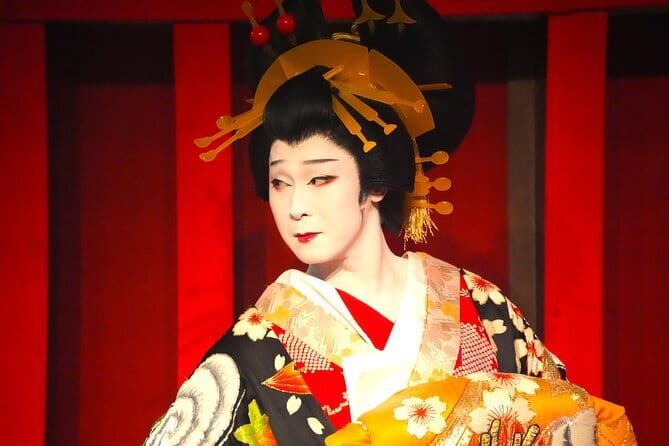
Carmen is usually linked with Seville, cigarette factories, bullfighters, and fiery Spanish romance. This production takes the story somewhere quite different: Yoshiwara, the historic pleasure district of Edo, in what is now Tokyo’s Asakusa area.
Here, Carmen becomes Karume. She is an oiran, a high-ranking courtesan whose beauty and status do not mean she is free. That shift gives the story a new center. Instead of simply watching a passionate woman reject convention, you are asked to think about a woman living inside a system that controls her choices.
The production draws a parallel between Karume and the original Carmen. Both understand desire. Both can influence the men around them, yet both are also shaped by the demands of those men. Their apparent power comes with loneliness and limits.
I find that idea more interesting than a simple costume change. The show uses Carmen to ask what freedom means when your choices are restricted by society, money, love, or reputation. You do not need to know the original opera well to follow the emotional thread, but some familiarity with Carmen may help you notice the connections.
More Opera Shows around Japan:
- Florence: Santa Monaca Church Italian Opera Concert Ticket
★ 4.7 · 2,692 reviews - Lucca: Puccini Festival Opera Recitals and Concerts
★ 4.7 · 1,278 reviews - Rome: Opera Concert at Palazzo Poli – Fontana di Trevi
★ 4.7 · 1,026 reviews
At Asakusa Kyugeki, tradition meets a modern stage
Asakusa Kyugeki provides a compact setting for the performance. That matters because Kabuki depends heavily on expression and controlled movement. In a smaller theater, you have a better chance of noticing the actors’ faces, poses, and signature Kabuki gestures.
One especially important Kabuki feature is the mie, a dramatic pose in which the performer freezes at a charged moment. It is not just a still photograph on stage. The pause gathers attention and gives the audience time to register the character’s emotion and power.
The theater also helps the show feel personal. This is not a huge opera house where the performers may seem far away. The close setting supports the show’s playful contact with the audience, and the room can feel more like a shared event than a formal concert.
You should know that this is not a museum-style demonstration of Kabuki. It is a theatrical production with a clear plot, strong character work, and modern stage energy. The traditional elements are placed inside a new story rather than presented as a long lesson in performance history.
That makes it useful for you if you want an introduction to Kabuki but are worried that a formal performance might be too difficult. You get a taste of the movement, makeup, gestures, music, and theatrical style without committing to a much longer program.
What happens during the 90-minute performance
The main event lasts about an hour and a half. That is long enough for the story to develop, but short enough to fit around temple visits, shopping, or dinner in Asakusa.
The central figure is Karume, an oiran living in Yoshiwara. Her story intersects with Carmen, the Western opera character, in a production that connects two women from different cultures and eras. The details are presented through Kabuki acting, opera-inspired singing, Japanese music, dance, and dramatic stage movement.
You can expect the show to shift between emotional scenes and more playful, audience-friendly moments. The performance is not a quiet, distant affair. Audience interaction is part of its appeal, and you may feel that the actors are aware of the room rather than simply performing into the darkness.
That interactive quality is helpful if you are new to Japanese theater. You are not expected to arrive with a thick guidebook or a working knowledge of Kabuki conventions. The production gives you enough support to understand the mood and follow the story.
The acting has drawn particular praise, especially from people who found the lead performers commanding and expressive. The show also uses gender-reversal casting in a way that connects with the Kabuki tradition, where male actors historically play female roles. Here, the casting becomes part of the production’s modern approach rather than a detail kept in the background.
The result is theatrical rather than naturalistic. Kabuki does not aim for ordinary conversation and everyday body language. Gestures are larger, poses are more deliberate, and emotion is shaped for an audience. If you expect realistic acting, the style may take a few minutes to settle into. Once you accept its formal language, the visual storytelling becomes easier to read.
English subtitles make the show accessible
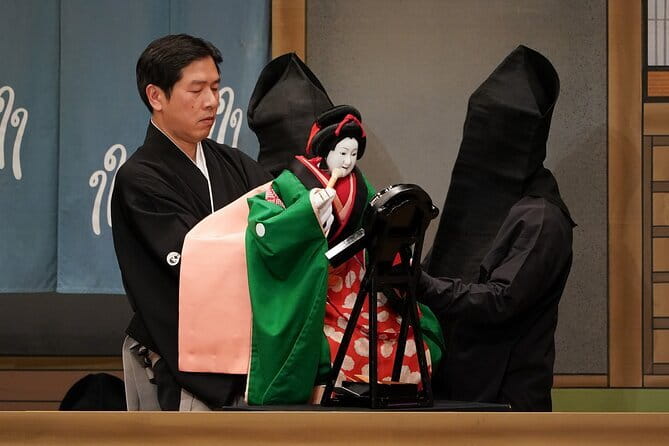
The subtitles are one of the strongest reasons to choose this performance. They allow you to follow the story even if you do not speak Japanese, and they make the show much less intimidating for a first Kabuki experience.
You will still need to look back and forth between the text and the stage. During a fast scene, a song, or an interactive moment, that can take some attention away from the actors. The subtitles have occasionally been slightly out of sync, though generally close enough to keep the plot understandable.
That is a fair trade for the access they provide. Without subtitles, the music and gestures might communicate the broad emotion, but important story details could slip past you. With them, you can understand the relationship between Karume and Carmen and follow the production’s questions about love and personal choice.
The subtitles also help if you are new to opera. You do not need to know every lyric or recognize each reference to enjoy the performance. The story remains clear, and the visual style carries much of the emotional weight.
I recommend sitting where you can comfortably see both the stage and the subtitle display. The available information does not specify seating arrangements, so you should follow the theater’s instructions on arrival. The practical point is simple: do not focus only on the text or only on the performers. The show works best when you watch both.
More Live Music around Japan:
- Kyoto: Traditional Concert at Townhouse or Bathhouse
★ 4.9 · 224 reviews - Japanese Traditional Music Show in Tokyo
★ 5.0 · 72 reviews - Traditional Japanese Music show & Experience Tour in Kyoto
★ 5.0 · 57 reviews - Concerts Played with Traditional Instruments in Kyoto
★ 5.0 · 50 reviews
Music, costumes, and movement carry the drama
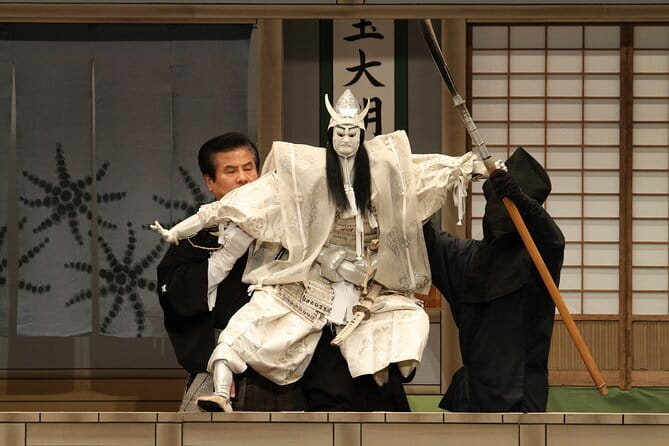
The appeal here is not only the plot. The production brings together opera singing and traditional Japanese music, including drum performances and other Japanese instrumental sounds. That combination gives the show its unusual character.
The Western opera influence supplies a familiar dramatic frame. Kabuki adds a different way to show emotion, with stylized movement, carefully shaped poses, and a strong sense of visual presentation. The musical contrast helps you hear the meeting of two cultures instead of merely being told that it is happening.
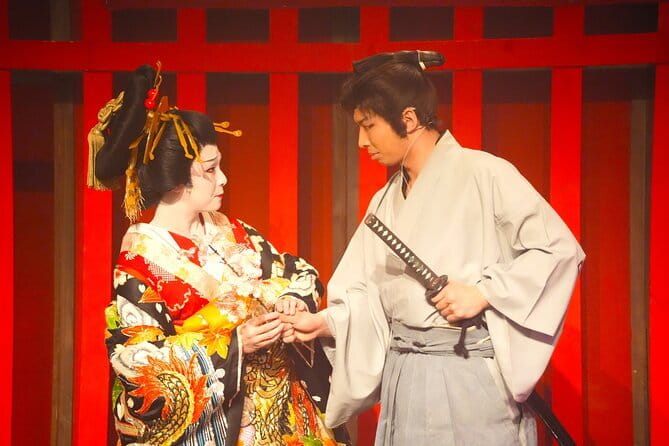
Costumes are another major part of the experience. The oiran setting allows the production to use elaborate Japanese clothing and the visual codes associated with a courtesan character. The clothes are not just decorative. They help establish status, restriction, beauty, and the public role Karume must perform.
You may find the stage pictures more memorable than individual lines of dialogue. A gesture, a turn, a drumbeat, or a costume detail can explain a character’s mood quickly. This is one reason the performance works well for an international audience. Meaning comes through several channels at once.
The show also has room for humor and energy. It is not a solemn cultural lecture. Singing, action, laughter, dance, and audience contact keep the pace moving. At the same time, the story turns serious when it considers loneliness and the cost of choosing your own path.
How the interactive style changes the evening
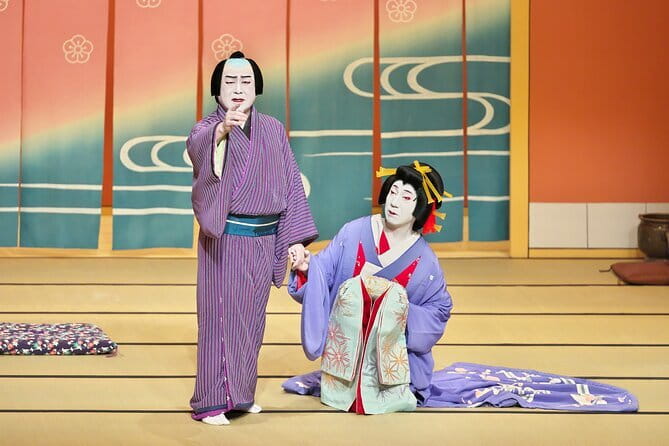
The audience is not treated as a silent group that must sit perfectly still for 90 minutes. Interactive sections give the performance a more relaxed tone, and they can make you feel included even if you have never seen Kabuki or opera.
That style will appeal to you if you enjoy live shows with a sense of play. It may be less appealing if you prefer a strictly formal concert where the audience has no role beyond watching.
The interactive moments also help explain why this works for groups and first-time theatergoers. You can go with friends and share the experience rather than worrying about whether you understand every convention. The show gives you something to talk about afterward, including the way the production connects Japanese theater with Bizet’s Carmen.
Do not assume interactive means chaotic. The performance still has a structured story and trained actors. The audience participation is part of the design, not a substitute for the main production.
Is $49.68 a good value?
At $49.68 per person, this is not a bargain-bin attraction, but the price is reasonable for a live 90-minute performance in central Tokyo. Your ticket includes the performance fee, English subtitles, snacks, and bottled water or one soft drink.
The value comes from the combination. You are not paying only to watch a standard Kabuki excerpt, and you are not paying for a conventional opera staged in Japanese costume. You are getting a purpose-built fusion show that is designed to welcome an international audience.
I would compare the cost with what you want from your evening. If you want a familiar tourist activity that explains every detail in a guided format, this may not be the best use of your budget. If you want live theater with a Japanese setting, a known Western story, and enough English support to follow along, the ticket makes good sense.
The 90-minute length also protects the value. You do not need to surrender a full evening, and the show can fit neatly between other activities in Asakusa. Since the experience is booked an average of 34 days ahead, I would plan it rather than wait until the final day of your trip.
Who should see Asakusa Carmen?
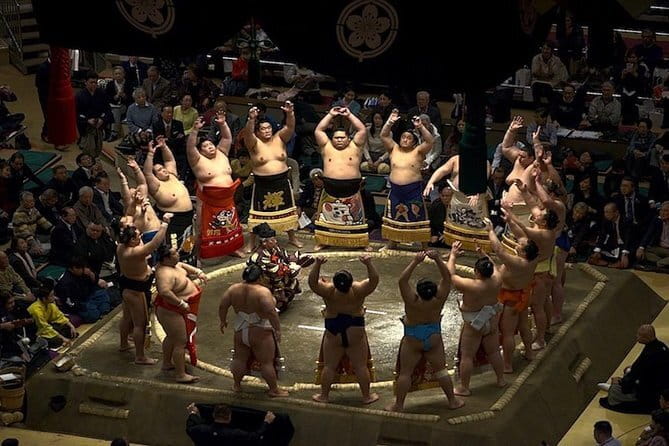
This show is a strong choice for several kinds of visitors:
- First-time Kabuki audiences: The English subtitles and clear story give you a gentle entry point.
- Opera fans: You can recognize the Carmen connection while seeing the story reworked through Japanese theater.
- Visitors with limited time: The 90-minute running time leaves room for other Asakusa sights.
- Couples and friends: The interactive tone gives you a shared evening rather than a purely academic performance.
- Families with older children: Most people can participate, though younger children may not have the patience for a dramatic production.
- Cultural explorers: You get a meeting of Japanese and Western performance traditions in one compact show.
I would be more cautious if you want a full-length, traditional Kabuki program with no modern adaptation. This production is deliberately inventive. Its value lies in the mixture, not in strict historical presentation.
You should also think about how you feel about subtitles. They are a major help, but you will need to read them while watching the stage. If you dislike dividing your attention during live theater, that may slightly reduce the pleasure.
Practical planning for your Asakusa day
The performance takes place at Asakusa Kyugeki, and the venue is near public transportation. Private transportation is not included, so you will need to make your own way to the theater.
Because the show lasts about 90 minutes, you can pair it with a wider Asakusa visit. The exact schedule depends on your ticket time, but the area gives you plenty of ways to fill the hours before or after the performance.
Arrive with enough time to find the theater and settle in. A mobile ticket is provided, so keep it easy to access on your phone. You also receive confirmation at booking.
The cancellation terms are straightforward. You can receive a full refund if you cancel at least 24 hours before the local start time. Cancellations or changes made inside that window are not refunded or accepted, so check your plans before booking.
If you feel unwell on the day, stay home. The provider may refuse participation for health and safety reasons.
Should you book the Asakusa Kabuki Opera Show?
Book it if you want an entertaining and approachable introduction to Kabuki, especially if you like opera, live music, unusual adaptations, or performances that include the audience. The English subtitles remove the biggest barrier for international visitors, and the short running time makes this easy to fit into an Asakusa itinerary.
The strongest reasons to go are the expressive acting, the striking combination of Japanese and Western music, the oiran version of Carmen, and the welcoming atmosphere. You may not love the occasional subtitle timing issue, and purists may prefer a traditional Kabuki performance.
For most first-time visitors, though, this is a smart cultural choice. It gives you a memorable Japanese theater experience without asking you to already understand the rules. If your Asakusa plans have room for one hour and 30 minutes, I would book it in advance and let Karume show you a different kind of Carmen.
FAQ
Where does the Asakusa Kabuki Opera Show take place?
The performance takes place at Asakusa Kyugeki in Tokyo, Japan.
How long is the show?
The performance lasts approximately 90 minutes.
Are English subtitles available?
Yes. English subtitles are provided throughout the performance so you can follow the story without speaking Japanese.
What is included in the ticket?
The ticket includes the 90-minute performance, bottled water or one soft drink, snacks, and English subtitles.
Is transportation included?
No. Private transportation is not included, but the venue is near public transportation.
Can I cancel for a full refund?
Yes. You can cancel at least 24 hours before the experience start time for a full refund. Cancellations or changes made less than 24 hours before the start time are not accepted or refunded.
Just added around Japan
- Japanaese tradtional Tsugaru Shamisen music lesson in Tokyo★ 4.5 · 3 reviews
- Tsugaru shamisen performance over traditional dinner★ 5.0 · 9 reviews
- Easy for everyone! Now you can play handmade mini shamisen and show off to everyone! Musical instruments, sweets and live music★ 5.0 · 3 reviews
- Traditional Japanese Music show & Experience Tour in Osaka★ 5.0 · 25 reviews
- Traditional Concert in Public bath near Kyoto Station★ 5.0 · 5 reviews
- Kyoto: Matcha & Traditional Japanese Music Immersive Experience★ 5.0 · 9 reviews
- Private Japanese music concert★ 5.0 · 4 reviews
- Kyoto: Kujo-yu Sento Traditional Japanese Instrument Concert★ 5.0 · 2 reviews
Opera Shows, compared.
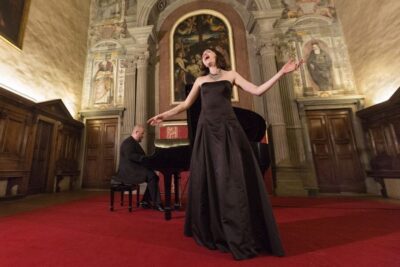
Santa Monaca Church Italian Opera Concert Ticket
Read our review →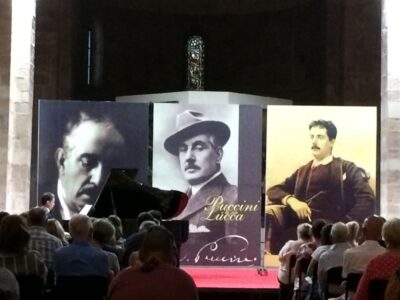
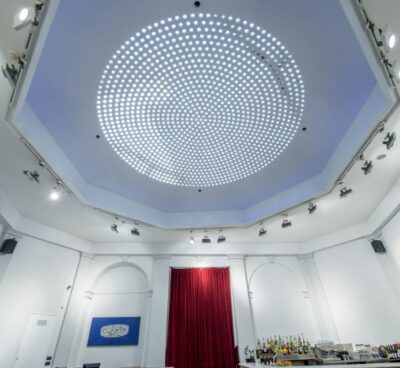
Opera Concert at Palazzo Poli – Fontana di Trevi
Read our review →

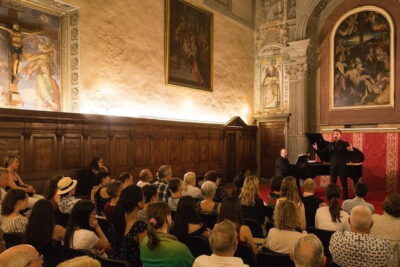
Italian Opera Concert Ticket in Florence’s Santa Monaca Church
Read our review →
Browse the lists this tour appears in