
REVIEW · JAPAN
Kyoto: Traditional Concert at Townhouse or Bathhouse
Kyoto sounds different at close range. This small concert brings you within a few feet of professional koto and shamisen musicians, either in a traditional townhouse or a converted bathhouse hall. I especially like the small audience, which makes the music feel personal rather than packaged, and the bilingual explanations that make unfamiliar instruments easy to follow. The main drawback is that the two venues offer very different schedules, and the townhouse can feel tight when it is full.
The program is short but thoughtfully arranged, with classical pieces, newer works, singing, and sometimes collaborations with shakuhachi, flute, guitar, or other instruments. I also like that you can ask questions and, at the townhouse, try the koto yourself. Finding the home may take a little patience, so save the meeting details and allow extra time.
Key points to know before booking
- Two distinct venues: Choose a cozy townhouse for a solo concert and workshop, or a former bathhouse for a larger duet performance.
- Very small groups: The townhouse holds about 11 people, while the bathhouse hall accommodates about 30.
- Music with context: A bilingual introduction covers the instruments, picks, bridges, notation, materials, and playing methods.
- A real hands-on option: The townhouse program can include a 35 to 40 minute beginner koto workshop after the concert.
- Good value at $32: You get a live performance, explanations, questions, photographs, and possible instrument instruction.
- Easy to pair with sightseeing: Nijō Castle, Arashiyama, Kinkaku-ji, and Nishiki Market can all fit before or after the event with sensible planning.
Why this Kyoto music experience feels personal
Kyoto offers grand temples, formal gardens, and polished stage shows. This concert gives you something smaller and less predictable: a close look at Japanese traditional music in rooms where the sound and the people matter as much as the performance.
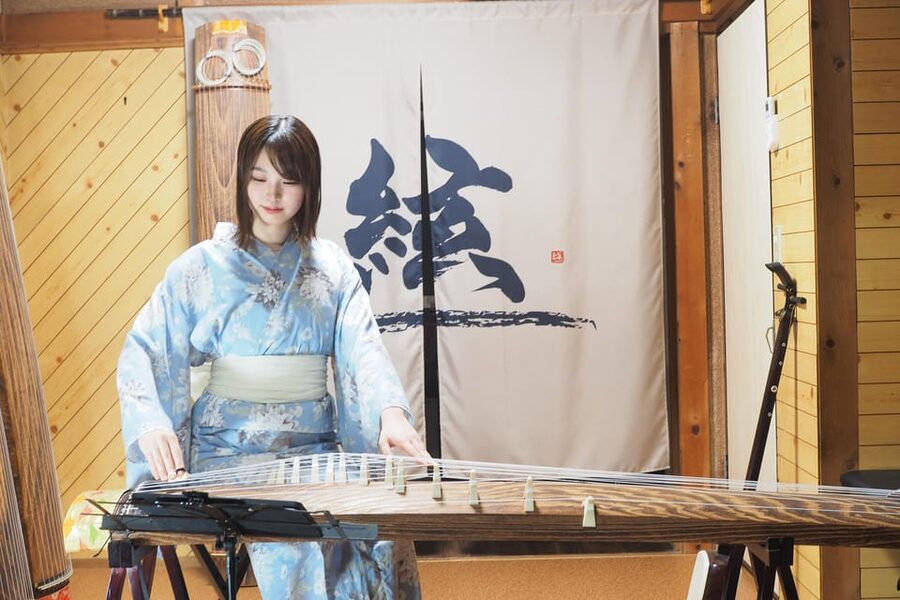
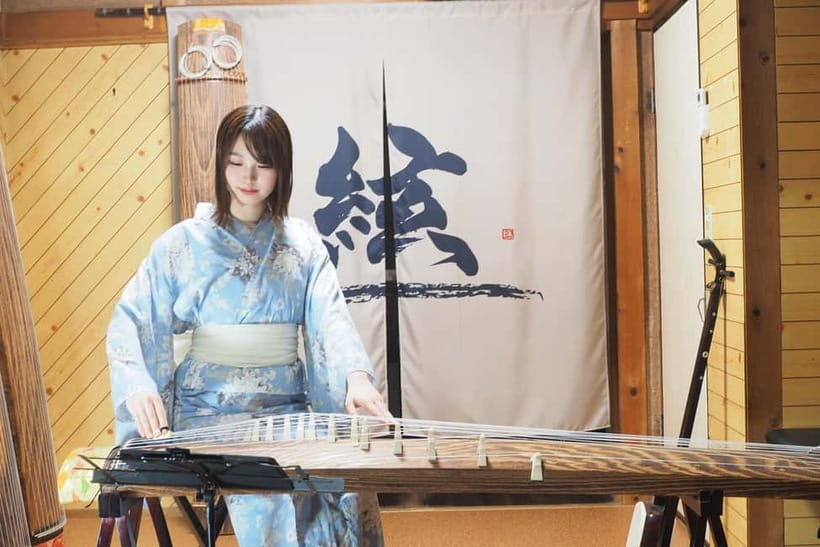
At the townhouse, the setting feels like a living room in an old Japanese home. Cushions or chairs face the musician at close range, and the limited capacity means you can see finger movements, picks, strings, and facial expressions without relying on a large screen.
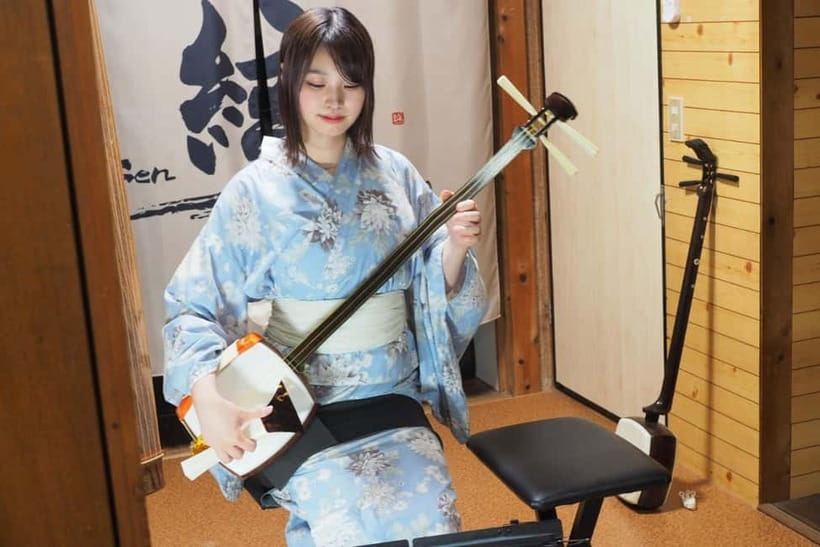
That closeness changes how you listen. The koto is not simply a decorative instrument placed in the corner of a cultural show. You can watch the musician shape the notes, control the strings, and move between delicate passages and stronger rhythmic sections. The shamisen gives the program a sharper, more percussive character.
The bathhouse hall offers a different experience. Tiled walls create natural reverberation, so the sound spreads around the room and feels more dramatic. The program usually pairs the koto with another instrument, such as shamisen, shakuhachi, taishōgoto, flute, or guitar.
I would choose the townhouse if you want conversation, closeness, and the option to play. I would choose the bathhouse if you care most about a fuller sound and the energy of a duet. If both options fit your schedule, attending both gives you a better sense of how the same instruments change with their surroundings.
More Live Music around Japan:
- Experience the Asakusa Kabuki Opera Show!
★ 5.0 · 99 reviews - Japanese Traditional Music Show in Tokyo
★ 5.0 · 72 reviews - Traditional Japanese Music show & Experience Tour in Kyoto
★ 5.0 · 57 reviews
The townhouse concert: a quiet room and solo music
The traditional townhouse is the most intimate choice. Capacity is about 11 people, and some sessions may have even fewer participants. One booking had only a small handful of people present, creating the feeling of a private evening rather than a formal tourist performance.
That small size is a major part of the value. You are not just sitting in the back of a hall while a musician performs. You can watch the hands closely, ask questions after the music, and take photographs during the designated time.
The performer presents solo pieces on koto and shamisen, usually four or five works. The selection changes with the musician and season, so you should not expect an identical program every time. Examples include Kajimakura, Chidorino Kyoku, and Kaede no Hana, along with other classical and contemporary pieces.
The range matters. Traditional Japanese music can seem distant if you hear only one long, unfamiliar work without explanation. Here, the changing styles give you different ways into the music. A classical piece may feel restrained and lyrical, while a newer arrangement may reveal how these instruments can suit modern musical ideas.
Some performers also sing. The voice, koto, and shamisen together can make the concert feel especially expressive. Several visitors have singled out the singing as a memorable part of the program, particularly when traditional songs are presented alongside instrumental works.
The townhouse setting does have a practical limit. With a full group, personal space is tight, and floor seating may not suit everyone for a long period. The concert itself lasts about 25 to 30 minutes, so this is not an exhausting commitment, but you should still check the seating arrangement when you book.
The bathhouse hall: tiled walls and duet arrangements
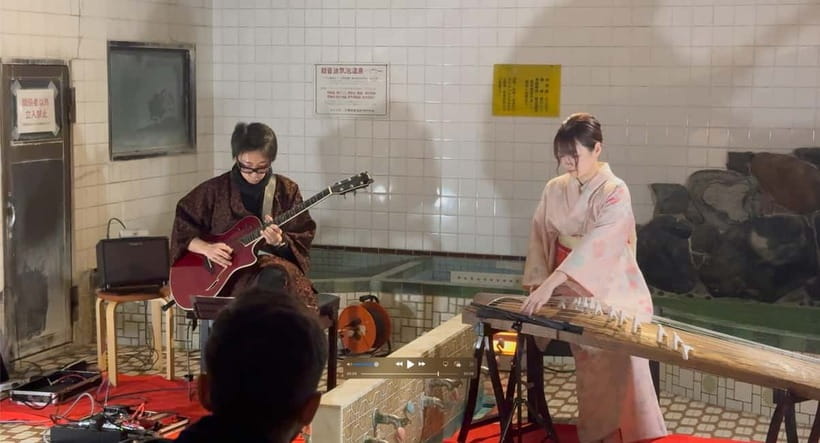
The second venue is a former bathhouse hall, not a bathing experience. Your ticket does not include bathing, food, drinks, or access to bathhouse facilities. You are there for the music and the atmosphere created by the room.
The hall holds about 30 people, giving the program more room to breathe. Its tiled surfaces produce natural echo and reverberation. That can make a koto duet feel broad and enveloping, especially when the second instrument brings a contrasting tone.
The music may pair koto with shamisen, shakuhachi, taishōgoto, flute, or guitar. This means the bathhouse program is not simply the townhouse concert moved into a bigger room. The repertoire is selected to suit the acoustics and the musicians performing that day.
You might hear a gentle solo before the duet begins. Then the added instrument changes the pace and texture. A shakuhachi can bring a breathy, spacious sound, while shamisen gives a more direct rhythmic edge. Guitar or flute can create a cross-genre feel without removing the Japanese character of the koto.
The bathhouse option is offered irregularly on Mondays, so it needs more planning. Check the calendar carefully before building your sightseeing day around it. The townhouse is the easier choice if you want flexible dates, since it is held almost every day.
What happens from check-in to the final question
The program follows a clear sequence and usually lasts 45 to 105 minutes, depending on whether you choose the concert alone or add the workshop.
At check-in, allow about five to 10 minutes for seating and a short explanation of venue etiquette. In the townhouse, this may include getting settled on a cushion or chair. In the bathhouse, you sit in rows facing the performers.
Next comes a 10 to 15 minute instrument introduction. This is one of the strongest parts of the experience for anyone new to Japanese music. The host or guide explains how the koto and shamisen are made, how they are played, and how the musician reads the music.
You may also see the picks, bridges, strings, and written notation up close. These details help you understand what your ears are hearing. Instead of simply being told that the instrument is traditional, you learn how its design shapes the sound.
The concert itself lasts about 25 to 30 minutes and includes four or five pieces. The opening piece may be treated separately at the bathhouse, so the precise count can vary. Short comments between works explain the repertoire and help you notice changes in mood, technique, or instrumentation.
After the performance, set aside five to 10 minutes for questions and photographs. The musicians are available to explain the pieces and their work, and the small format makes it easier to ask something specific. You might want to ask about the notation, the materials, the role of singing, or the difference between the koto and shamisen.
At the townhouse, you can add a 35 to 40 minute koto workshop. Instruments are sanitized, and beginners receive guidance on posture, plucking, and playing a short phrase. The lesson is designed for people with no previous experience, including children old enough to follow the instruction.
The workshop is not a full music course. Think of it as a chance to understand the physical work behind the performance. After watching an expert play, trying even a short tune gives you a better sense of the coordination involved. Several families have found this especially rewarding, with patient instruction for younger participants.
Same city, a different sound:
- Concerts Played with Traditional Instruments in Kyoto
★ 5.0 · 50 reviews - Kyoto: Japanese Koto & Shamisen Concert and Koto Class
★ 4.9 · 31 reviews - Traditional Japanese Music show & Experience Tour in Osaka
★ 5.0 · 25 reviews - Tokyo: Traditional Asakusa Music Show with Dinner
★ 5.0 · 10 reviews
The music: classical pieces, modern works, and singing
The program is built around variety. You may hear Japanese classical music, contemporary arrangements, original compositions, and vocal pieces. The exact selection depends on the performer, so the concert has a personal quality rather than following a fixed museum-style script.
That artist-led approach is useful. A musician can choose works that show the instrument’s softer side, then follow with something faster or more forceful. You get a compact view of the koto and shamisen instead of one narrow sample.
The performers are trained professionals, and the musicians named in past sessions include Aoi, Kyoko, and Furan. The hosting team has included Shoei, Shima, Gen, and others who provide English support and guide the discussion. Names and lineups can change, but the central format remains the same.
English access is practical rather than theatrical. The explanations are bilingual, and the hosts translate questions and comments when needed. You do not need to know Japanese musical terms in advance. Most people arrive with little background, and the introduction is built for beginners.
Do not expect a large concert hall production. There is no promise of a long evening of music, elaborate staging, or a fixed celebrity performer. The strength here is direct contact, clear explanations, and a setting where you can notice small details.
How the two venues compare
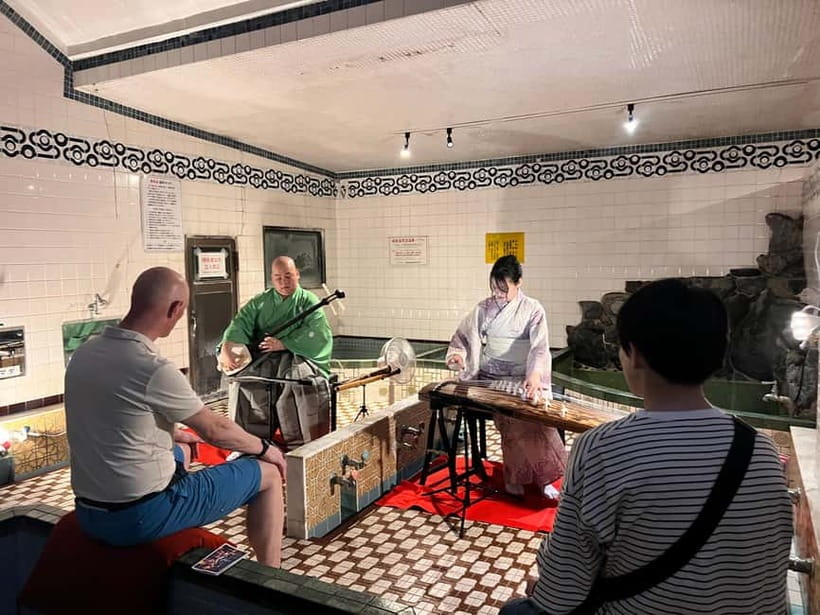
The choice is simple if you know what kind of evening you want.
Choose the townhouse for:
- The smallest possible audience
- Solo koto and shamisen performances
- A warm home setting
- More opportunities to ask questions
- The optional hands-on koto lesson
- More frequent scheduling
Choose the bathhouse for:
- A room with noticeable natural echo
- Duets and mixed instrumentation
- A larger audience capacity
- A more dramatic concert atmosphere
- A Monday date that matches your plans
The townhouse is likely the better first introduction. Its size makes the explanations easy to follow, and the workshop adds a practical memory to the music. The bathhouse is a good second visit, or the better pick for someone who already enjoys live music and wants to hear the instruments in a more resonant space.
Is $32 a fair price?
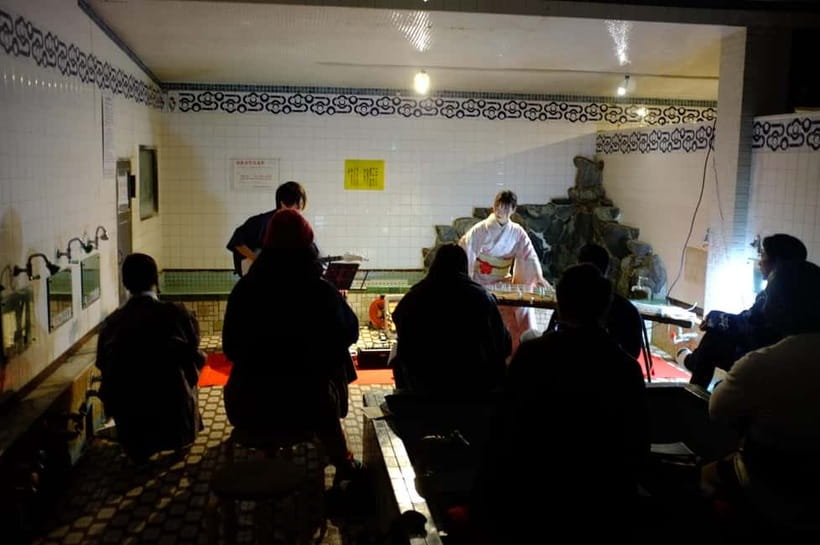
At $32 per person, this is good value for a live performance with a small audience. You are paying for more than 25 minutes of music. The price includes the concert, bilingual commentary, a question period, photographs, and venue seating. At the townhouse, the optional workshop adds another substantial block of instruction.
The value is strongest if you use the explanations. A short concert with no context might feel expensive to someone who is not already interested in Japanese music. Here, the introduction gives you a way to listen, and the Q&A lets you connect the sound to the performer’s technique and cultural background.
It is also a useful choice when your Kyoto schedule is crowded. You do not need to give up half a day. The core program can fit into an afternoon or evening, and the townhouse option is offered almost daily.
The bathhouse schedule is less convenient. Since it is offered irregularly on Mondays, it may require more careful planning and a willingness to shape your day around the concert.
Free cancellation up to 24 hours before the start and reserve-now, pay-later booking make it easier to hold a place while your Kyoto plans change. The meeting point varies by option, so read the exact location carefully before leaving your hotel.
Pairing the concert with Kyoto sightseeing
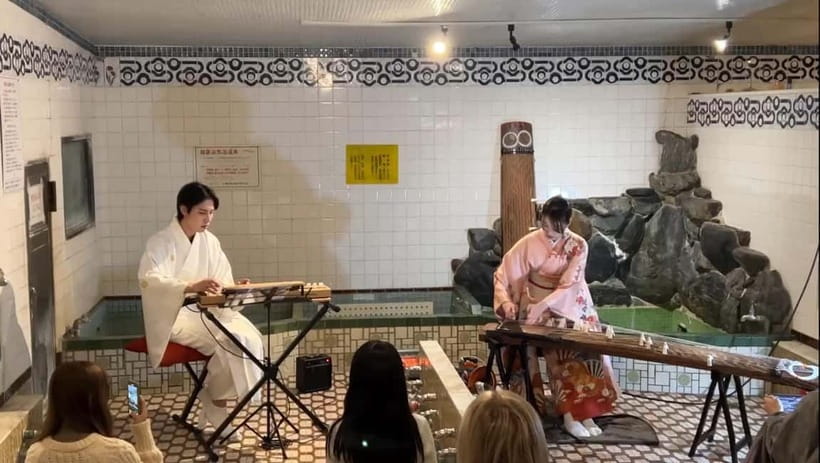
The location works well with several major sights.
Nijō Castle is about 20 minutes away and can pair neatly with the concert. It is one stop from Saiin on the Tozai subway line, according to the route information provided. You could visit the castle earlier, then continue to the performance without crossing the whole city.
Arashiyama takes about 25 minutes by the suggested route. Walk to Saiin Station, take the Hankyu line to Katsura, then transfer to the Randen Line. This works best if you leave enough time for transfers and do not schedule the concert immediately after a timed attraction.
Kinkaku-ji is about 20 minutes away. The suggested route uses a bus from Nishioji Sanjō, taking about 16 minutes, followed by a short walk. This is a practical pairing if the Golden Pavilion is already on your list.
Nishiki Market is about 25 minutes away by direct Hankyu service to Karasuma or Kawaramachi. Plan it before the concert if you want to browse food stalls and shops, but keep an eye on the start time. The market can tempt you into one more snack, one more shop, and suddenly a short journey becomes a late arrival.
The venue can be a little difficult to locate, especially the townhouse. Use the exact meeting information and allow extra time. One useful tip from past bookings was entering the longitude and latitude rather than relying only on the street address.
Who will enjoy this most?
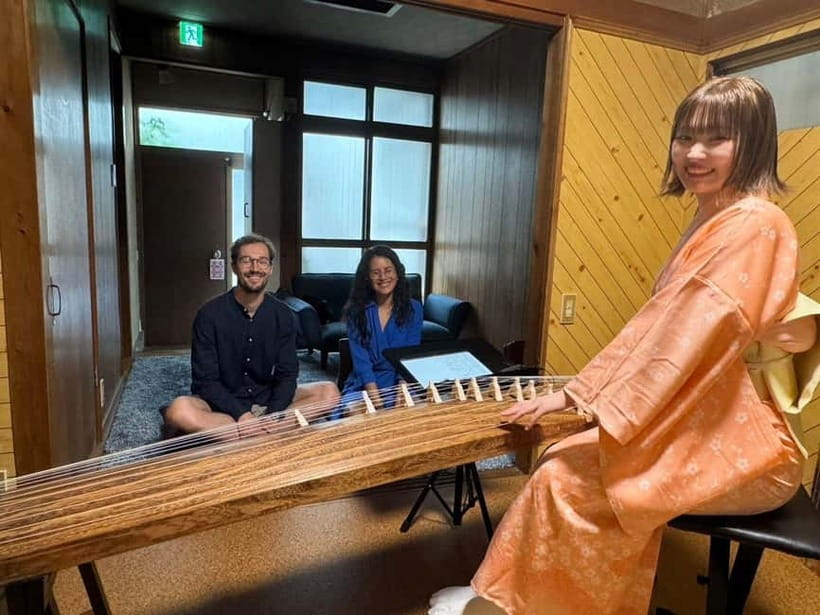
I would recommend this concert to first-time visitors who want culture without a long lecture. The explanations are short, and the performance remains the focus.
It is also a good fit for music lovers, couples, solo visitors, and families with older children. The workshop gives children a concrete activity, while the intimate concert suits anyone who prefers a quieter evening to a large staged show.
You should think twice if you want a long performance, a fixed artist lineup, or a highly formal theater setting. The program changes by performer and venue, and the townhouse may feel close quarters when full.
Babies under one year old are not suitable for this activity. For everyone else, no specialized musical knowledge is required.
Should you book the Kyoto traditional concert?
Yes, if you want a short, personal encounter with Japanese music and do not mind a little planning. I would choose the townhouse first because it offers the most intimate setting, the easiest schedule, and the hands-on koto lesson.
Choose the bathhouse if the Monday date works and you prefer duet music with stronger room acoustics. At $32, either option gives you more contact with the musicians than a standard stage show, along with enough explanation to make the music meaningful.
This is not the grandest cultural event in Kyoto. That is exactly the point. You sit close, listen carefully, ask questions, and leave with a clearer sense of how the instruments work. For many people, that quiet hour becomes one of the most memorable parts of a busy Japan itinerary.
FAQ
How much does the concert cost?
The listed price is $32 per person.
How long does the activity last?
The total duration is 45 to 105 minutes, depending on the selected program and whether you add the optional workshop.
What instruments are featured?
The main instruments are the koto and shamisen. Bathhouse programs may also include shakuhachi, taishōgoto, flute, guitar, or another instrument.
How many people can attend the townhouse concert?
The traditional townhouse has capacity for approximately 11 people.
How many people can attend the bathhouse concert?
The historic bathhouse hall has capacity for approximately 30 people.
Is the concert suitable for beginners?
Yes. No previous knowledge of Japanese instruments or traditional music is required.
Is the koto workshop included?
The hands-on workshop is optional and available only with traditional townhouse bookings.
How long is the koto workshop?
The workshop lasts approximately 35 to 40 minutes.
Is the bathhouse ticket also valid for bathing?
No. The activity includes the concert but does not include bathing, food, drinks, or access to bathhouse facilities.
What languages are used?
The activity is offered in English and Japanese, with bilingual commentary.
Can I cancel the booking?
You can cancel up to 24 hours in advance for a full refund. Reserve-now, pay-later booking is also available.
Just added around Japan
- Japanaese tradtional Tsugaru Shamisen music lesson in Tokyo★ 4.5 · 3 reviews
- Tsugaru shamisen performance over traditional dinner★ 5.0 · 9 reviews
- Easy for everyone! Now you can play handmade mini shamisen and show off to everyone! Musical instruments, sweets and live music★ 5.0 · 3 reviews
- Traditional Japanese Music show & Experience Tour in Osaka★ 5.0 · 25 reviews
- Traditional Concert in Public bath near Kyoto Station★ 5.0 · 5 reviews
- Kyoto: Matcha & Traditional Japanese Music Immersive Experience★ 5.0 · 9 reviews
- Private Japanese music concert★ 5.0 · 4 reviews
- Kyoto: Kujo-yu Sento Traditional Japanese Instrument Concert★ 5.0 · 2 reviews