
REVIEW · JAPAN
Kyoto: Japanese Koto & Shamisen Concert and Koto Class
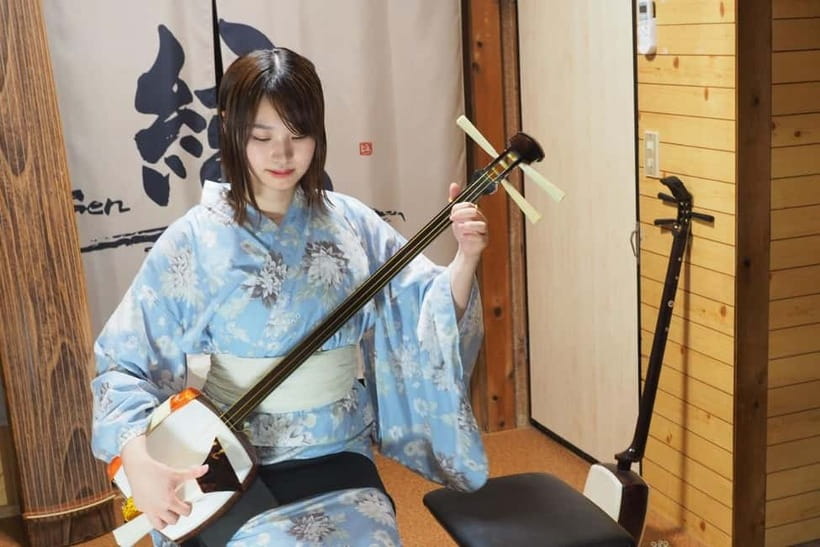
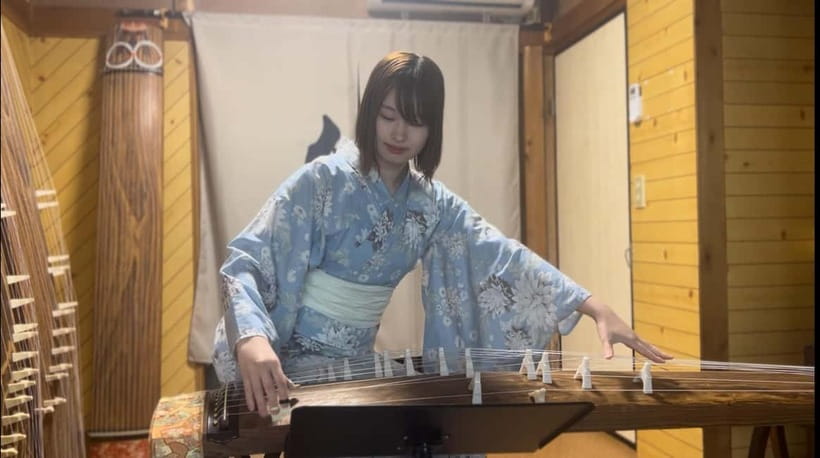
Music feels different in a home. This Kyoto koto and shamisen experience trades grand temples for a small old Japanese house, where professional playing, friendly conversation, and a hands-on lesson make the music feel close and personal. I especially like the intimate setting and the chance to play the koto yourself after hearing it performed. The one drawback is practical: the house can be tricky to locate in a residential lane, and the meeting point varies by booking option.
The program also gives you more than a concert. You hear classical, modern, and original pieces, learn how the instruments work, ask questions directly, and receive photos afterward. At $38 per person, that is a strong value for a private or small-group activity, though anyone hoping for a large stage production should choose a different kind of evening.
Key Points to Know Before You Book
- The concert takes place in a home: Expect a warm, close setting rather than a formal theater, temple, or large cultural hall.
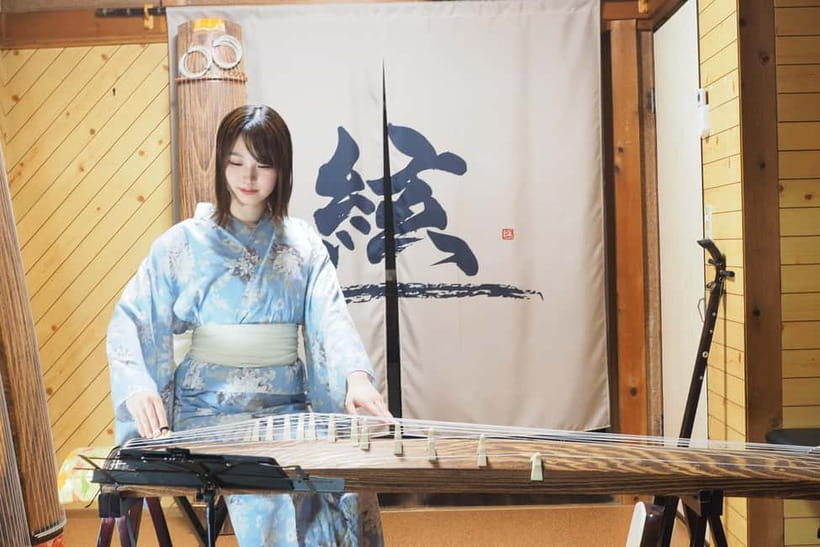
- You hear both koto and shamisen: The program can move from classical music to contemporary works and original compositions.
- The lesson is beginner-friendly: A professional guides you through a simple koto piece, even if you have no musical background.
- The performers welcome questions: The close-up conversation helps explain the instruments, their music, and the unusual sheet music used to play them.
- The program can change: Music varies by season and performer, so repeat visits may offer a different set of pieces.
- It fits neatly into a Kyoto day: Saiin Station connects you with Arashiyama, Nijo Castle, Kinkakuji, and Nishiki Market by train, bus, and short walks.
Entering an Old Japanese Home for Live Music
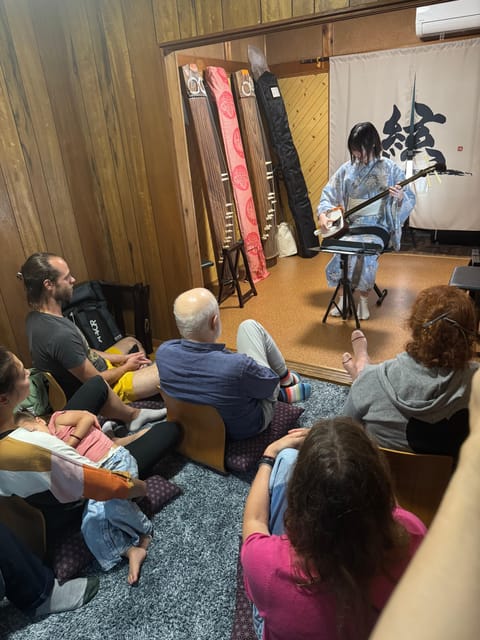
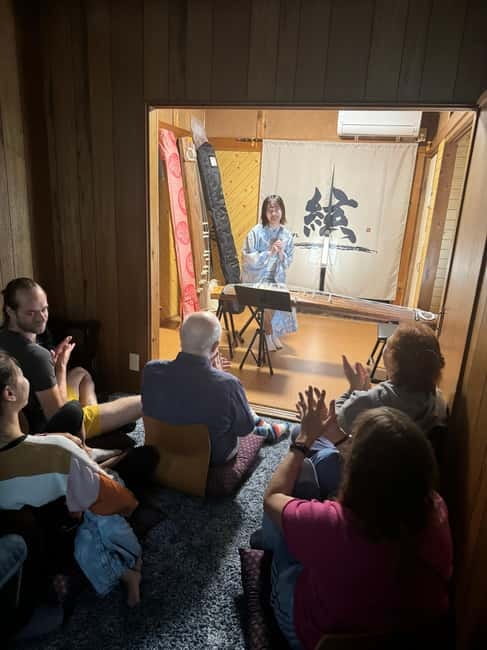
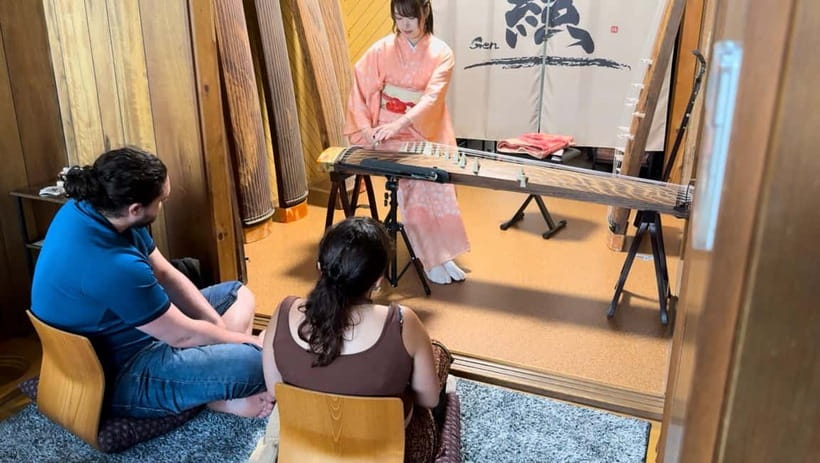
The first surprise is the venue. You are not entering one of Kyoto’s famous temples or a polished concert hall. You are visiting a small, old Japanese house in a residential area, with a homey mood that makes the music feel less formal and more direct.
That setting matters. A koto is a long, elegant string instrument, and the shamisen is a three-stringed instrument with a sharper, more percussive voice. In a big hall, you might admire the sound from a distance. Here, you can watch the player’s hands, hear the changes in tone, and ask about what you just heard.
The scale is especially useful if you are curious but not already familiar with Japanese music. You do not need to know the names of composers, understand Japanese musical notation, or play an instrument. The tone is welcoming rather than academic.
The program is offered as a private session or for a small group. That makes it a good fit for couples, families, and friends who want a shared cultural activity without being part of a large crowd. A small group also gives you a better chance to ask questions and receive help during the lesson.
More Workshops around Japan:
- Japanaese tradtional Tsugaru Shamisen music lesson in Tokyo
★ 4.5 · 3 reviews - Mango’s Miami: Salsa Lessons, Mojitos, Bites & Live Music
★ 4.7 · 156 reviews - Afro Puerto Rican Folklore Bomba Class and Live Music
★ 4.5 · 55 reviews
The Opening Introduction Explains More Than the Basics
The experience begins with a short introduction to the koto and shamisen. You learn about the instruments themselves, how they are played, and the distinctive sheet music used for traditional pieces.
That opening is brief, but it gives your ears something to listen for. Instead of hearing a mysterious sequence of plucked notes, you begin to notice how technique changes the sound. Different approaches can create different tones from the same instrument, a detail that becomes clearer during the performance.
The introduction also gives useful cultural context without turning the session into a long lecture. If you have only seen the koto in photographs or heard it in passing, this is enough preparation to make the concert more meaningful.
English and Japanese are available. An English-speaking guide or interpreter helps explain the presentation when needed, and the performers can answer questions in the close-up conversation afterward.
Hearing Classical, Contemporary, and Original Pieces
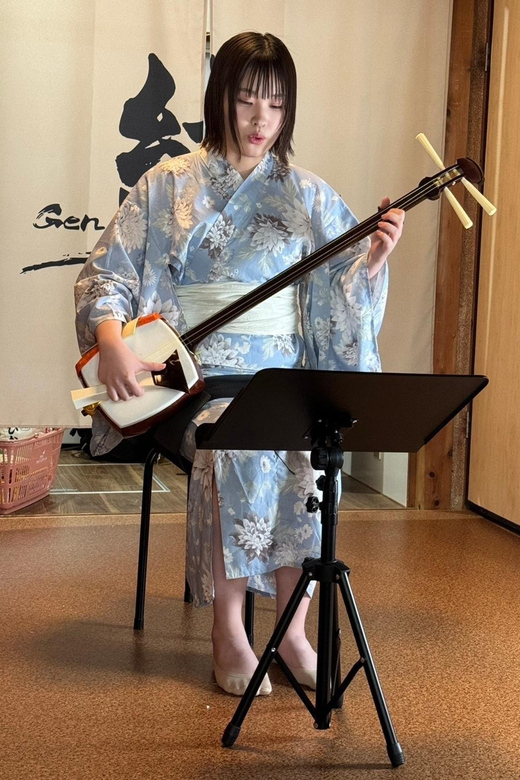
The live concert is the heart of the experience. Professional musicians perform a varied program that can include classical pieces, contemporary compositions, and original works. Some traditional selections may include vocals, adding another layer to the koto’s clear, ringing sound.
The range keeps the hour from feeling repetitive. Classical music gives you a sense of the instrument’s older musical language, while contemporary and original works show that the koto and shamisen are not locked in a museum case. They remain working instruments with room for personal expression.
The program changes according to the season and the performer. That is useful if you return to Kyoto and decide to book again, but it also means you cannot choose a precise song list in advance. If you have a favorite piece in mind, you can ask about it when you book or during the conversation, though a request is not guaranteed.
Aoi is one of the performers associated with the experience. The feedback about her playing places particular emphasis on her koto technique, singing, and the feeling she brings to the music. Kyoko is also praised for making the lesson more engaging, including giving a participant room to try personal ideas.
You may also hear the shamisen played with different techniques. One account specifically describes how the performer created different timbres, or tones, from both instruments. That is the sort of detail you can appreciate more easily in a small room, where the sound is close and unfiltered.
A Conversation With the Musician
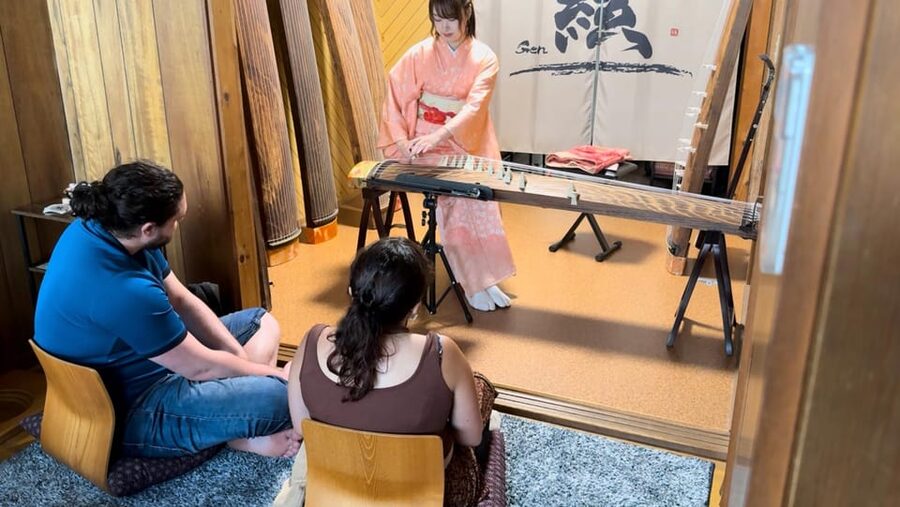
After the performance, you have time for questions, photographs, and a closer look at the instruments. This is not a quick applause-and-leave concert. The conversation is built into the experience.
You can ask about the instruments, the music, the sheet notation, and the techniques used during the pieces. If you are visiting with children, this question period may be the part that holds their attention best, since it turns a performance into a conversation.
The performers and guides are described as friendly, patient, and encouraging. That matters for anyone who feels shy about asking a basic question. You do not need to arrive with specialist knowledge. The format is designed to welcome curiosity.
Photos of the experience are included. They can show your group during the lesson and give you a useful memory of an activity that is difficult to recreate with ordinary sightseeing photographs.
More Live Music around Japan:
- Kyoto: Traditional Concert at Townhouse or Bathhouse
★ 4.9 · 224 reviews - Experience the Asakusa Kabuki Opera Show!
★ 5.0 · 99 reviews - Japanese Traditional Music Show in Tokyo
★ 5.0 · 72 reviews - Traditional Japanese Music show & Experience Tour in Kyoto
★ 5.0 · 57 reviews
Playing the Koto Yourself
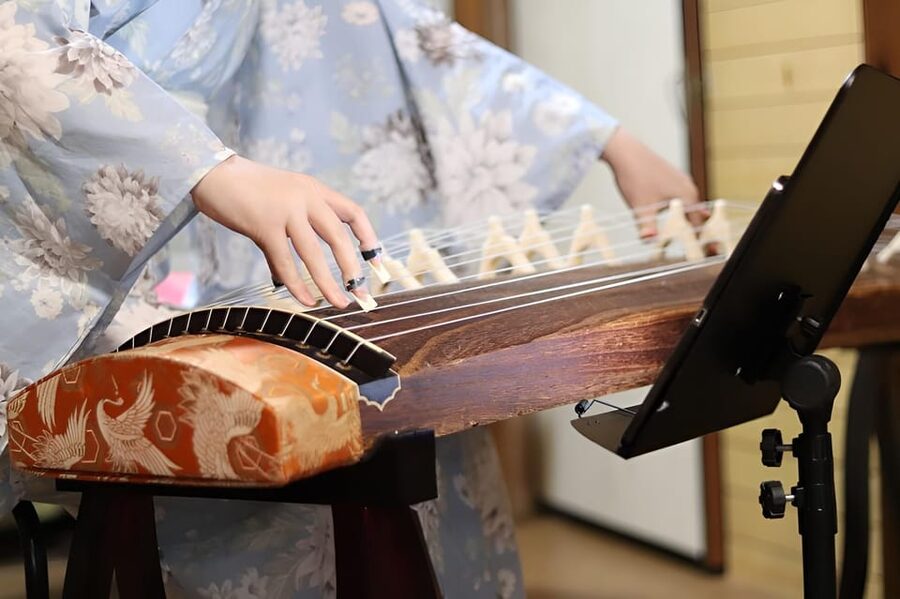
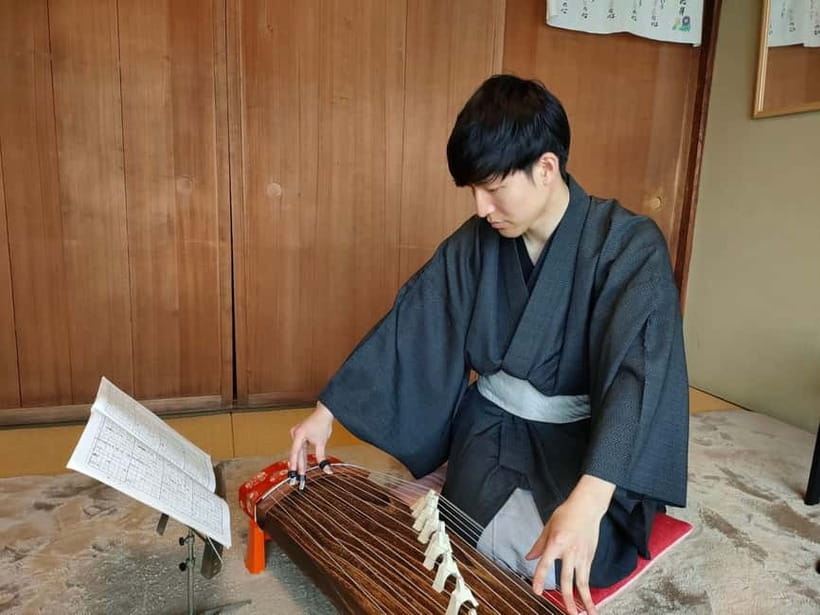
The final part gives you a chance to sit at the koto and try it. A professional instructor guides you through a simple piece, explains the basic technique, and helps you play along.
Do not expect to become a koto musician in one short session. The value is in feeling how the instrument responds under your fingers. Several people with no musical experience found the basics approachable, and the instruction is meant to be supportive rather than demanding.
You might be surprised by how quickly you can produce a recognizable sound. The lesson also gives you a better appreciation for the performers. Playing a simple piece is one thing. Hearing a professional move through complex techniques, shifting tones, and expressive phrasing is another.
The lesson can be especially memorable for families. One parent described the experience as a special event with a daughter, and another participant received a birthday song during the performance. Those personal touches are not guaranteed, but they show how the small setting can allow for occasional requests or celebrations.
Musicians may enjoy the session for a different reason. The performers welcome questions and, in at least one case, let a participant try personal ideas during the lesson. If you already play music, you may find the short practice time more rewarding than a standard demonstration.
Why the $38 Price Makes Sense
At $38 per person, this is not the cheapest cultural activity in Kyoto. You can hear public performances or visit music-related museums for less, depending on the day. The difference here is the amount of direct contact included.
Your price covers the concert, the introduction, the performer conversation, the koto lesson, all needed materials and tools, use of the instrument, instructor guidance, and photos. You are paying for a small-group experience rather than a seat in a large audience.
The value is strongest if you intend to ask questions or take part in the lesson. If you only want to listen to music, a performance-only option may be available at a lower cost, according to the activity details. Check the exact option before booking, since the meeting point and included elements can vary.
The activity lasts from about one hour to 100 minutes, depending on the option and schedule. That is a useful length for a busy Kyoto day. It is long enough to include a real concert and lesson, but short enough to fit before dinner or between sightseeing stops.
Finding the House and Planning Your Visit
The meeting point can vary depending on the option you book, so check your confirmation carefully. The house is in a residential area, and one person found the lane difficult to locate. Another arrived by taxi and found the place manageable, but noted that the alley was very dark.
Give yourself extra time. Late arrival may shorten your session, and the activity is not the kind of event you want to rush into after getting lost. If you arrive early, you may need to wait outside until shortly before the start time, so plan for that possibility.
Transportation to and from the venue is not included. You will also need to arrange your own meals and drinks, and souvenirs or extra koto accessories cost extra.
The location is useful for building a larger day. Saiin Station is within walking distance and serves as a transfer point between the Hankyu Line and Randen Line. From there, Arashiyama takes about 25 minutes by train and on foot.
Nijo Castle is about 20 minutes away by train and on foot, with access from Nijo Castle-mae on the Tozai Line. Kinkakuji, the Golden Pavilion, takes about 20 to 25 minutes by bus and on foot from the Nishioji Sanjo bus stop.
Nishiki Market is about 25 minutes by train and on foot. A direct Hankyu Line ride toward Karasuma or Kawaramachi makes it an easy pairing with food shopping and market browsing.
These travel times are approximate, not guarantees. Kyoto’s transfers, station walks, and traffic can add time, so I would avoid placing the concert between two tightly timed reservations.
Who Will Enjoy This Most
I would choose this experience if you want a cultural activity that asks you to participate, not just watch. It works particularly well for:
- First-time visitors curious about Japanese instruments
- Couples seeking a quiet evening activity
- Families with children old enough to sit through a concert and try an instrument
- Musicians and music fans interested in technique
- Anyone who prefers small groups to formal shows
- Visitors who want a meaningful indoor activity between major sights
The activity is not suitable for children under four, with the supplied age information also listing restrictions for babies and children under two or three. Because the venue is a small home, tell the organizers about physical limitations or allergies ahead of time.
You should also consider your expectations. This is not a full evening concert with a large ensemble, elaborate staging, or a long program. It is a close, educational session with a performance at its center.
How This Fits Into a Kyoto Itinerary
The easiest plan is to place it near other western or central Kyoto stops. Pair it with Arashiyama if you want nature and historic sights earlier in the day, then return for music in a quieter residential setting.
Nijo Castle is another good match. You can visit the castle first, then head to the concert for a change of pace. The same approach works with Nishiki Market, especially if you want food and shopping before a seated activity.
Kinkakuji can also fit into the schedule, though bus travel is more subject to delays. Allow enough time for the trip and for finding the house.
I would not book this as a last-minute filler between major attractions. The dark lane, changing meeting point, and possible wait outside make careful timing worthwhile. Treat the music as the main event, then let nearby sightseeing fill the rest of the day.
Should You Book the Koto and Shamisen Experience?
Book it if you want personal contact with Japanese music, a professional performance, and the chance to play the koto yourself. The excellent rating, warm instruction, small setting, and included photos all support the $38 price.
I would be most likely to recommend it to families, curious first-time visitors, and music lovers. You will get the most from it if you ask questions and take part in the lesson rather than simply sitting back.
Skip it if you need a large formal venue, guaranteed song choices, or a perfectly simple arrival. For everyone else, this is a thoughtful Kyoto experience that fits a busy itinerary while still giving you something personal to remember.
FAQ
How long does the koto and shamisen experience last?
The experience lasts from one hour to 100 minutes. The exact duration depends on the option and starting time you select.
How much does the experience cost?
The listed price is $38 per person.
Is the koto lesson suitable for beginners?
Yes. The lesson is designed for beginners, and a professional instructor guides you through playing a simple piece.
What instruments will I hear?
You will hear the koto and shamisen, along with musical pieces that may include vocals. The program can feature classical, contemporary, and original compositions.
Is the experience private or shared?
Private and small-group options are available. Check the specific option when booking because the meeting point may vary.
Are transportation, food, and drinks included?
No. Transportation to and from the location, meals, and drinks are not included. Souvenirs and additional koto accessories are also separate.
Can I cancel the booking?
You can cancel up to 24 hours in advance for a full refund. A reserve-now-and-pay-later option is also available.
Just added around Japan
- Japanaese tradtional Tsugaru Shamisen music lesson in Tokyo★ 4.5 · 3 reviews
- Tsugaru shamisen performance over traditional dinner★ 5.0 · 9 reviews
- Easy for everyone! Now you can play handmade mini shamisen and show off to everyone! Musical instruments, sweets and live music★ 5.0 · 3 reviews
- Traditional Japanese Music show & Experience Tour in Osaka★ 5.0 · 25 reviews
- Traditional Concert in Public bath near Kyoto Station★ 5.0 · 5 reviews
- Kyoto: Matcha & Traditional Japanese Music Immersive Experience★ 5.0 · 9 reviews
- Private Japanese music concert★ 5.0 · 4 reviews
- Kyoto: Kujo-yu Sento Traditional Japanese Instrument Concert★ 5.0 · 2 reviews
Workshops, compared.

Mango’s Miami: Salsa Lessons, Mojitos, Bites & Live Music
Read our review →
Afro Puerto Rican Folklore Bomba Class and Live Music
Read our review →
Cooking Class + Guitar Concert at Chef’s Francesco
Read our review →
Cooking Class with Chef Francesco and Live Music in Venice
Read our review →

Alicante:Evening Spanish Tapas Cooking Class with Live Music
Read our review →
Mindelo Cultural: city tour with live music and dance class
Read our review →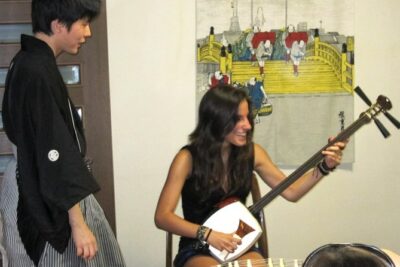
Japanaese tradtional Tsugaru Shamisen music lesson in Tokyo
Read our review →Browse the lists this tour appears in