
REVIEW · AUSTRIA
Vienna: Classical Concerts in the Minorite Church Ticket
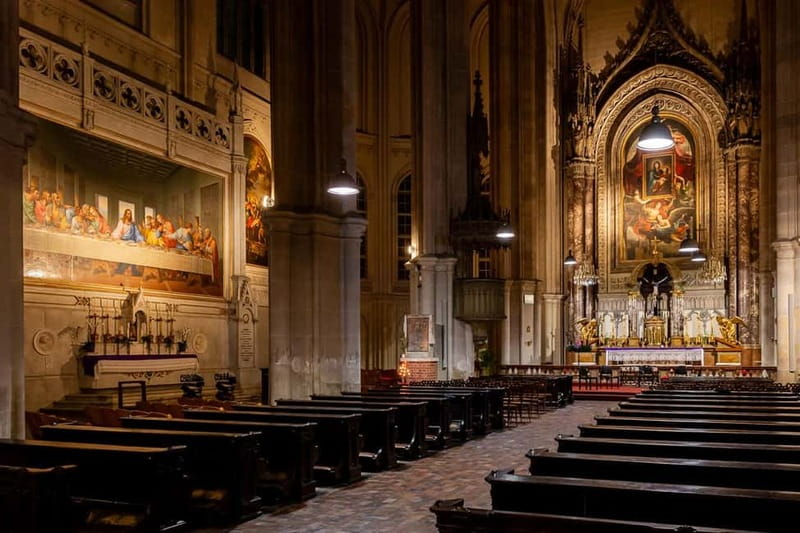
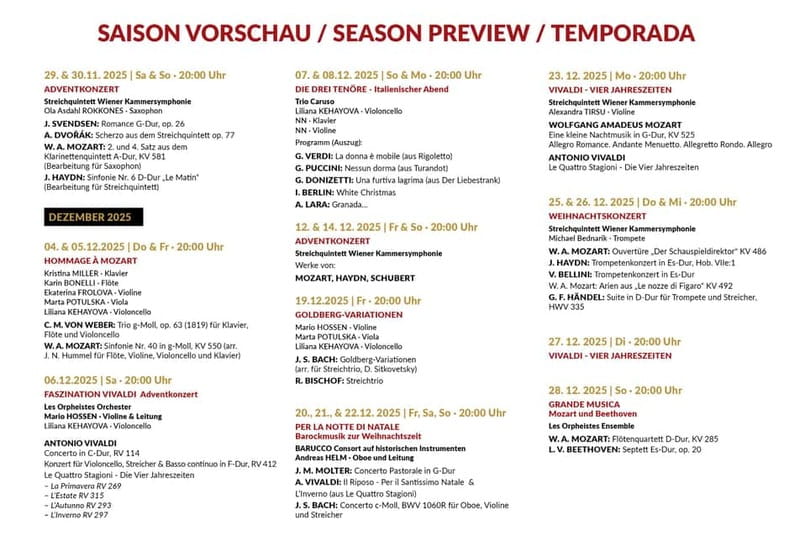
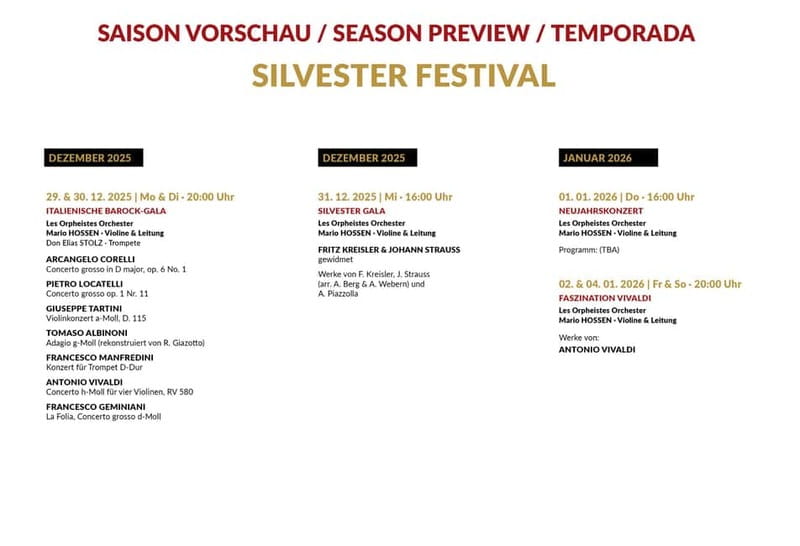
Classical music feels different inside a Gothic church. The Minoritenkirche gives these concerts an intimate setting in Vienna’s historic center, where Mozart, Beethoven, Vivaldi, and Bach sound especially well suited to the stone interior. I like the excellent acoustics and the changing programs, which range from familiar favorites to less predictable works such as Bach’s Goldberg Variations arranged for string trio.
The $22 starting price is appealing for a one-hour to 70-minute cultural evening, especially when you want something more personal than a large concert hall. The main drawback is seating: places are unnumbered, some pews are hard, and a pillar or nearby speaker can affect the view or sound from certain seats.
I also like the easy timing. Admission begins 30 minutes before the concert, and staff greet you beneath the church arcade. Arrive early if seating matters, particularly if you have a lower category ticket and want a clear view of the musicians.
Key Points Before You Book
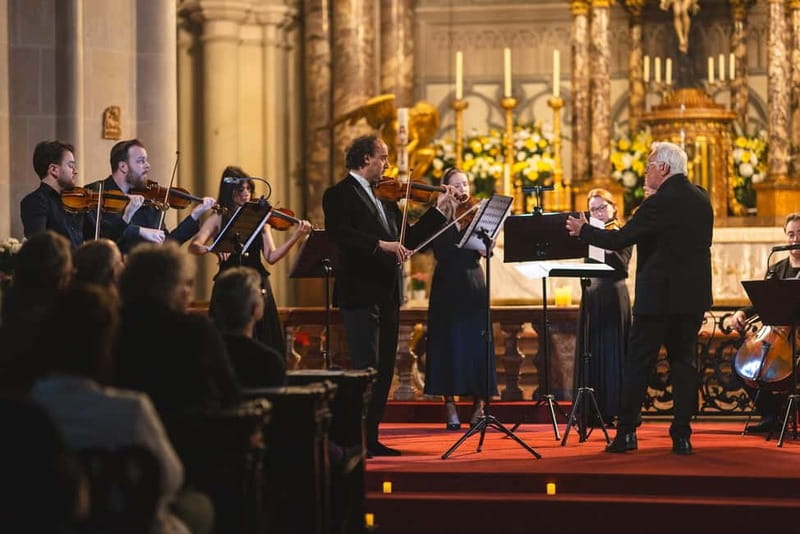
- Gothic church setting: Concerts take place inside the historic Minoritenkirche in central Vienna.
- Programs change often: You may hear Vivaldi’s Four Seasons, Mozart symphonies, Bruckner, Bach’s St John Passion, or unusual chamber arrangements.
- Short enough for an evening plan: Performances last about one hour to 70 minutes.
- Starting at $22: The price offers a relatively affordable way to hear live classical music in Vienna.
- Unnumbered seating: Staff guide you to available places, but early arrival can help you get a better view.
- Strong musician lineup: Programs can include the Győr Philharmonic Orchestra, Les Orpheistes Orchestra, Wiener Kammersymphonie, and soloists such as Mario Hossen.
Why Minoritenkirche Makes the Concert Special
Vienna has no shortage of concert venues. The reason to choose this one is the combination of music and setting.
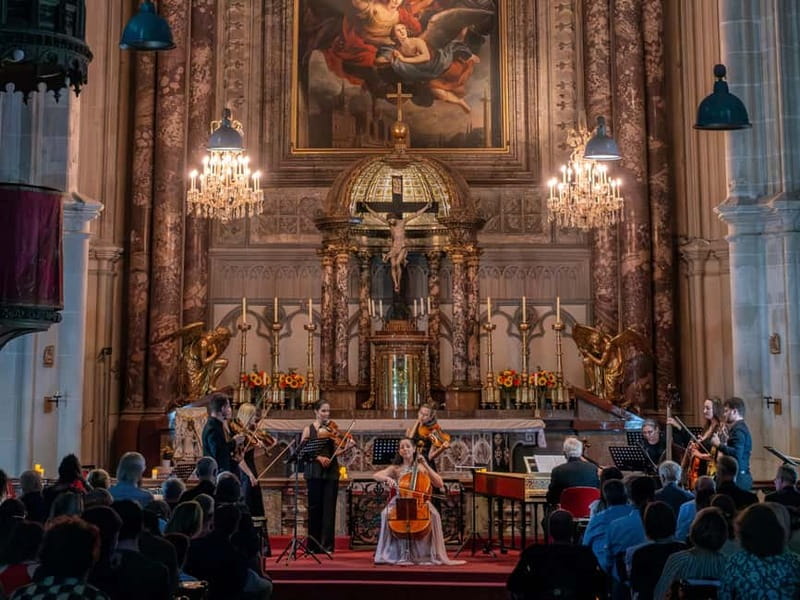
The Minoritenkirche is a Gothic church in the center of Vienna, with a high interior, historic architecture, and a visual backdrop that feels far removed from an ordinary auditorium. You sit close to the performers, with the altar and stone interior framing the concert. That closeness changes the experience. You can watch a violinist’s bowing, a conductor’s gestures, and the interaction among chamber musicians.
The church’s acoustics are a major part of the appeal. Sound carries through the interior, giving string instruments a full, resonant quality. This works particularly well for Baroque music, where a small ensemble can fill the room without needing amplification.
There is a tradeoff. Church acoustics create resonance, but they can also soften precise detail from some seats. One attendee found a nearby speaker distracting, while another had a limited view because of a pillar. The music is the main reason to come, but your seat still matters.
More Classical Concerts around Vienna:
- Vienna: Vivaldi’s Four Seasons Concert in Karlskirche
★ 4.7 · 14,951 reviews - Vienna: Classical Concert in the World-Famous Musikverein
★ 4.6 · 6,673 reviews - Vienna: Mozart Concert at the Musikverein – Golden Hall
★ 4.6 · 5,194 reviews
What the One-Hour Evening Looks Like
The concert itself lasts from about 60 to 70 minutes. That makes it easy to fit into a busy Vienna itinerary. You can attend after a museum visit, before dinner, or as the final activity of the day without committing to a long formal evening.
Admission begins 30 minutes before the stated start time. The entrance is under the arcade of the church, not necessarily through the most obvious front door. Staff are present to welcome you and guide you to appropriate seating.
There is no need to arrive far earlier than the opening time. Still, I would use much of that 30-minute window if you care about your position. Seating is unnumbered, and early arrival puts you closer to the front of the line. This matters most in the less expensive sections, where the view may vary.
The programs generally begin at the advertised time. You should not expect a long introduction or a guided tour of the church. This is a concert experience, not a church sightseeing visit with a performance added on.
The Music: From Vivaldi Favorites to Unusual Programs
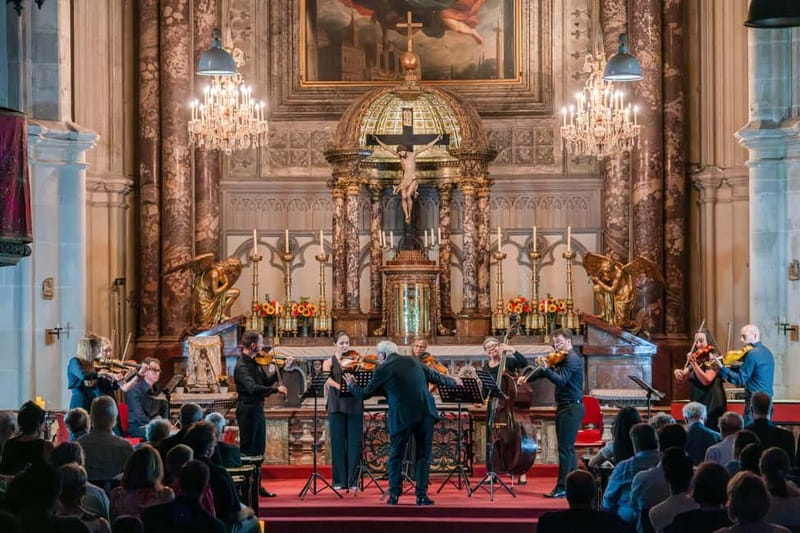
The program is the heart of the experience, and it changes by date. Some evenings feature music you already know. Others offer a more distinctive selection that may appeal to regular classical concertgoers.
Vivaldi’s Four Seasons
Vivaldi’s Four Seasons is one of the most recognizable works in classical music. In the Minoritenkirche, its lively violin writing benefits from the close seating and church acoustics.
The April 18, 2026 program pairs the work with Haydn’s Symphony No. 104 in D major. Cornelia Gradwohl is scheduled as violin soloist with the Wiener Kammersymphonie. This is a good choice if you want a familiar work but still prefer a smaller ensemble to a huge orchestral performance.
More Church and Cathedral Concerts around Vienna:
- Vienna: Classical Concert in St. Anne’s Church (Annakirche)
★ 4.6 · 3,414 reviews - Vienna Classical Concert at St. Peter’s Church
★ 4.5 · 2,039 reviews - Vienna: Classical Concert in St. Anne’s Church (Annakirche)
★ 4.5 · 1,000 reviews - Vienna: Christmas & New Year’s Concert in St. Peter’s Church
★ 4.6 · 763 reviews
Mozart Programs
Mozart appears in several different formats. The May 1 and 2, 2026 Mozart cycle includes the Divertimento in D major, the Violin Concerto in A major, and Symphony No. 1 in E-flat major.
Mario Hossen conducts and plays violin for that program. The combination gives you three different views of Mozart, from an early symphony to a mature concerto. On May 30, the program moves in another direction, pairing Mozart’s Fantasy in D minor with Schubert’s Death and the Maiden string quartet and Chopin variations on a theme from Don Giovanni.
That variety is useful if you have already heard the standard Mozart concert format elsewhere in Vienna. You can choose an evening built around a composer, or select a mixed program with more contrast.
Bach’s Goldberg Variations for String Trio
The March 28, 2026 concert presents Bach’s Goldberg Variations in an arrangement for violin, viola, and cello by Dmitri Sitkovetsky.
This is not the usual keyboard version. The string trio arrangement lets you hear the familiar variations as a conversation among three instruments. It is a longer and more concentrated work, so it may suit you best if you already enjoy chamber music or want something less routine.
The church setting fits this kind of program well. You are close enough to notice phrasing and changes in texture, rather than simply hearing a large mass of sound.
Bruckner’s Symphony No. 7
On March 13, the Győr Philharmonic Orchestra performs Bruckner’s Symphony No. 7, conducted by Martin Sieghart.
This is a larger-scale orchestral program than the chamber concerts. Bruckner’s broad, spacious writing can work beautifully in a church, but you should choose this date knowing that the experience will be more symphonic and less intimate than a string quintet evening.
Bach’s St John Passion and Easter Programs
The April 3 concert features Bach’s St John Passion with Les Orpheistes Orchestra, chorus, soloists, and Martin Sieghart as conductor.
The Easter schedule also includes Haydn and Mozart on April 5, followed by Vivaldi and Bach on April 6. These holiday programs are a sensible choice if your Vienna visit falls around Easter and you want music that fits the season without booking a full religious service.
Christmas, Advent, New Year’s, and other festive programs are also offered during the year. Check the exact date carefully, since a seasonal title does not always mean every piece will be holiday music.
Later Spring Programs Worth Considering
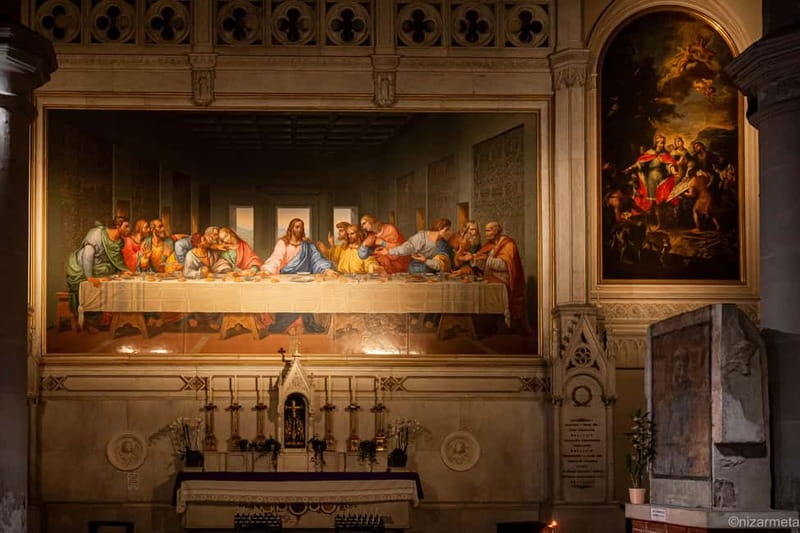
The May and June schedule shows how broad the series can be.
On May 15, Vivaldi versus Paganini places the two violin traditions side by side. The program includes selections from The Four Seasons, Paganini variations, Rondo Il Campanello, and the Sonata Preghiera. Mario Hossen conducts and plays violin with Les Orpheistes Orchestra.
On May 22, Breath and Strings brings together flute and string ensemble works by Paisiello, Michael Nyman, Salieri, Mozart, and Carl Philipp Emanuel Bach. Massimo Mercelli is scheduled to play flute with the Wiener Kammersymphonie.
On May 30, Natalia Rehling plays piano with the Varga Quartet Vienna. The program links Mozart, Schubert, and Chopin, including Schubert’s Death and the Maiden.
The June 4 and 5 program, La Passione, includes Haydn, Bach, a marimba improvisation by Christoph Sietzen, and a marimba concerto by Emmanuel Séjourné. This is a good reminder that these concerts are not limited to the three most familiar Viennese names. If you want a less predictable evening, read the full program before buying.
Seating Categories and the Best Place to Sit
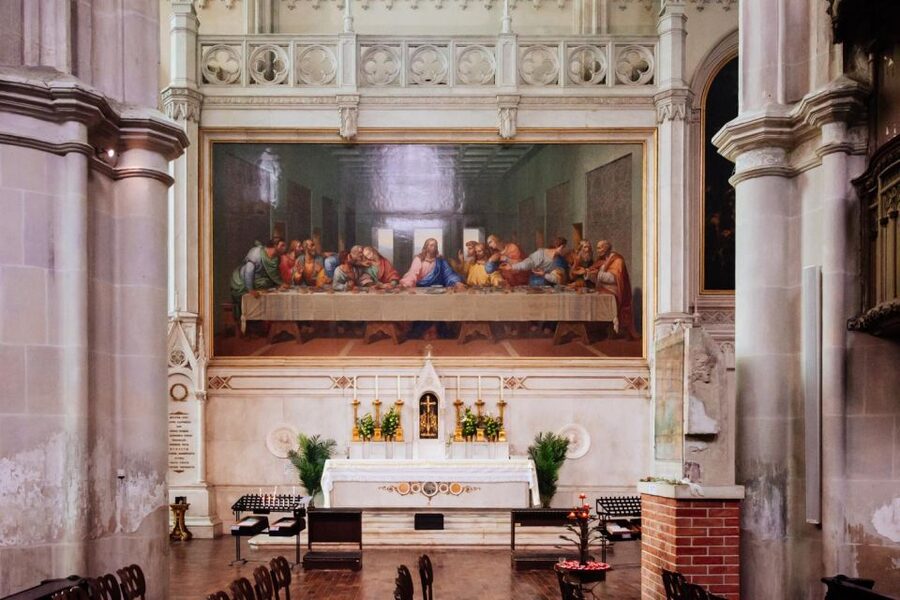
Seating is unnumbered, and staff assign or guide you to available places. That can work smoothly when the church is not full. Several people received upgrades when capacity remained, but you should treat that as a possibility rather than a promise.
The front section costs more, yet proximity can add real value. You see the musicians’ hands and facial expressions, and chamber music feels especially immediate from nearby. If you are attending mainly for the performance rather than the architecture, paying more for a closer category may be worthwhile.
Lower categories can still provide good sound, but the view is less predictable. Some seats may be beside a pillar or off to the side. A category that sounds central may not place you exactly where you expect, so arrive during the admission period and ask staff about the clearest available view.
The pews are historic-looking but not luxurious. Several people found them uncomfortable, especially during longer works. Cushions are not guaranteed, so consider your comfort needs when choosing a ticket category.
Sound, Temperature, and Church Comfort
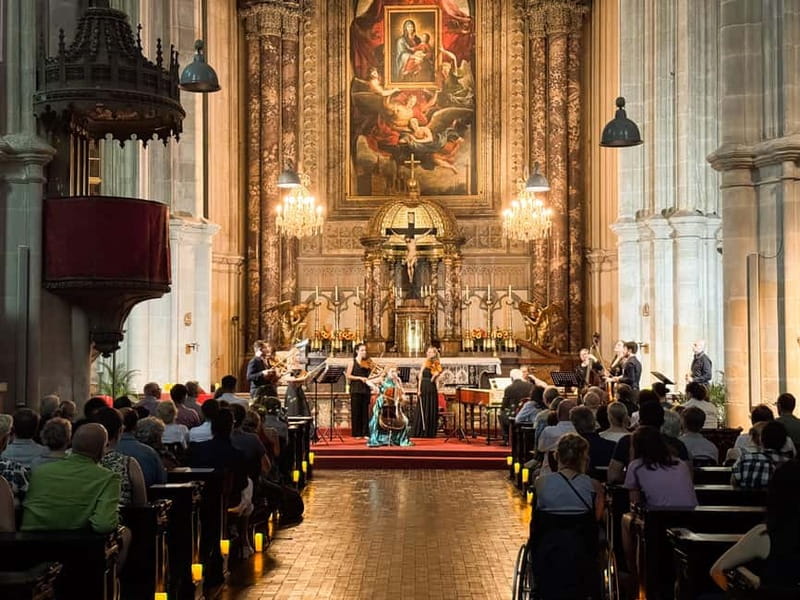
The acoustics are one of the most praised parts of the evening. The stone interior gives the strings a warm resonance, and the setting adds a sense of occasion without requiring formal concert-hall dress.
Winter temperature has caused some uncertainty for visitors, but the church is heated for performances. You may still want a light extra layer, since individual comfort varies in a large historic building. The venue is not presented as an outdoor or unheated experience.
Food, drinks, smoking, alcohol, and drugs are not allowed. Flash photography, video recording, and photography inside are also prohibited. Please keep your phone away during the performance. A glowing screen or a phone dropping on the stone floor can disturb the quiet, intimate mood for everyone nearby.
Location and Getting There
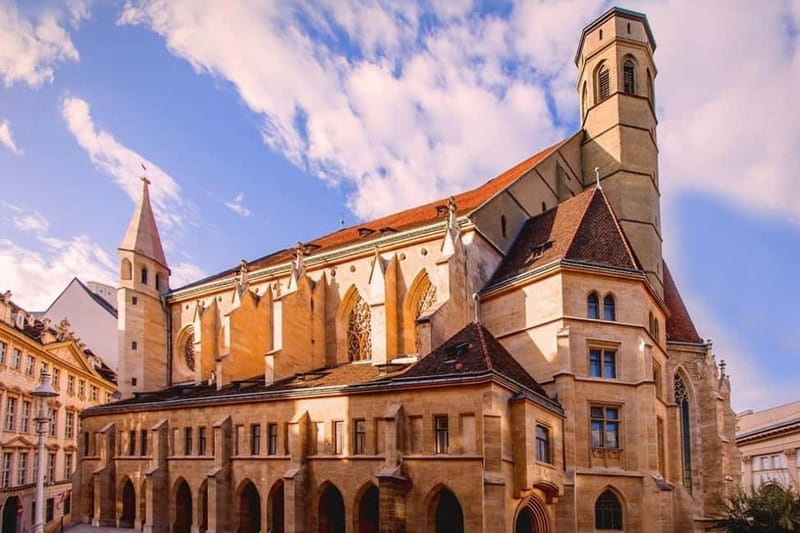
The Minoritenkirche is in Vienna’s historic city center, and the venue is convenient for an evening out. One attendee specifically noted that the church is opposite a metro station, making it easy to reach by public transport.
The meeting point can vary depending on the option you book, so check the instructions attached to your chosen performance. Look for the entrance beneath the church arcade, where the staff and greeters will direct you.
The concert works well as part of a central Vienna walking day. You can pair it with museums, palaces, cafés, and dinner nearby without spending much time crossing the city. Its central location is also useful when you want a cultural activity that does not require a late journey back to your accommodation.
Is $22 Good Value?
At $22 per person, this is a strong value if you want live classical music in a historic venue. The ticket includes admission and a program sheet or booklet. You are paying for a complete performance rather than a short musical demonstration.
The value improves if you choose a program with a full orchestra, soloist, or a work you particularly want to hear. The cost is also modest compared with premium seats at Vienna’s best-known concert halls.
Still, the cheapest ticket should not be judged only by the music. You may have an obstructed view, a harder pew, or a less direct sound position. If the concert is a major part of your Vienna trip, a higher category may be worth the extra cost. If you simply want an enjoyable cultural evening, the basic ticket can do the job.
Free cancellation up to 24 hours before the concert and reserve-now, pay-later booking add useful flexibility. Children under six are not admitted, and the church is wheelchair accessible.
Who Will Enjoy This Concert Most?
I would recommend it to you if you want:
- A compact evening of live classical music
- A historic church setting rather than a modern hall
- Mozart, Vivaldi, Beethoven, Bach, Haydn, or related repertoire
- An intimate chamber performance with a close view of musicians
- A central activity that is easy to add to a Vienna sightseeing day
- A reasonably priced first classical concert
It is also a good choice for someone who is not already devoted to classical music. One attendee who came mainly because of a partner found the performance gripping and continued talking about it afterward. The short running time helps if you are unsure about committing to a long concert.
You may prefer another venue if you need deeply comfortable seating, guaranteed central placement, or a large modern hall with carefully tiered sightlines. This is a church concert, and that means the architecture and acoustics come with a few practical compromises.
Should You Book the Minoritenkirche Concert?
Book it if you want atmosphere, strong musicians, and good value in one compact evening. The Minoritenkirche gives the music character, and the changing schedule lets you choose between familiar works and more unusual programs.
For the best experience, check the exact program, arrive during the 30-minute admission window, and consider paying for a closer seating category if the view matters. I would especially recommend the concert to first-time classical listeners, couples looking for a memorable Vienna evening, and music lovers who appreciate smaller venues.
If you are choosing among dates, select the music first. Vivaldi’s Four Seasons is the easy introduction. The Goldberg Variations arrangement, Bruckner’s Seventh, Vivaldi versus Paganini, and La Passione offer more distinctive evenings.
FAQ
How long does the concert last?
The performance lasts approximately one hour to 70 minutes.
Where does the concert take place?
It takes place in the Minoritenkirche in Vienna’s historic city center.
What is included in the ticket?
The ticket includes entrance to the concert and a program sheet or booklet.
How much does the ticket cost?
Prices start at $22 per person.
When can I enter the church?
Admission begins 30 minutes before the concert starts.
Is seating numbered?
No. Seating is unnumbered, and staff guide you to suitable available seats.
Should I arrive early?
Arriving during the admission period is sensible if you want a better choice of seats, especially because seating is unnumbered.
Are children allowed?
Children under six years old are not suitable for this experience and are not admitted.
Is the venue wheelchair accessible?
Yes, the venue is wheelchair accessible.
Can I take photographs or record the performance?
No. Photography inside, flash photography, and video recording are not allowed. Food, drinks, smoking, alcohol, and drugs are also prohibited.
Just added around Vienna
- Vienna: Romantic Classics Piano, Violin, and Cello Concert★ 4.7 · 60 reviews
- Vienna: Sunday Brunch Danube Cruise & Live Music★ 4.2 · 42 reviews
- Vienna: Concert by the Vienna Baroque Orchestra★ 4.6 · 56 reviews
- Vienna: Musical Tickets THE PHANTOM OF THE OPERA★ 4.9 · 132 reviews
- Vienna Private Walking Tour including State Opera★ 3.2 · 7 reviews
- Vienna Supreme Orchestra at Palais Niederösterreich★ 4.8 · 10 reviews
- Vienna: Mozart Concert with Dinner and Carriage Ride★ 4.8 · 25 reviews
- Vienna: Classical Concert in the historic 1837 Strauss-Hall★ 4.5 · 39 reviews
Classical Concerts, compared.
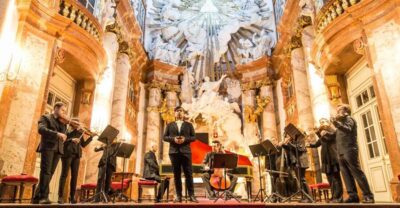
Vivaldi’s Four Seasons Concert in Karlskirche
Read our review →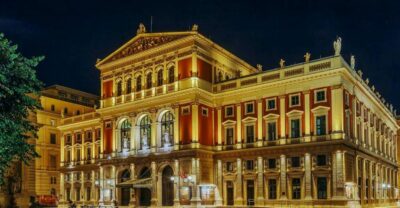
Classical Concert in the World-Famous Musikverein
Read our review →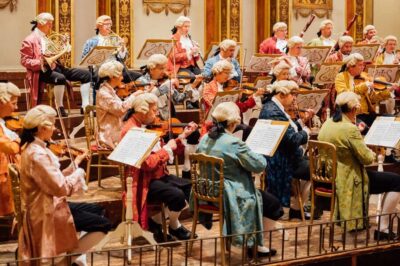
Mozart Concert at the Musikverein – Golden Hall
Read our review →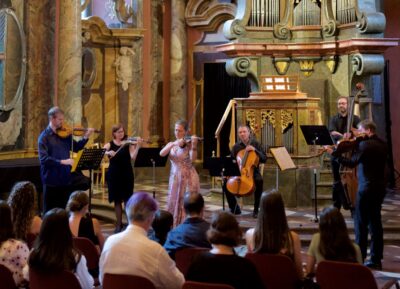
Entry Ticket Classical Concert at the Mirror Chapel
Read our review →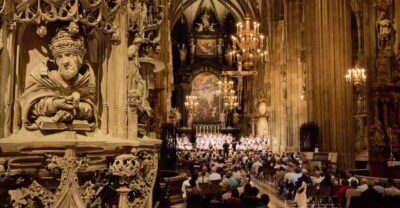
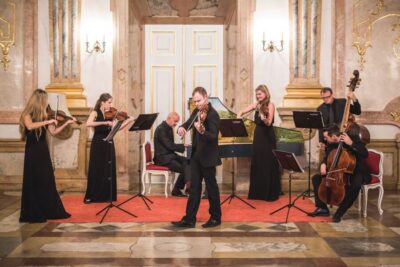
Classical Concert in St. Anne’s Church (Annakirche)
Read our review →
Browse the lists this tour appears in