
REVIEW · AUSTRIA
Vienna: Romantic Classics Piano, Violin, and Cello Concert
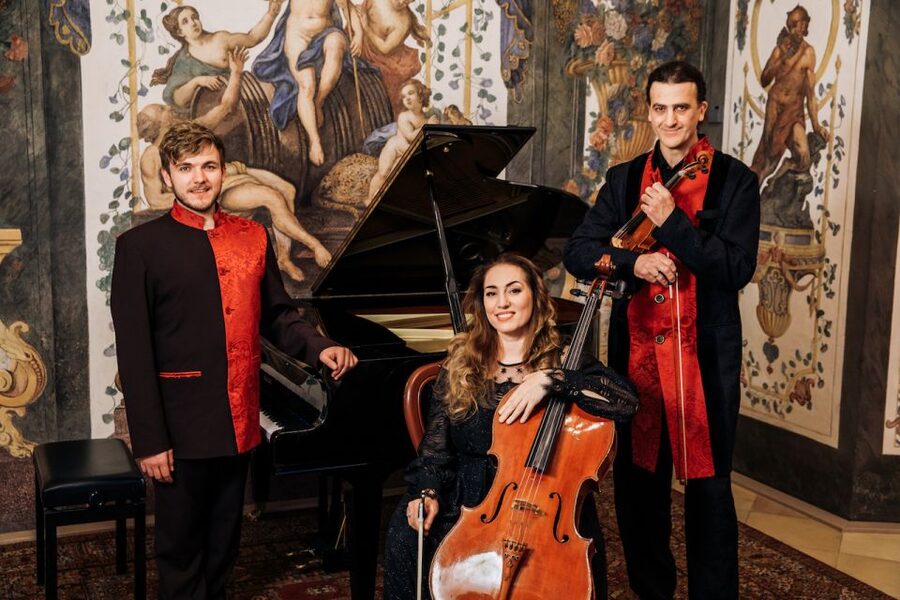
Vienna can make a short concert feel grand. I like the intimate Sala Terrena, where frescoes and clear acoustics put you close to the performers, and I like the carefully mixed program of Beethoven, Mozart, Chopin, Liszt, Schubert, and Brahms. The main consideration is that refreshments are not included, and any drinks available during the break require cash.
For $69, this 90-minute performance offers a polished evening of famous works without asking you to commit to a full opera or symphony program. You will need to arrive 15 minutes early at Deutschordenskirche, and the venue can be easy to miss because the concert entrance sits just 150 meters from St. Stephen’s Cathedral.
Key points to know before you go
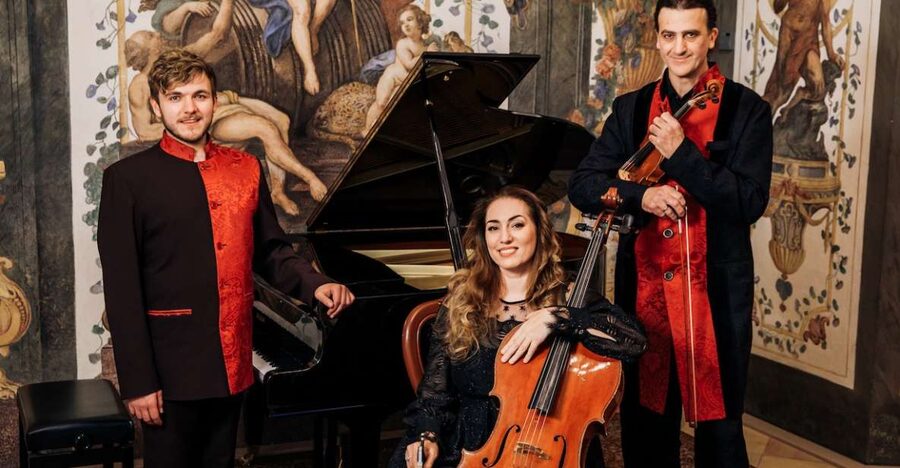
- The Sala Terrena is part of the experience: Frescoes, historic character, and good acoustics give the concert more atmosphere than a plain modern hall.
- The program mixes famous and less familiar works: Expect Beethoven’s Moonlight Sonata, Liszt’s Un sospiro, Chopin’s Nocturne in C minor, Saint-Saëns’s The Swan, and Schubert’s Trio in E-flat Major.
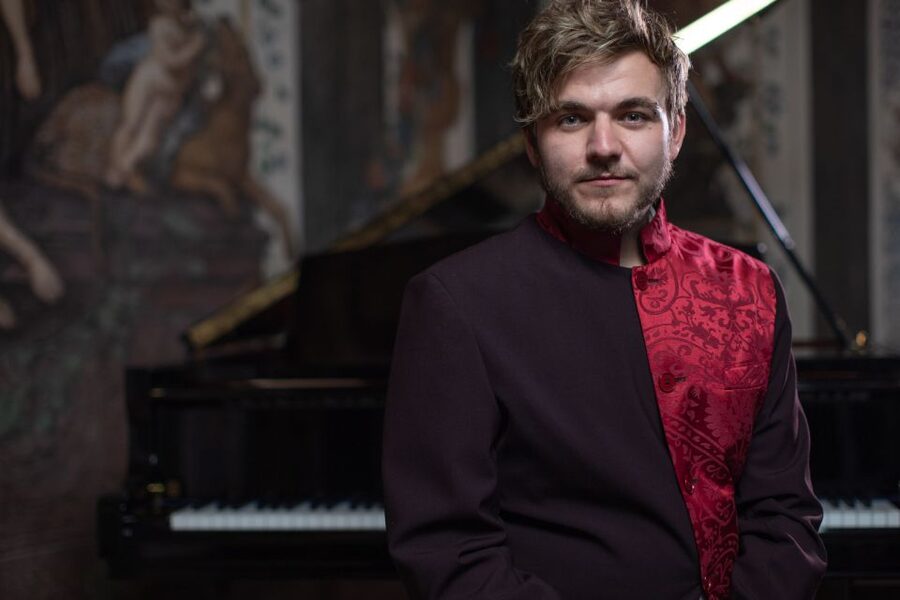
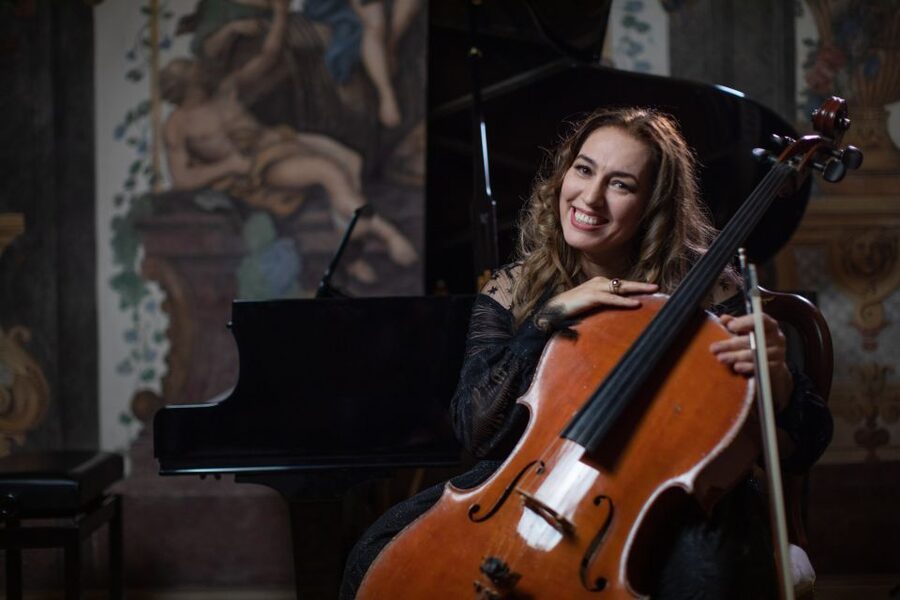
- The music is performed by accomplished specialists: Violinist Claudio Bentes, pianist Dushan Sretovic, and soloist Teodora Miteva are named among the featured performers.
- You can choose your price and view: Student tickets, back-row seats, and places closer to the performers are available.
- The location is excellent for an evening in central Vienna: The meeting point is close to St. Stephen’s Cathedral and easy to pair with dinner or a walk through the old center.
- The practical details are simple: The concert lasts 90 minutes, the cloakroom is included, and cancellation is free up to 24 hours before the start.
Why this concert works in central Vienna
Vienna has no shortage of classical music. That is both its charm and its problem. A visitor can spend a lot of time comparing churches, halls, orchestras, and ticket categories, only to end up with a seat far from the musicians.
This concert keeps things manageable. It takes place near the center, lasts 90 minutes, and focuses on a small group of major composers. You get a taste of Vienna’s musical tradition without giving up an entire night.
The setting matters. The Sala Terrena is decorated with expressive frescoes, giving the performance a more personal feel than a large concert hall. The room is relatively small, which helps you hear the detail in the strings and piano. One especially useful point is the acoustics. Every note can carry clearly, even in a compact space.
I would choose this for an evening when you want music to be the main event, but not the only event of the night. The concert fits neatly before or after dinner, and its location makes it easy to reach from the cathedral area.
More Piano Concerts around Vienna:
- Mozarthaus Concert in Vienna – Piano Trio
★ 4.5 · 43 reviews - Krakow: Chopin Piano Recital at Chopin Concert Hall
★ 4.7 · 2,330 reviews - Warsaw: Live Chopin Piano Concert
★ 4.7 · 370 reviews
Finding the entrance near St. Stephen’s Cathedral
The meeting point is at Deutschordenskirche, only 150 meters from St. Stephen’s Cathedral. Enter through the gate where you will find a poster stand for concerts at Mozarthaus.
This is close enough that you should not need a taxi or a special transport plan if you are already in the historic center. Still, I would not cut it too close. The instruction is to arrive 15 minutes before the performance, and that advice is worth following. Central Vienna can be confusing when you are watching street signs, checking a phone, and trying to locate a gate rather than a large theater entrance.
The host or greeter speaks English and German. That helps if you need assistance finding the correct doorway or confirming your seating area.
A cloakroom is included, which is useful in winter when you may be carrying a coat. The venue is wheelchair accessible. Seating choices include student tickets, back-row tickets, and places closer to the performers, so check the available category before booking.
The Sala Terrena: frescoes, closeness, and sound
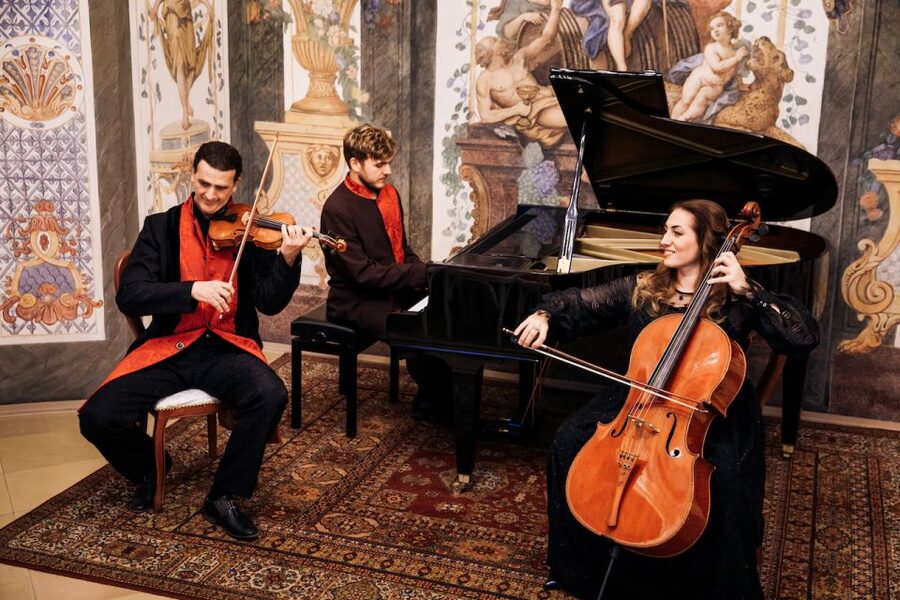
The room is one of the strongest reasons to choose this performance. The frescoes add visual interest without turning the concert into a sightseeing stop. You are there for the music, but the surroundings help create the sense of a special Vienna evening.
The smaller scale also changes how you listen. In a large hall, the full sound can be impressive, but small gestures may disappear. Here, the format allows the expressive side of the music to come forward. The bow of a violin, the attack of a piano key, and the softer passages in a cello work can feel more immediate.
That intimacy is not perfect for everyone. If you prefer the grand scale of a major orchestra, this chamber-style setting may feel modest. It does not offer the force of a full symphony. Its appeal is precision, closeness, and atmosphere.
The room’s acoustics have been praised for clarity and depth. That is especially important for a program that moves between piano solos, string works, and trio pieces. You want a room that can handle both delicate passages and more forceful virtuoso writing.
The musical program, from Haydn to Schubert
The program begins with Joseph Haydn’s Trio all’ungarese, Hob XV:25. Its sections include Andante, Poco Adagio, and a Rondo finale. This gives the evening a graceful opening before the more dramatic Romantic works arrive.
Haydn is a useful starting point because his music brings structure and wit. The Rondo finale adds movement and energy, while the slower sections let the ensemble settle into the room. It is a pleasant way to hear the instruments working together before the program moves into solo pieces.
Beethoven follows with the Adagio from the Moonlight Sonata. This is one of the most recognizable works on the program, and its slow, focused mood can quickly quiet the room. Hearing it in an intimate setting suits the music. The piece does not need a huge stage to make an impression.
Mozart’s La tartine de beurre, also known as Das Butterbrot, adds a lighter touch. It is a short, playful work, and its presence keeps the evening from becoming too solemn. This is a good example of the program’s range. You are not given 90 minutes of heavy Romantic drama.
The next Beethoven selection is the Sonata Op. 2, Allegro con brio. Compared with the Moonlight Sonata’s Adagio, this is more energetic and demanding. The contrast lets you hear another side of Beethoven, one driven by speed, force, and sharp changes in mood.
More Live Music around Vienna:
- Vienna: Vivaldi’s Four Seasons Concert in Karlskirche
★ 4.7 · 14,951 reviews - Vienna: Classical Concert in the World-Famous Musikverein
★ 4.6 · 6,673 reviews - Vienna: Mozart Concert at the Musikverein – Golden Hall
★ 4.6 · 5,194 reviews - Vienna: Classical Concert in St. Anne’s Church (Annakirche)
★ 4.6 · 3,414 reviews
Liszt, Chopin, and the night’s piano focus
Franz Liszt’s Un sospiro brings the piano into the foreground. The title is often associated with a sigh, and the piece gives the pianist room to shape long melodic lines while handling difficult writing.
Dushan Sretovic is presented as a multiple award-winning piano virtuoso known for Chopin interpretations on international stages. That background fits this program, which gives the piano several important moments rather than treating it as simple accompaniment.
Chopin’s Nocturne in C minor, Op. 48 No. 1, follows. The nocturne form is one of Chopin’s best-known contributions to piano music, but this particular work has more weight and drama than a gentle salon piece. You can expect a strong emotional center here.
The program then includes Chopin’s Étude Op. 10 No. 1 in C major. The études were written as technical studies, but the finest performances make them sound like complete concert works. This is where a close seat can be rewarding, since you can watch the pianist handle the fast, wide-ranging patterns.
For me, this section is likely to be the musical high point for anyone who comes mainly for piano music. The selection moves from lyrical reflection to technical brilliance without losing the Romantic mood promised by the concert title.
Bach, Paganini, Saint-Saëns, and Massenet
Johann Sebastian Bach’s Cello Suite in G Major, BWV 1007, Allegro brings a different texture. A solo cello has a direct, human sound, and the opening movement gives the instrument room to speak without the piano or violin beside it.
The program then turns to Niccolò Paganini’s Caprice 13. Paganini is closely linked with violin virtuosity, so this is a natural choice for violinist Claudio Bentes. The caprice format puts technical control on display, but it also gives the performer a chance to bring personality to the piece.
Camille Saint-Saëns’s The Swan is one of the evening’s most familiar melodies. It is calm, graceful, and easy to recognize, making it a welcome pause after the demands of Paganini.
Jules Massenet’s Meditation from Thaïs continues that reflective mood. It is often treated as a showcase for violin, but the music works best when the melody feels unforced and singing. The contrast between Paganini’s rapid writing and Massenet’s long lines gives the string part a satisfying range.
Teodora Miteva is described as an outstanding soloist and a winner of numerous international competitions. Her presence adds another level of professional polish to the string program. The available information identifies her as a featured soloist, so you should expect a performance built around strong individual musicians as well as ensemble playing.
Schubert closes with warmth and movement
The final work is Franz Schubert’s Trio in E-flat Major, Op. 100, Andante con moto. It is a substantial and emotionally varied ending, with all three instruments contributing to the conversation.
Schubert is a fitting close because his music can feel both intimate and expansive. After the solo works by Bach, Paganini, Chopin, and Liszt, the trio brings the performers back together. You hear the piano, violin, and cello sharing the melodic work rather than taking turns in isolation.
This final selection also helps the program feel like a complete arc. It begins with Haydn’s trio writing and ends with Schubert’s, while the middle moves through some of the best-known solo music in the classical repertoire.
If you prefer a concert made entirely of famous hits, you may find the Haydn and Schubert trio sections less instantly familiar. I see them as a benefit, since they give the program shape and keep it from feeling like a simple parade of greatest hits.
Is $69 a fair price?
At $69 per person, this concert is not the cheapest classical music option in Vienna. The value depends on what you want from the evening.
You are paying for a 90-minute program in a historic central setting, with a cloakroom included and seats offered at different levels. The price also reflects the chance to hear several acclaimed performers in a small room rather than watching from the back of a huge venue.
The seating categories help. If you are mainly curious about the music and want the lowest price, a student or back-row ticket may make sense. If you care about watching the performers closely, paying more for a seat near the front could improve the experience.
One practical cost to remember is refreshments. Drinks are not included. During the break, refreshments can be bought outside with cash, and the restroom signage may not be clear. I would carry some cash if you want a drink and take note of the facilities before the music begins.
For someone already planning an evening near St. Stephen’s Cathedral, $69 can be reasonable. For a casual listener who only wants a short sample of classical music, it may feel less attractive than a free church performance or a less formal event.
Who will enjoy this evening most?
I would recommend this concert to you if you want:
- A compact classical program in central Vienna
- Famous composers without a full-length opera
- A close view of the musicians
- A historic room with frescoes and strong acoustics
- A date-night activity with a romantic mood
- A manageable 90-minute event for a busy sightseeing schedule
It is also a good choice for first-time classical listeners. The program includes familiar names and melodies, but it gives you enough variety to hear how different composers use the same instruments.
You may want something else if your main goal is a large orchestra, choir, or grand opera production. This is a chamber concert. Its strength is detail and intimacy, not scale.
Practical tips for a smoother visit
Arrive 15 minutes early. The entrance is close to the cathedral, but the correct gate is at Deutschordenskirche, not necessarily a large concert-hall doorway.
Choose your seating category with care. The back row may offer the best price, while seats closer to the performers are better if you want to observe the musicians at work. Student tickets are available, though eligibility details are not provided, so check before booking.
Bring cash if you want a refreshment during the break. The cloakroom is included, and the venue is wheelchair accessible. English and German are the available languages for the host or greeter.
You can cancel up to 24 hours before the start for a full refund, and the reserve-now, pay-later option gives you some flexibility while planning your Vienna schedule.
Should you book the Romantic Classics concert?
Book it if you want a polished, intimate music evening within easy reach of St. Stephen’s Cathedral. The strongest reasons are the frescoed Sala Terrena, clear sound, respected performers, and a program that balances Beethoven and Chopin with Bach, Haydn, Massenet, and Schubert.
I would be less quick to book if you expect a full symphony orchestra or included drinks. For everyone else, especially couples, first-time classical listeners, and people with one free evening in central Vienna, this is a well-sized concert with plenty of musical variety for 90 minutes.
FAQ
Where does the concert take place?
The concert takes place in the Sala Terrena at Deutschordenskirche, about 150 meters from St. Stephen’s Cathedral in central Vienna.
How long does the performance last?
The concert lasts 90 minutes.
What time should I arrive?
You should arrive 15 minutes before the concert begins.
Which composers are included?
The program includes Haydn, Beethoven, Mozart, Liszt, Chopin, Bach, Paganini, Saint-Saëns, Massenet, and Schubert.
Who are the named performers?
The named performers include violinist Claudio Bentes, pianist Dushan Sretovic, and soloist Teodora Miteva.
Is the venue wheelchair accessible?
Yes, the venue is wheelchair accessible.
Can I cancel my booking?
Yes. You can cancel up to 24 hours before the concert for a full refund.
Just added around Vienna
- Vienna: Sunday Brunch Danube Cruise & Live Music★ 4.2 · 42 reviews
- Vienna: Concert by the Vienna Baroque Orchestra★ 4.6 · 56 reviews
- Vienna: Musical Tickets THE PHANTOM OF THE OPERA★ 4.9 · 132 reviews
- Vienna Private Walking Tour including State Opera★ 3.2 · 7 reviews
- Vienna Supreme Orchestra at Palais Niederösterreich★ 4.8 · 10 reviews
- Vienna: Mozart Concert with Dinner and Carriage Ride★ 4.8 · 25 reviews
- Vienna: Classical Concert in the historic 1837 Strauss-Hall★ 4.5 · 39 reviews
- Vienna: Baroque Orchestra Concert and Dinner★ 4.6 · 18 reviews
Piano Concerts, compared.
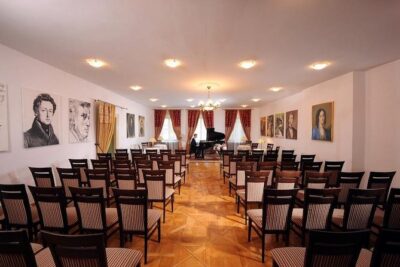
Chopin Piano Concert at Chopin Gallery with a Glass of Wine
Read our review →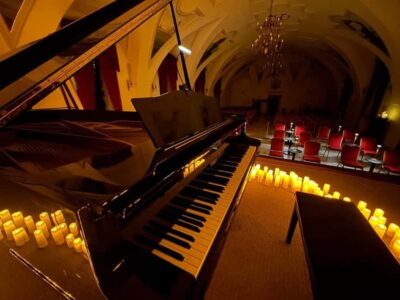
Piano Trio Chopin & Friends Concert VIP with Wine
Read our review →
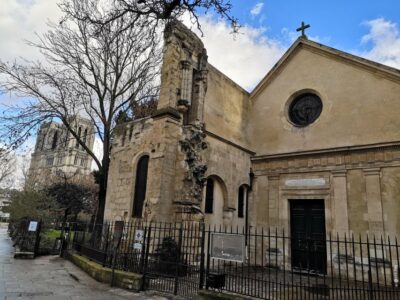
Romantic Piano Concert at Saint-Julien-le-Pauvre
Read our review →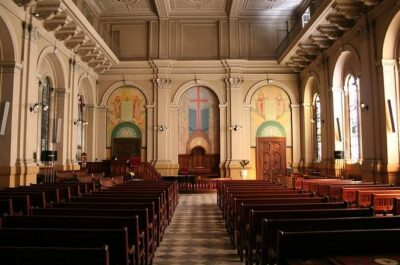
Browse the lists this tour appears in