
REVIEW · AUSTRIA
Vienna: Classical Concert in the historic 1837 Strauss-Hall
Vienna’s musical past takes center stage here. I like the beautiful historic hall and the way the orchestra, soprano, and lights turn familiar Strauss and Mozart pieces into a visual show. The included museum visit and glass of Austrian sparkling wine also make the $76 price easier to justify.
The main thing to consider is the format. This is not a long, traditional symphony concert. Commentary and light effects share the evening with the music, so purists may want more uninterrupted playing. For most visitors, though, it is an inviting introduction to Vienna’s classical culture, especially if you do not spend your evenings in concert halls.
Key points at a glance
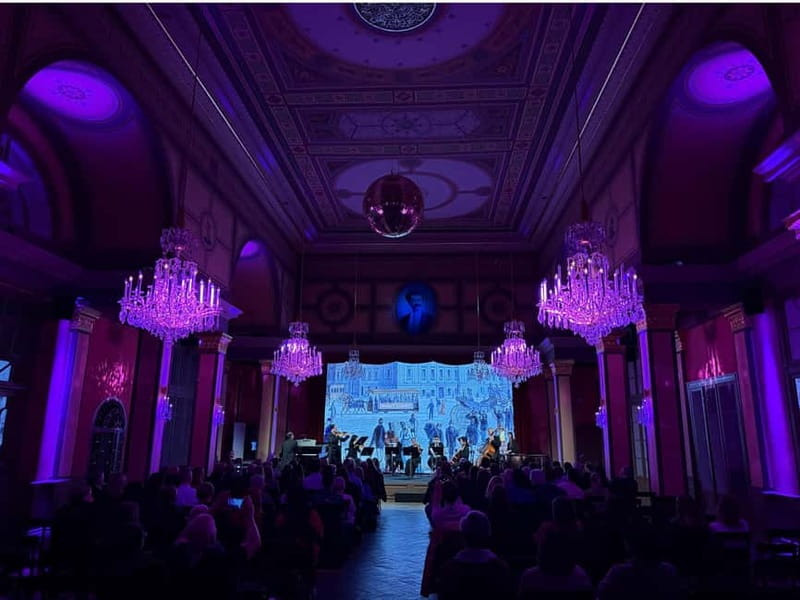
- A concert in the 1837 Strauss Hall: The setting gives the evening its strongest sense of place, with original artwork, ornate decoration, and celebrated acoustics.
- A 12-piece orchestra and soprano: The smaller ensemble creates an intimate feel, while the singer adds dramatic force to selected works.
- The evening begins before the music: Museum entry starts at 7:00 PM, giving you time to explore the Strauss dynasty and Viennese musical life.
- A glass of Austrian sparkling wine is included: The reception takes place in the hall’s stylish octagon at 8:00 PM.
- Music meets projected light: The show uses synchronized visual effects to suggest the mood and story behind each composition.
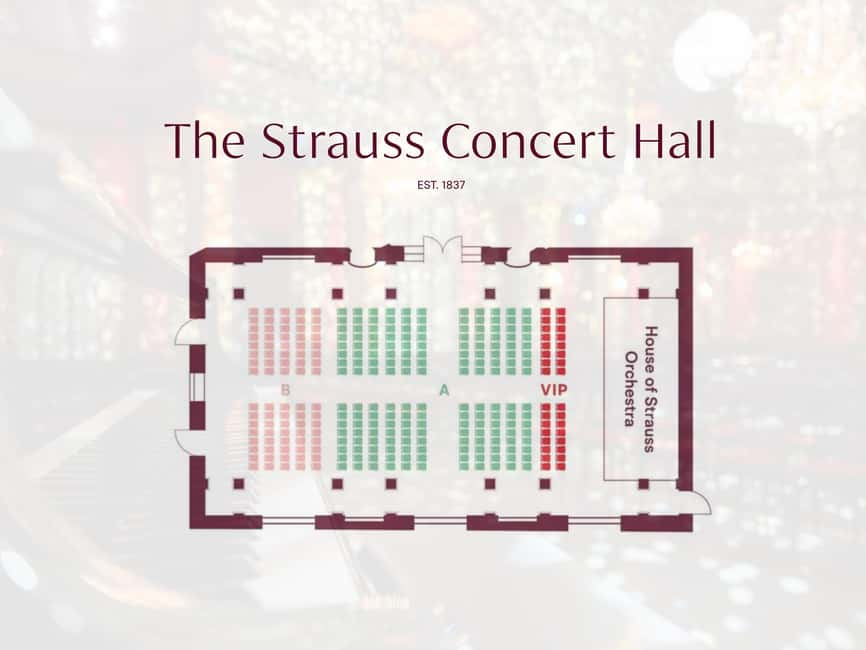
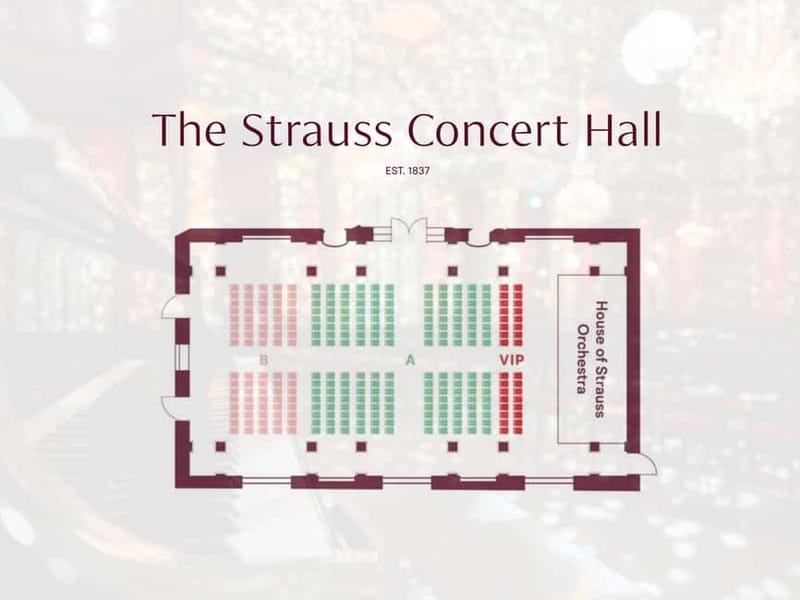
- Three seating categories: VIP rows 1 and 2 offer the closest view, while Category A and Category B still provide clear sightlines and access to the full light show.
Why the Strauss Hall matters
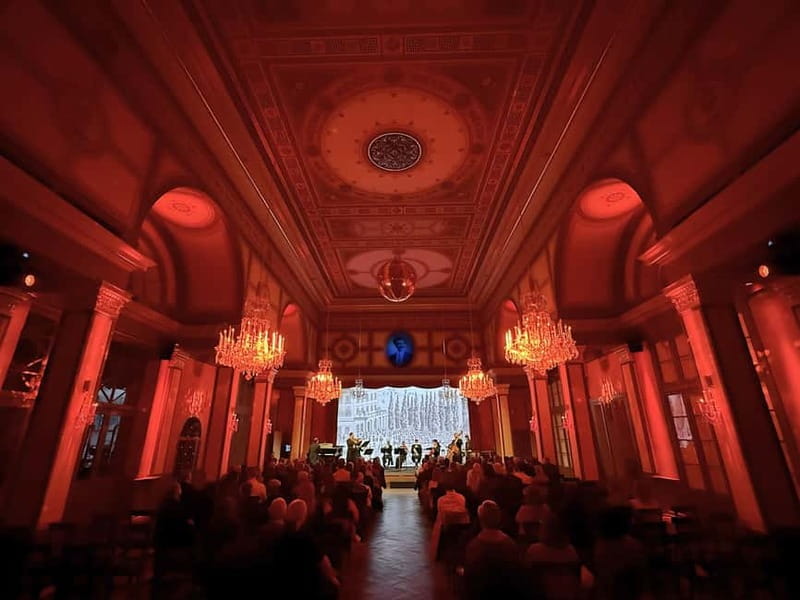
A classical concert can happen in any attractive room. This one takes place in a venue tied directly to Vienna’s Strauss tradition, and that changes the feel of the evening.
The House of Strauss presents the concert in a historic hall dating to 1837. Its painted details, decorative surfaces, and formal design create the sort of setting you hope for when you come to Vienna for waltzes and Mozart. One Austrian attendee described the room as breathtaking, and that reaction is easy to understand. The hall is part of the experience, not just a box around the orchestra.
The venue also has a reputation for clear acoustics. A 12-piece orchestra performs without amplification, which gives the music a natural character. You hear the instruments as a live ensemble rather than through a heavily produced sound system.
There is a trade-off. A smaller orchestra cannot produce the same force as a full symphony orchestra, particularly in a large hall. One audience member felt that the violins sometimes had to work hard to fill the room. I would keep that in mind if you want massive orchestral sound. If you prefer detail, intimacy, and the feeling of hearing musicians in a historic room, this format has real appeal.
More Classical Concerts around Vienna:
- Vienna: Vivaldi’s Four Seasons Concert in Karlskirche
★ 4.7 · 14,951 reviews - Vienna: Classical Concert in the World-Famous Musikverein
★ 4.6 · 6,673 reviews - Vienna: Mozart Concert at the Musikverein – Golden Hall
★ 4.6 · 5,194 reviews
Starting with the Strauss Exhibition at 7:00 PM
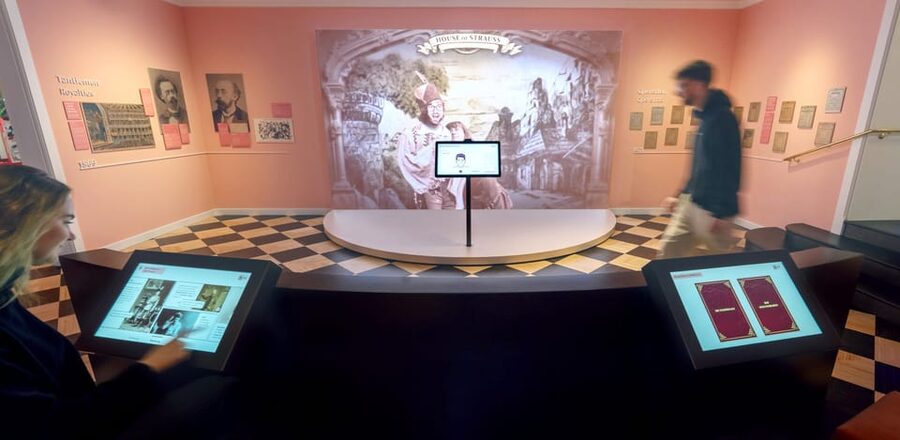
Your evening begins with access to the House of Strauss Museum from 7:00 PM. This is a useful first step because it gives you context before the music begins.
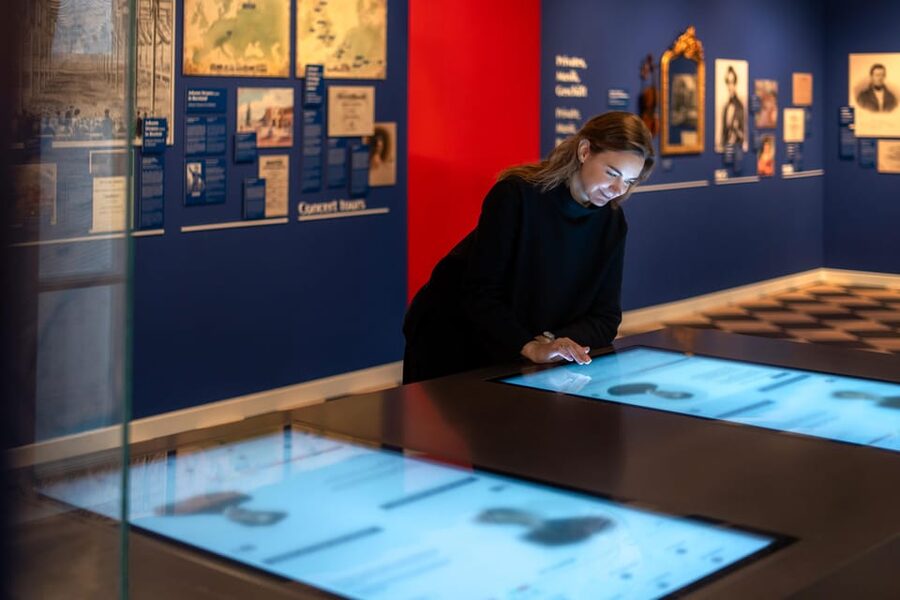
The exhibits cover the Strauss dynasty, its place in Vienna, and the family’s influence on the city’s musical life. Interactive and multimedia displays bring the material beyond standard wall panels. You can spend this time learning how the Strauss name became so closely linked with Viennese waltzes, dance halls, and the city’s golden age of music.
I would arrive close to the museum opening rather than treating it as a quick extra. The schedule gives you an hour before entry to the concert hall, enough time to read the displays without rushing. If you arrive much later, you may feel pressed to choose between the museum and a relaxed start to the concert.
The museum is not the main event, and that matters when you set expectations. Some people will enjoy the background material and visual displays. Others will see it as a pleasant addition and prefer to move quickly toward the music. Either approach works, since the concert does not begin until 8:30 PM.
The 8:00 PM sparkling wine reception
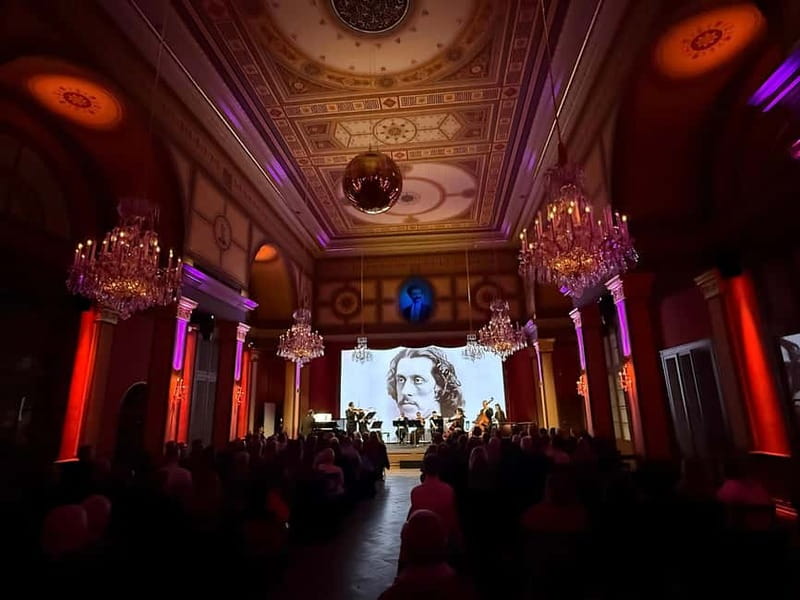
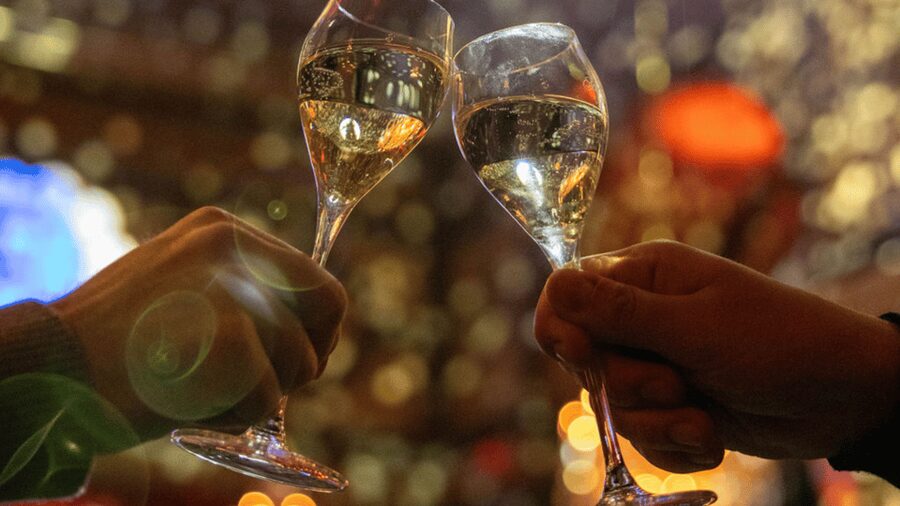
At 8:00 PM, you enter the Strauss Hall and receive a complimentary glass of Austrian sparkling wine. The reception takes place in an elegant octagon, a detail that adds a little ceremony without turning the evening into a formal ordeal.
This is a small benefit, but it helps the event feel like more than a standard seat-and-listen concert. You can take in the decorations, look around the room, and settle into the atmosphere before the performance starts.
Do not book the event mainly for the drink. It is one glass, not a full reception, and the strongest value comes from the hall, museum, orchestra, and production. One attendee who arranged a separate meal at the restaurant praised the food and helpful staff, but that meal is not included in the ticket. If you want dinner beforehand, treat it as an independent plan and allow enough time to return for the scheduled entry.
The reception also gives you a natural pause between the museum and the performance. That makes the evening feel unhurried, even though the full schedule stretches from 7:00 PM to roughly 9:30 PM.
The 8:30 PM performance: Strauss, Mozart, and a soprano
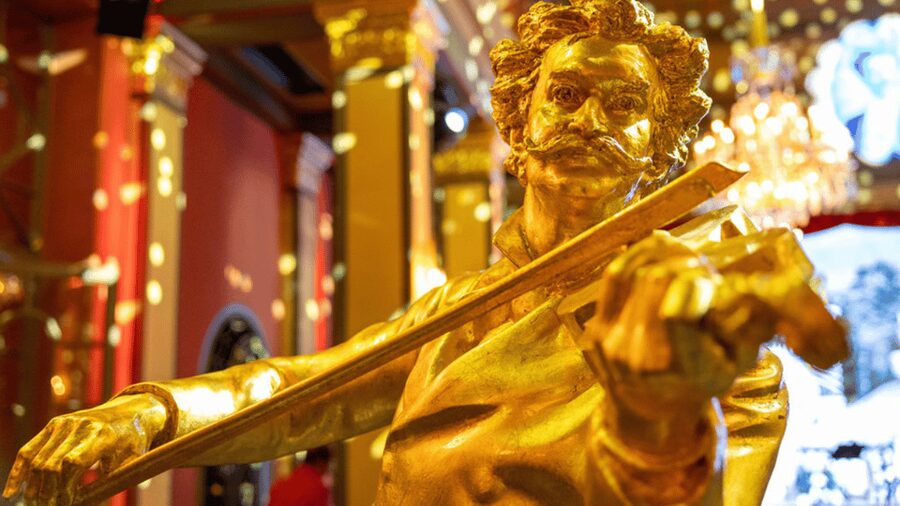
The concert begins at 8:30 PM. The program focuses on Johann Strauss and Wolfgang Amadeus Mozart, two names that carry very different musical personalities.
Strauss brings the Viennese dance tradition: waltzes, polish, motion, and a sense of public celebration. Mozart brings elegance, contrast, and a broader range of emotional color. The program uses both composers to present Vienna as a city of courtly music, grand balls, theatrical feeling, and disciplined craft.
The original Strauss Capelle performs in the hall. The ensemble is relatively small, with 12 musicians, so you get a closer connection to the players than you might in a large concert venue. This is especially valuable if you are new to classical music. You can follow the conversation between instruments more easily, rather than hearing one large wall of sound.
A soprano soloist joins the orchestra for selected pieces. Her role adds a strong emotional change of pace. The evening is not simply one instrumental waltz after another. The voice brings drama and human feeling, particularly in the more theatrical moments.
The soprano does not sing through the entire program, so do not expect a full opera recital. Think of her as a featured color within a mixed concert. That variety is one of the reasons the performance works well for first-time classical listeners.
The commentary is presented in English with German subtitles. This helps explain the music and its setting, though it also takes time away from the playing. One attendee would have preferred more music and less commentary. I can see that point. The spoken sections are useful if you want historical context, but they may feel unnecessary if you already know the composers and their work.
More History and Heritage Tours around Vienna:
- Vienna Mozart Concert in Historical Costumes at the Musikverein
★ 4.5 · 888 reviews - Vienna Classical Concert – Strauss in Historic 1837 Hall
★ 5.0 · 136 reviews - Vienna State Opera House Mozart Concert in Historical Costumes
★ 4.0 · 120 reviews - Porto: An Intimate Fado Show in a Historical Tavern
★ 4.8 · 2,055 reviews
How the light show changes the concert
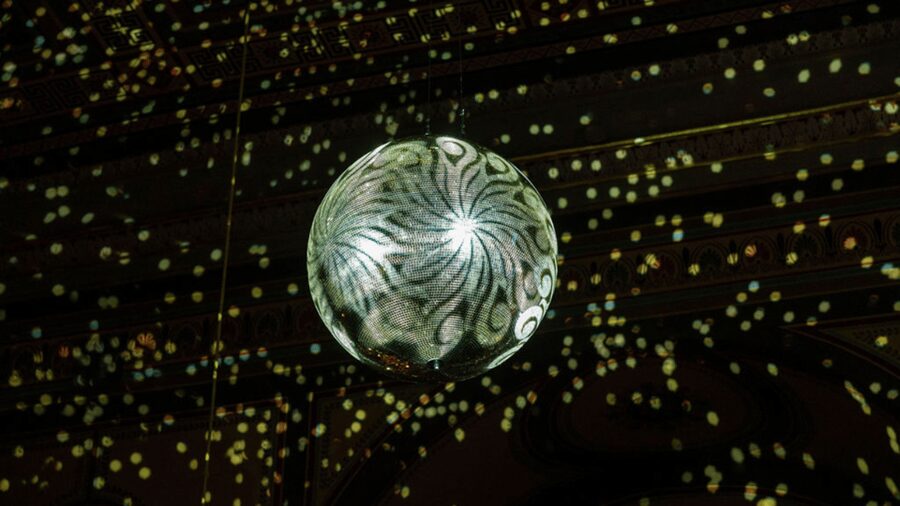
The most unusual part of this experience is the light and sparkle show. Visual effects are synchronized with the music to suggest each piece’s emotion, theme, or historical background.
This is not a silent, candlelit recital. The room changes as the music develops, helping create images of Viennese balls, romance, theatrical drama, and the world behind the compositions. The result is closer to a concert combined with stage design than a strictly traditional classical performance.
I think this works best for people who want a clear story to follow. If you are not familiar with Strauss or Mozart, the lights give you something to connect with while your ear adjusts to the music. The visual material can make the evening more memorable for families and mixed-age groups, too.
For a serious classical listener, the light show may feel like an interruption. The orchestra is good enough to carry the program on its own, and some people will prefer to focus only on sound, architecture, and performance. Category B seats still provide the full light show experience, so the visual effects are clearly intended to be a major part of the design.
The balance is the key. You are not choosing between a concert and a theatrical show. You are buying a hybrid experience that uses music, voice, commentary, and light together.
Choosing between VIP, Category A, and Category B
The seating plan is simple:
- VIP, rows 1 and 2: The closest view and the most direct sense of the performers.
- Category A, rows 3 to 13: Strong visibility and sound without sitting at the very front.
- Category B, rows 14 to 18: A more distant view, with a broad perspective on the light show.
For most people, Category A looks like the sensible middle choice. You remain close enough to see the musicians while avoiding the premium cost of the first two rows. Since the production includes lights across the room, a slightly farther seat may even give you a wider view of the visual effects.
VIP makes sense if the concert is a central event in your Vienna visit, or if you strongly value being near the performers. Category B is a reasonable budget choice if you care more about the overall atmosphere than watching every musician closely.
The information provided does not give exact prices for each seating level, so compare the available categories when booking. At the base price of $76 per person, the museum, sparkling wine, historic venue, and live performance make the package fairly priced for a special evening. A premium seat may still be worthwhile, but I would not assume it is necessary for a good experience.
What the 70-minute duration really means
The experience is listed as lasting 70 minutes, while the evening schedule places museum access at 7:00 PM, hall entry at 8:00 PM, and the concert from 8:30 to 9:30 PM.
The practical lesson is simple: plan on being connected to the venue for the full evening, not just the stated concert duration. The museum and reception are included parts of the visit, but the music itself is the portion that runs from 8:30 to 9:30 PM.
That timing works well with a Vienna sightseeing day. You have the afternoon free, can eat before the museum or arrange a separate meal, and still finish at a reasonable hour. It is also useful for anyone planning another night activity, since the scheduled concert ends around 9:30 PM.
Because there are three stages to the evening, arrive with enough time to enjoy them. Turning up just before the concert means you lose much of the museum and the gradual buildup that makes the event feel special.
Who will enjoy this most
I would recommend this concert to you if you want a polished introduction to Vienna’s classical music without committing to a long, formal symphony program.
It suits:
- First-time visitors who want Strauss and Mozart in a memorable setting.
- Couples looking for a dressy cultural evening with a little ceremony.
- Families and mixed groups who may appreciate the light show and spoken explanations.
- Classical music newcomers who want context as well as music.
- Visitors who care about historic architecture and original artwork.
- Anyone who wants a convenient evening plan with museum access included.
It may be less suitable if you want two hours of uninterrupted music, a full symphony orchestra, or an entirely traditional concert format. The commentary, theatrical touches, and visual effects are deliberate parts of the evening. If those sound distracting rather than helpful, a standard concert may serve you better.
The performance is wheelchair accessible, and commentary is offered in German and English. That makes the event practical for an international audience, with German subtitles supporting the English presentation.
Is $76 a fair price?
At $76 per person, I see this as a midrange cultural evening rather than a bargain attraction. You are paying for several components: entry to the House of Strauss Museum, the multimedia displays, a glass of sparkling wine, a live orchestra, a soprano, the historic venue, and the light production.
The value depends on what you would otherwise book. If you only want live classical music, the ticket may seem high for a 70-minute program. If you want a complete evening with a museum, reception, historic surroundings, and visual presentation, the price becomes easier to defend.
The strongest value lies in the setting and presentation. The original Strauss Capelle, natural sound, preserved decoration, and carefully timed show create something more distinctive than a generic concert in a modern auditorium.
Free cancellation up to 24 hours before the event and the option to reserve now and pay later also reduce the risk when your Vienna schedule is still changing. These are useful practical advantages, but they do not change the basic question: you need to decide if you want a traditional concert or a theatrical introduction to Viennese music.
My verdict on the House of Strauss evening
Book this experience if you want Vienna’s musical identity presented in an accessible, attractive format. The historic 1837 hall, clear acoustics, strong orchestra, featured soprano, and synchronized lights give you plenty to remember after the final piece.
Go in expecting a compact concert with commentary and stage effects, not a full-length orchestral recital. The music remains the heart of the evening, but the museum, sparkling wine, and visual storytelling give it a wider frame.
For a first visit to Vienna, I think that is the point. You leave with a sense of Strauss, Mozart, the Strauss family, and the city’s love of performance. If you already attend classical concerts often, choose your seat carefully and be ready for less uninterrupted music. If you want a beautiful room, a relaxed schedule, and an evening that makes classical music easy to approach, this is a sound choice.
FAQ
Where does the concert take place?
The concert takes place in the historic Strauss Hall at the House of Strauss in Vienna. The venue is associated with the Strauss dynasty and dates to 1837.
What time should I arrive?
Museum access begins at 7:00 PM. Entry to the Strauss Hall is at 8:00 PM, and the concert begins at 8:30 PM. Arrive early if you want time for the museum and sparkling wine reception.
How long is the experience?
The activity is listed as 70 minutes, while the schedule places the museum, hall entry, reception, and concert between 7:00 PM and approximately 9:30 PM. The main performance runs from 8:30 PM to 9:30 PM.
Is sparkling wine included?
Yes. Each ticket includes a complimentary glass of Austrian sparkling wine during the reception in the hall’s octagon at 8:00 PM.
Which composers are performed?
The program celebrates Johann Strauss and Wolfgang Amadeus Mozart, with orchestral works and selected vocal performances by a soprano soloist.
Is the concert wheelchair accessible?
Yes, the experience is wheelchair accessible. Commentary is available in German and English, with German subtitles supporting the English presentation.
Just added around Vienna
- Vienna: Romantic Classics Piano, Violin, and Cello Concert★ 4.7 · 60 reviews
- Vienna: Sunday Brunch Danube Cruise & Live Music★ 4.2 · 42 reviews
- Vienna: Concert by the Vienna Baroque Orchestra★ 4.6 · 56 reviews
- Vienna: Musical Tickets THE PHANTOM OF THE OPERA★ 4.9 · 132 reviews
- Vienna Private Walking Tour including State Opera★ 3.2 · 7 reviews
- Vienna Supreme Orchestra at Palais Niederösterreich★ 4.8 · 10 reviews
- Vienna: Mozart Concert with Dinner and Carriage Ride★ 4.8 · 25 reviews
- Vienna: Baroque Orchestra Concert and Dinner★ 4.6 · 18 reviews
Classical Concerts, compared.
Vivaldi’s Four Seasons Concert in Karlskirche
Read our review →
Classical Concert in the World-Famous Musikverein
Read our review →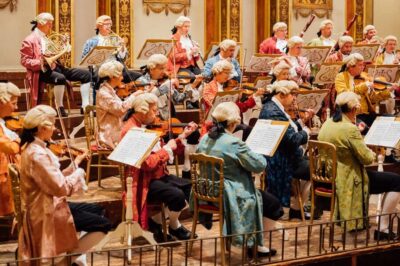
Mozart Concert at the Musikverein – Golden Hall
Read our review →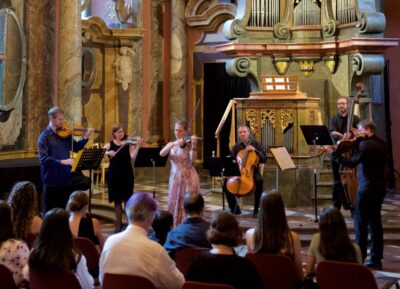
Entry Ticket Classical Concert at the Mirror Chapel
Read our review →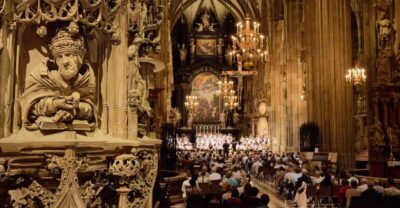
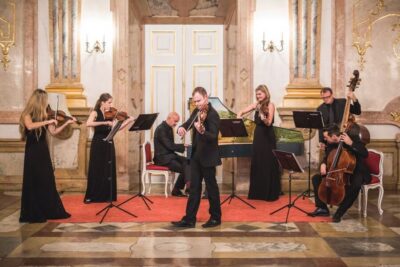
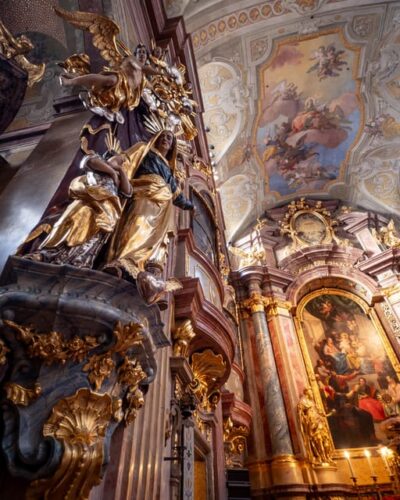
Classical Concert in St. Anne’s Church (Annakirche)
Read our review →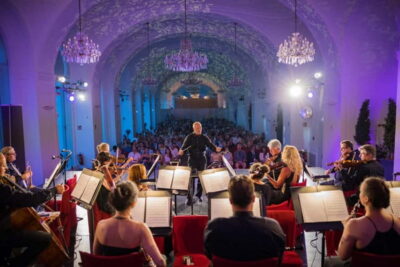
Browse the lists this tour appears in