
REVIEW · AUSTRIA
Vienna Private Walking Tour including State Opera
Vienna rewards curious walkers. This three-hour private tour links Roman Vindobona, Habsburg power, famous composers, wartime history, and central Vienna’s grandest buildings in one compact route. I like the way it connects political history with classical music, and I like the private format, which gives your group of up to 15 a more personal pace than a large sightseeing crowd. The main concern is the State Opera promise, since access may be limited to the lobby and a full opera tour may require another ticket.
The route covers a lot in three hours, so you should expect an overview rather than a slow study of each site. Comfortable shoes matter, and the tour is not suitable for people with mobility impairments. One German-language booking described an excellent, engaging guide, while another raised serious concerns about political comments and the handling of Nazi persecution. That makes the guide assigned to your group especially important.
Key things to know before you book
- The State Opera visit may be only a lobby stop: Do not assume the advertised opera visit includes backstage rooms, the auditorium, or a full guided tour.
- You see Vienna’s central core on foot: The route links Stephansplatz, the Graben, the Hofburg, Michaelerplatz, the Mozart Monument, and major museum facades.
- The history runs from Rome to the Second Republic: You get a broad timeline covering Vindobona, the Habsburgs, the Holy Roman Empire, the Austro-Hungarian Empire, both World Wars, and postwar Austria.
- The group is private: The price is $323 for up to 15 people, so the value improves sharply when shared by a larger family or group of friends.
- Guiding quality matters: One three-hour tour was described as highly competent and entertaining, while another account reported offensive and politically charged commentary.
- It is a walking tour, not an attraction pass: Entrance fees are not included, so budget separately for any paid interior visit.
Starting at Stephansplatz and Vienna Cathedral
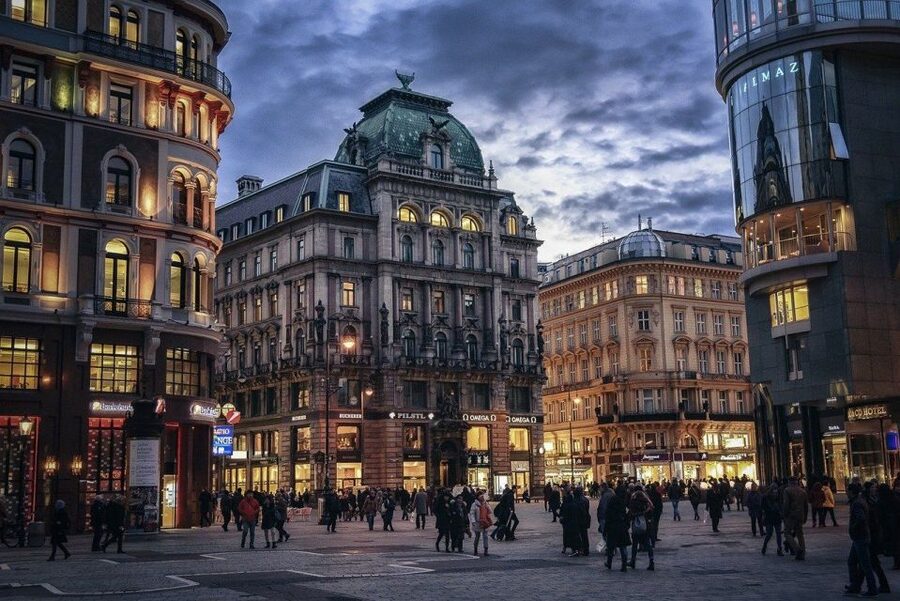
The listed meeting point is Stephansplatz 8A in central Vienna. This puts you beside Stephansdom, the city’s huge cathedral and one of Vienna’s most recognizable buildings.
Stephansdom combines Romanesque and Gothic elements, with a long history reaching back centuries. The cathedral’s height and scale help explain why it became such a strong symbol of Vienna. Here, your guide can set the scene for the city’s growth from a Roman settlement to the political center of a major European dynasty.
I like starting here because Stephansplatz gives you an immediate sense of Vienna’s layers. Medieval religious power, imperial ambition, modern shopping streets, and everyday city life all meet in one square.
The tour does not promise a separate cathedral entrance or tower visit. Treat the building as an important exterior landmark unless your guide confirms that you will go inside. If you want a longer look at the cathedral, ask before the walk begins so you know how much time is available.
More Live Music around Vienna:
- Vienna: Vivaldi’s Four Seasons Concert in Karlskirche
★ 4.7 · 14,951 reviews - Vienna: Classical Concert in the World-Famous Musikverein
★ 4.6 · 6,673 reviews - Vienna: Mozart Concert at the Musikverein – Golden Hall
★ 4.6 · 5,194 reviews
The Roman roots beneath modern Vienna
Vienna’s old center is not simply a collection of imperial facades. Parts of it follow the shape of the Roman settlement known as Vindobona, and the route points out Roman remains in the area around Michaelerplatz.
This is one of the tour’s more useful historical connections. Instead of presenting Vienna as a city that suddenly appeared under the Habsburgs, the guide traces its earlier role as a Roman settlement and later medieval center.
You may see ancient Roman ruins in the square, along with sections of medieval walls and remnants connected with the old Burgtheater. These remains are not a large archaeological park. They are fragments in the middle of the modern city, which means your guide’s explanation is important. Without context, they can be easy to overlook.
That is also a limitation. If you want a long archaeological visit, this tour will feel too quick. The value is in understanding how the city’s street plan and central landmarks developed over time.
The Hofburg, Michaelerkirche, and Habsburg power
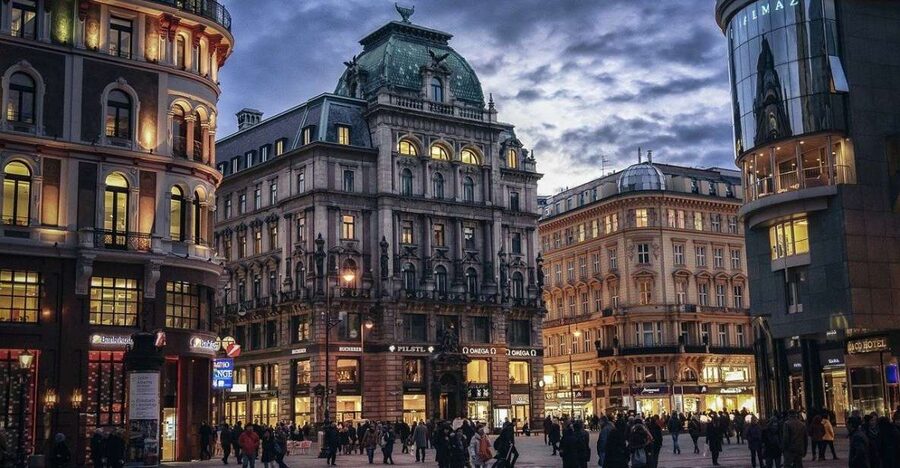
From the Roman and medieval remains, the route moves toward the Hofburg, the immense palace complex that served as the Habsburg seat for centuries. Its facades tell you plenty before you enter. This was a ruling family’s working center, not merely a royal residence built for display.
The tour places the Hofburg within the larger story of the Holy Roman Empire and the Austro-Hungarian Empire. That broader frame is useful because Vienna’s buildings can otherwise blur into one long parade of grand architecture.
At the Michaelertor gate, you get a look at Michaelerkirche, or St. Michael’s Church. It served as the official church of the emperors for many years. The church’s location near the Hofburg shows how closely religious ceremony and dynastic government were tied together.
The route focuses on exteriors. Entrance fees are not included, and the tour description does not promise admission to the palace museums, imperial apartments, or church interior. You should see this portion as a guided introduction that can help you choose which interiors to visit later.
Mozart, museums, and Vienna’s fine arts
The Mozart Monument adds a musical stop to the imperial route. Mozart is only one name in Vienna’s long list of composers, but he provides a natural bridge between the city’s court culture and its public musical life.
The tour also points out the facades of the Art History Museum and the Hofburg. Vienna’s major museums reflect the collecting power of the Habsburg rulers and the city’s role as a center for European art.
You will not receive a full museum visit during a three-hour walk. Instead, you get help placing these buildings within Vienna’s cultural story. I find that useful if you are visiting for the first time and want to decide where to spend a separate afternoon.
The itinerary also refers to 19th and 20th-century fine arts. That keeps the tour from treating Vienna as a city frozen in imperial times. Still, the exact works, artists, and galleries covered can depend on the guide, so ask whether art is a major focus if that is your chief interest.
Same city, a different sound:
- Vienna: Classical Concert in St. Anne’s Church (Annakirche)
★ 4.6 · 3,414 reviews - Vienna: Mozart and Strauss Concert at Schönbrunn
★ 4.5 · 2,967 reviews - Vienna: Classical Concert at Mozart’s First House
2,423 reviews - Vienna Classical Concert at St. Peter’s Church
★ 4.5 · 2,039 reviews
Walking the Graben and old city center
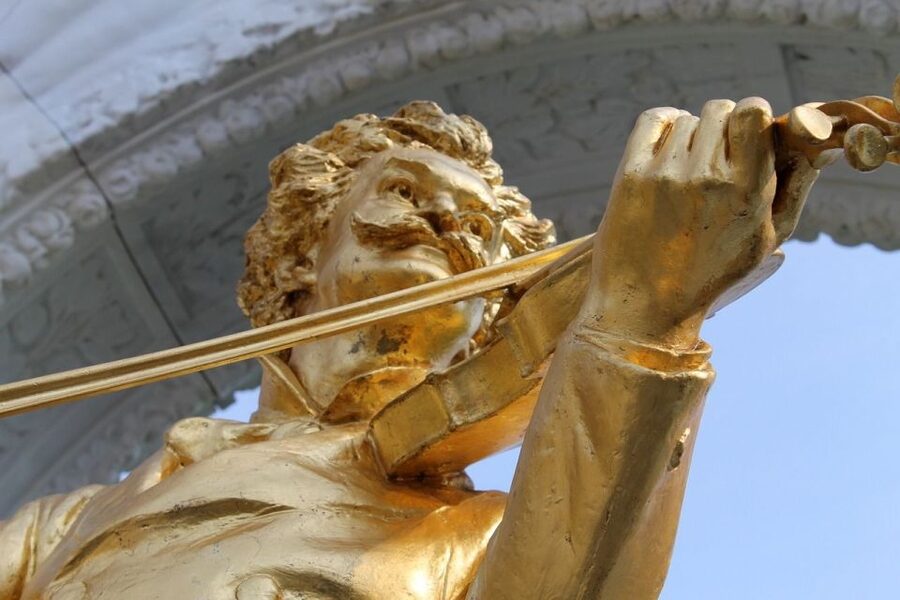
The Graben is one of Vienna’s most famous streets, and the tour connects it to the Roman past. Its name and layout reflect the city’s earlier defenses and development.
The route also includes a colorful historical detail involving Richard the Lionheart, who is associated with entering Vienna through this area. Stories like this can make an ordinary shopping street easier to remember, though the walk is still a live guide’s interpretation rather than a full medieval history course.
You continue toward Peterskirche, or St. Peter’s Church. The site is described as dating back to the fourth century, making it another reminder that Vienna’s religious history reaches much further back than the Baroque and imperial buildings most people notice first.
This part of the walk should be visually rewarding, but it can also be busy and distracting in the central city. Keep your attention on the guide, especially when crossing streets or moving through crowded public areas.
The State Opera and the biggest booking question
The Vienna State Opera is the tour’s headline attraction. Its history reaches back to the 1860s, when it was known as the Vienna Court Opera. The name changed in 1920 as Austria’s early republic took shape.
The building is tied to major works including La Traviata, La Clemenza di Tito, and Verdi’s Don Carlo. It has also been associated with celebrated directors such as Gustav Mahler, Herbert von Karajan, and Claudio Abbado.
That background makes the opera stop worthwhile even if you are not attending a performance. It gives you a place to connect Vienna’s political past with its living music culture. The city’s identity is closely tied to Mozart, Haydn, Beethoven, Schubert, the Strauss family, Brahms, Mahler, and many others.
But you need to clarify what visit the State Opera means before paying. One booking described the opera portion as a visit to the lobby only. Another said the guide explained that a proper opera tour had to be booked separately and paid for in addition. The activity information also lists entrance fees as excluded.
In practical terms, do not assume the $323 group price buys a full guided tour of the opera house. Ask the provider exactly what is included: lobby access, an official interior tour, an auditorium visit, or simply an exterior explanation. Opera access can depend on the building’s schedule, and the starting time has reportedly been shifted to accommodate opera tours.
If the opera is your main reason for booking, this question matters more than almost anything else. If your priority is a broad central Vienna walk, the opera still adds useful context even with limited interior access.
Vienna’s difficult 20th-century story
The tour also promises coverage of the World Wars and the birth of Austria’s Second Republic. This is important because Vienna’s grand imperial image can hide the city’s later upheavals.
A good guide should explain the collapse of the Habsburg world, the changes brought by the First World War, the Nazi period, the destruction and hardship of the Second World War, and Austria’s postwar political rebirth. The route through the old center may include references to the Jewish quarter and the persecution of Vienna’s Jewish population.
This subject requires care and precise language. Systematic murder during the Nazi era should not be softened into vague phrases about people simply dying or passing away. One account of a German-language tour reported deeply troubling comments about Jewish victims and modern politics. I cannot treat that as a minor style difference. If your guide makes prejudiced or politically inflammatory remarks, you are reasonable to challenge the wording or end the tour.
At the same time, another German-language booking described the guide as highly competent and said the three hours passed quickly. That contrast suggests an uneven experience rather than a uniformly poor one. Ask for a guide who can handle Austria’s wartime past with factual accuracy and respect.
How the private format affects value
The price is $323 per group, with up to 15 people included. For one or two people, that is a costly walking tour. For a family, reunion group, or several couples, the arithmetic becomes more appealing.
At the full group limit, the cost works out to about $22 per person. With six people, it is roughly $54 per person. With only two, it is about $162 each, before any separate entrance fee for the opera.
The private format gives you a chance to ask questions and request a reasonable pace. It also means the tour is not priced per person, which can make it a sensible choice for a larger group that wants one guide rather than several public tours.
The drawback is that a private booking does not automatically guarantee a private experience of the State Opera. You are paying for the guide and walking route, while admission remains separate. Confirm the opera arrangements in writing before you commit.
Who will enjoy this three-hour route
I would choose this tour if you want a quick orientation to Vienna’s historic center and prefer a guide who can connect buildings to politics, music, art, and imperial history.
It suits:
- A first visit to Vienna
- Families or groups of friends who can share the fixed group price
- People interested in Habsburg history and classical music
- Visitors who want a central walking route without arranging several separate stops
- English or German speakers who value a live guide
I would hesitate if you have serious mobility limitations, want long interior visits, or care mainly about a full State Opera tour. The route has many landmarks, but the information provided does not promise extended time inside each one.
The language choice is English or German. The guide assigned to you can make a large difference, especially during the sections covering the Nazi era, Jewish persecution, and current politics.
Small practical details that matter
Wear comfortable shoes. The tour lasts three hours and links several central sites on foot.
The meeting point is Stephansplatz 8A, 1010 Vienna. Check the starting time carefully, since opera access may affect scheduling. The activity offers free cancellation up to 24 hours before the start and allows you to reserve now and pay later, which helps if your Vienna plans are still moving around.
The group is private, but the tour is not suitable for people with mobility impairments. Entrance fees are not included, so ask about the opera cost before the day of the tour.
The stated languages are English and German. If you book in German, pay attention to the guide’s approach to difficult historical subjects and do not hesitate to ask for clear, respectful explanations.
Should you book the Vienna private walking tour?
Book it if you want a broad, guide-led introduction to central Vienna and can share the $323 price with a larger group. The route covers an unusually wide span, from Roman Vindobona to the Habsburg court, famous composers, museum culture, the opera, and Austria’s postwar republic.
Book with caution if the State Opera is the main attraction. The available information points to a possible lobby-only visit or a separate paid opera tour, so you must confirm that detail first.
I would also ask who will guide the tour and how the modern history portion is handled. One guide earned praise for making three hours pass quickly, while another account described offensive remarks that would seriously damage the experience. The itinerary has real promise, but the quality of the guide and the exact opera access are the two details that decide its value.
FAQ
How long is the Vienna private walking tour?
The tour lasts three hours.
Where does the tour meet?
The meeting point is Stephansplatz 8A, 1010 Vienna, Austria.
Is the State Opera entrance included?
The activity includes a visit to the State Opera, but entrance fees are not included. One booking described the visit as limited to the lobby, while another indicated that a fuller opera tour required separate booking and payment. Confirm the exact access before booking.
What languages are available?
The live tour guide speaks English or German.
How many people can join the private group?
The price of $323 covers a private group of up to 15 people.
Is the tour suitable for people with mobility impairments?
No. The activity is listed as unsuitable for people with mobility impairments. Comfortable shoes are recommended.
Just added around Vienna
- Vienna: Romantic Classics Piano, Violin, and Cello Concert★ 4.7 · 60 reviews
- Vienna: Sunday Brunch Danube Cruise & Live Music★ 4.2 · 42 reviews
- Vienna: Concert by the Vienna Baroque Orchestra★ 4.6 · 56 reviews
- Vienna: Musical Tickets THE PHANTOM OF THE OPERA★ 4.9 · 132 reviews
- Vienna Supreme Orchestra at Palais Niederösterreich★ 4.8 · 10 reviews
- Vienna: Mozart Concert with Dinner and Carriage Ride★ 4.8 · 25 reviews
- Vienna: Classical Concert in the historic 1837 Strauss-Hall★ 4.5 · 39 reviews
- Vienna: Baroque Orchestra Concert and Dinner★ 4.6 · 18 reviews
Tours, compared.
Liverpool: City & Beatles Tour with Live Guide & Live Music
Read our review →Sydney Opera House Official Guided Walking Tour
Read our review →
Alfama Tour and Live Fado with Traditional Dinner
Read our review →
Schönbrunn Palace Evening Tour, Dinner and Concert
Read our review →Browse the lists this tour appears in