
REVIEW · AUSTRALIA
Sydney: Sydney Opera House VIP Backstage Tour and Breakfast
The Opera House has a backstage life. I like the small-group access to rehearsal rooms and working areas, and I like hearing the building’s less polished, more human stories from guides such as Bruce, Alan, Marcus, and Suanne. The Green Room breakfast is a fine finish, too.
The catch is physical: you will climb more than 300 stairs, wear enclosed rubber-soled shoes, and leave cameras and large bags behind. At $140 per person, this is not a cheap morning, but the early access and restricted areas give it real value for anyone curious about theatre, design, or the Opera House beyond its famous sails.
Key points to know before you go
- Start at Stage Door: Meet beneath the Monumental Stairs at Bennelong Point, where performers and crew enter.
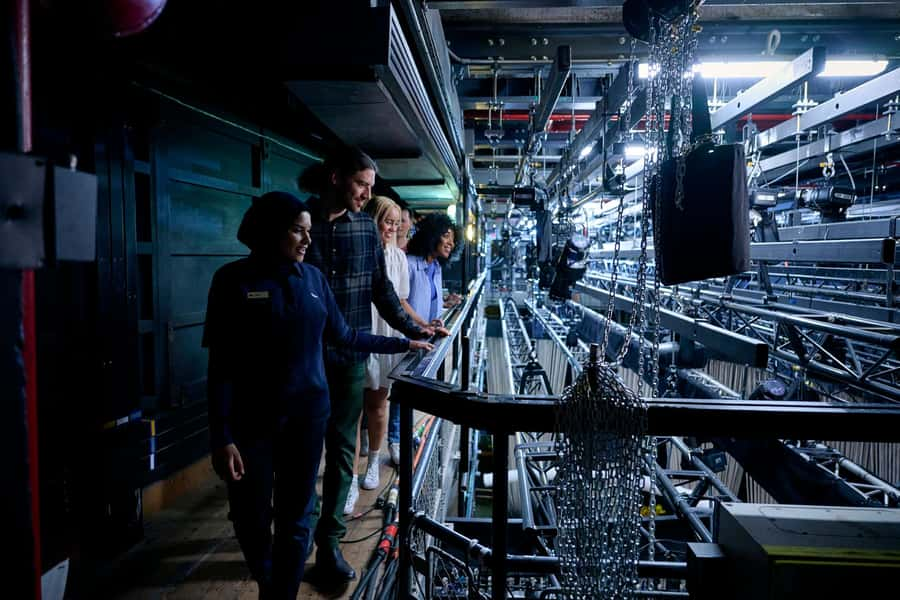
- See working theatre spaces: The route can include backstage zones, rehearsal rooms, performance venues, and areas normally closed to the public.
- Expect more than 300 stairs: This is an active walking tour, not a gentle architectural visit.
- Breakfast has a special setting: The meal takes place in the Green Room, an area associated with performers and crew.
- Small groups matter: Groups can be as small as six, with a stated maximum of 12, making it easier to ask questions.
- Arrive early and pack light: You need to arrive 10 to 15 minutes before departure, and large bags must be cloaked.
Meeting the Opera House at Stage Door
Your morning begins at Stage Door, beneath the Monumental Stairs at the Sydney Opera House. This is a better starting point than the usual visitor entrance because it puts you close to the building’s working side from the first minute.
The public sees the Opera House as a grand waterfront symbol. Stage Door gives you a different picture. This is where actors, musicians, dancers, stagehands, and famous names have entered before performances. The setting helps shift your attention from the white shells and harbour views to the people who keep the place running.
You should arrive 10 to 15 minutes early. That gives the group time to gather and avoids a rushed start. The tour lasts 150 minutes, so this is a substantial morning activity rather than a quick add-on before sightseeing elsewhere.
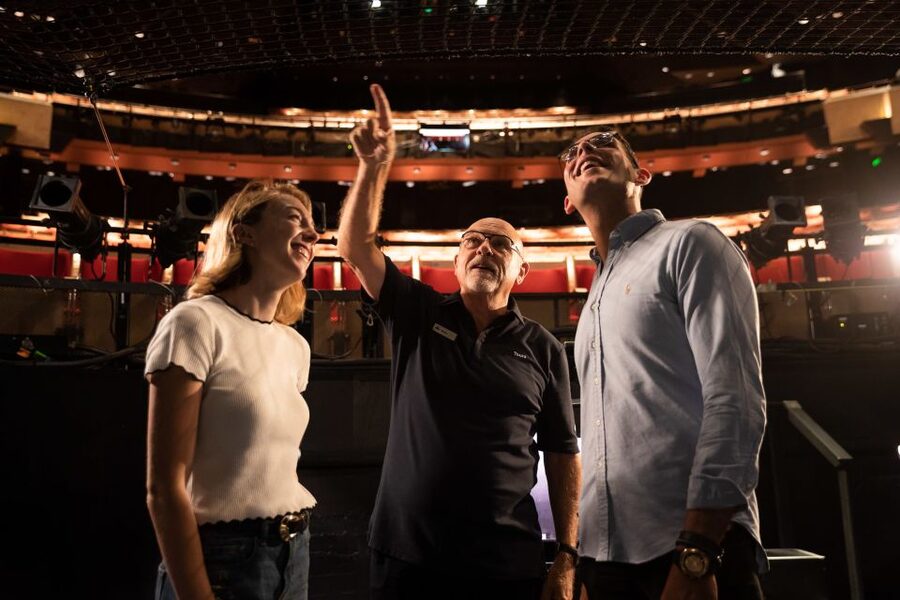
The group size is one of the experience’s strengths. A group may be as small as six, and the stated maximum is 12. That gives you a better chance to hear the guide clearly and ask about the odd details that make a building come alive. Guides including Bruce, Alan, Marcus, Nick, Suanne, and Janet have been praised for mixing facts with humour and personal stories.
More Opera House Tours around Sydney:
- Sydney: Opera House Guided Tour with Entrance Ticket
★ 4.8 · 8,312 reviews - Sydney Opera House Official Guided Walking Tour
★ 4.5 · 3,770 reviews - Sydney: Sunrise Kayak, Opera House & Under Harbour Bridge
★ 5.0 · 869 reviews
Walking through spaces the public rarely sees
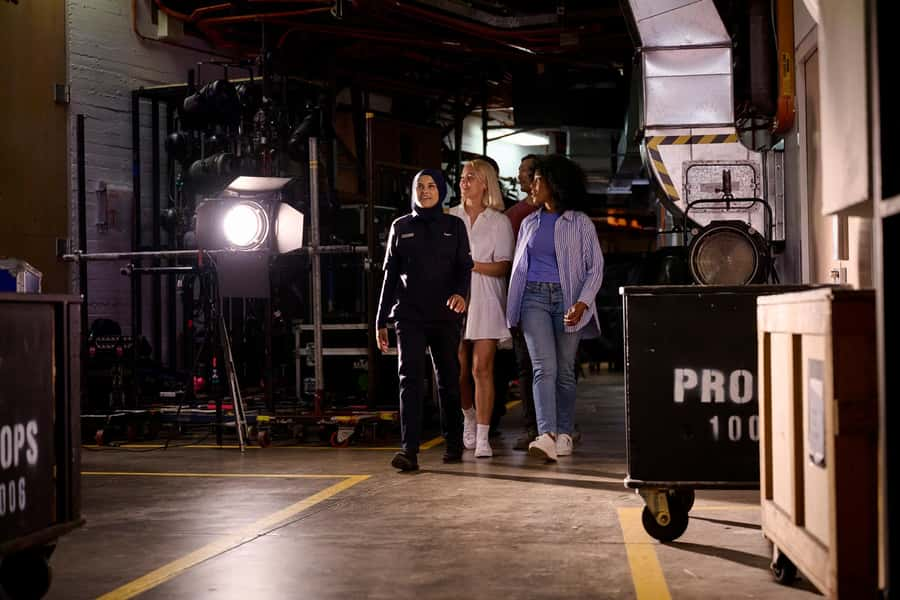
The main reason to book this tour is access. You move beyond the familiar public foyers and enter backstage areas, rehearsal spaces, and parts of the performance complex that are not normally open to the general public.
Exactly what you see depends on what is happening inside the building that morning. Venue access is subject to availability, and performers or stage crews may need certain areas for their work. That uncertainty is worth understanding before you book. You are paying for special access, but the route cannot be fixed like a museum exhibition.
The early start helps. In the morning, some backstage areas may be easier to visit before the day’s performances and rehearsals gather pace. One especially useful tip is to consider a Sunday, when there may be fewer workers in the building and, as a result, more room for access. This is not a guarantee, but it can improve your odds.
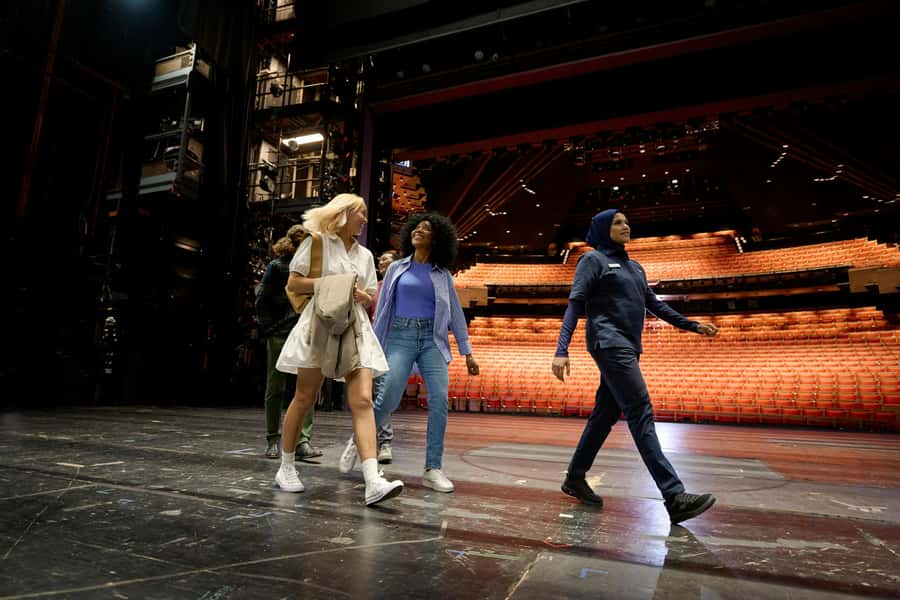
You might enter more than one performance venue during the tour. The Opera House is not simply one auditorium under a famous roof. It is a complex of performance spaces, each with its own backstage needs, entrances, equipment, and technical challenges.
That variety keeps the visit moving. One moment you are hearing about a performer’s routine, and the next you are looking at the practical problem of moving a large set through the building. The tour makes theatre feel less like a finished product and more like a carefully managed piece of machinery.
The technical side of theatre
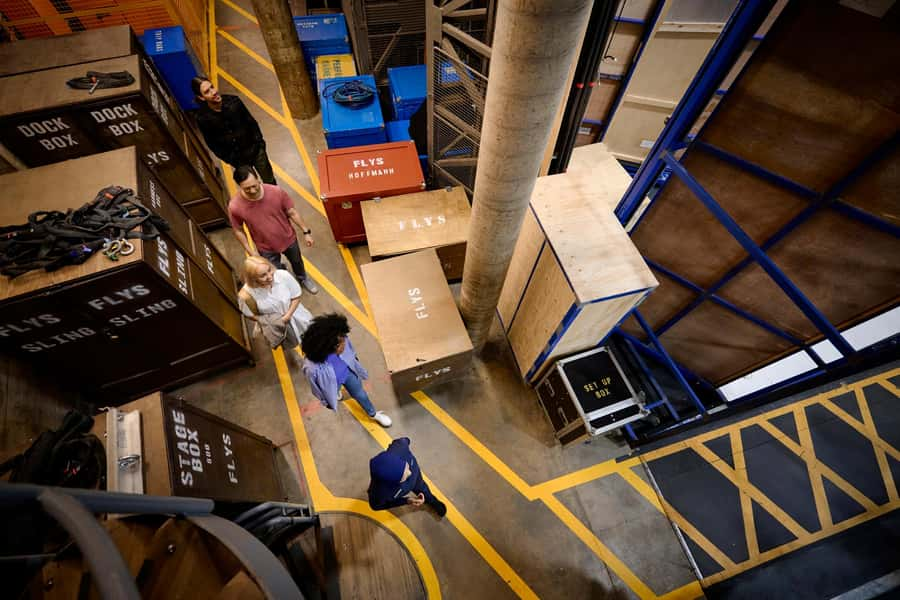
The best part of this experience is often the practical explanation of how shows happen. You learn how sets are moved, how backstage areas support performances, and how a venue designed for beauty must also handle heavy equipment, tight schedules, and large crews.
That perspective changes the way you see the Opera House later. The building’s famous exterior is only one layer. Behind the walls are rehearsal areas, loading and movement routes, stage machinery, storage needs, and working spaces that must function even when the architecture seems delicate.
Stories about construction add another useful layer. Guides explain the building’s development and the challenges involved in creating such a complex venue. You are not only looking at a landmark. You are learning why the building works as a performance centre and why its design created such demanding practical problems.
I especially like that the information is tied to places you can see. A fact about the Opera House is easy to forget. A story told beside a stage, rehearsal space, or backstage passage has a physical reference, so it sticks.
The guide makes a big difference here. Alan is repeatedly praised for his warmth, humour, and command of the building. Marcus is described as friendly and highly informed, while Bruce brought both wit and a strong grasp of Sydney and the Opera House. Suanne was praised for her enthusiasm and affection for the building.
The quality of individual guides can vary on any guided tour, but this experience appears to rely heavily on people who enjoy telling the story. That is good news if you like conversation and anecdotes. It also means the tone may be more lively than a formal audio guide.
A closer look at the stages and rehearsal areas
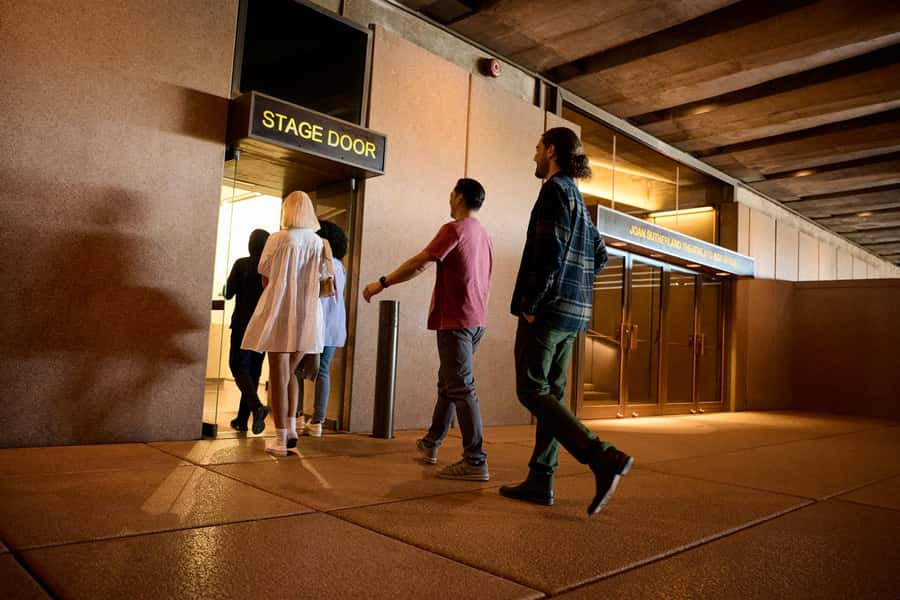
The tour can take you behind the stage and into the surroundings used by performers. This is where the visit feels most different from a standard Opera House stop.
A normal visit gives you time to admire the design, take in the harbour setting, and perhaps attend a performance. The backstage route shows the less glamorous side: corridors, working areas, equipment, and the spaces performers use before they appear in front of an audience.
You may also hear real-life stories about stars who have passed through Stage Door. These stories give the building a human scale. A famous venue can feel distant and formal from the outside. Personal stories make it easier to picture the nerves, routines, and last-minute activity that happen before the curtain rises.
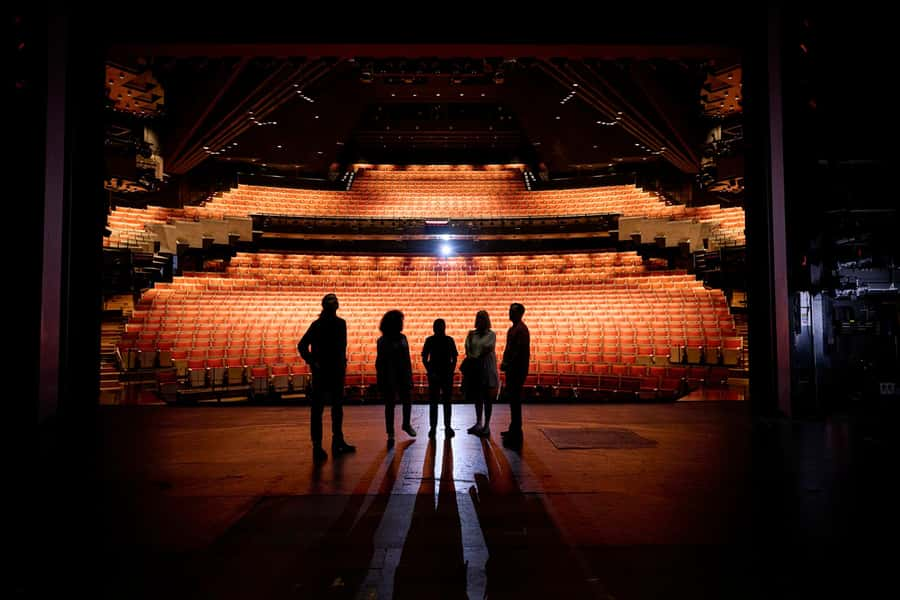
The route may include a chance to see one or more performance spaces from a different angle. The exact areas are not guaranteed, so you should not book with one specific stage in mind. Instead, think of the value as access to the working system of the building.
One past participant was even invited to sing on the Joan Sutherland Theatre stage after mentioning a passion for performance. That sort of moment cannot be promised, but it shows how a good guide can respond to the interests of a small group.
If you love theatre, the backstage details may be the main event. If you do not, the engineering and building stories still give the tour a clear purpose. The experience works for theatre fans, architecture enthusiasts, and curious first-time visitors alike.
More VIP Concert Tickets around Sydney:
- Sydney Opera House VIP Experience: Guided Tour, Dinner & Drinks
★ 4.5 · 61 reviews - VIP Jazz Dinner Cruise with Private Tour and Open Bar Option
★ 4.5 · 838 reviews - Frenchmen Street VIP Live Music Pub Crawl in New Orleans
★ 4.5 · 613 reviews - Best of Mozart Concert and Dinner or VIP Dinner at Fortress Hohensalzburg
★ 4.5 · 598 reviews
Breakfast in the Green Room
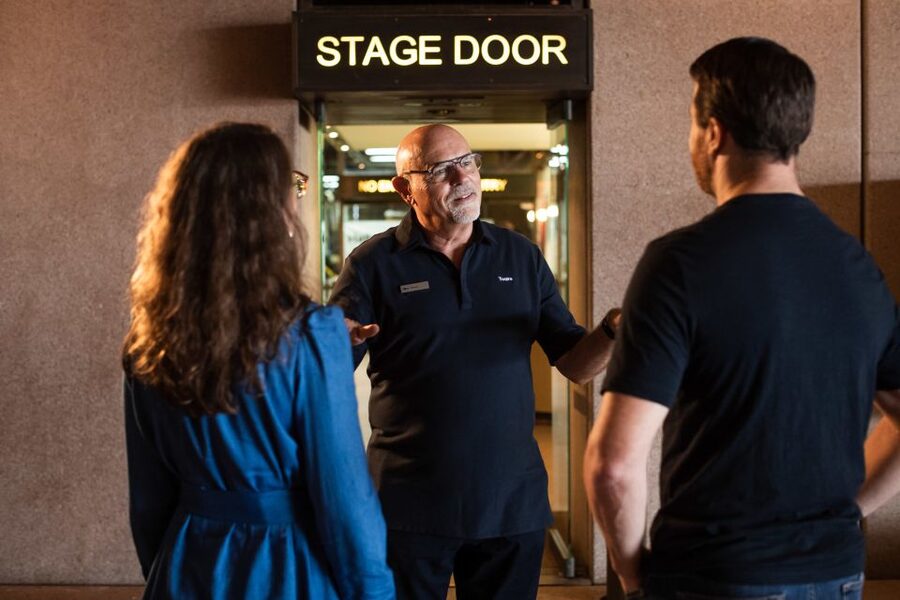
After the walking portion, you sit down for breakfast in the Green Room. This is not just a convenient meal at the end of the route. The setting is part of the appeal.
The Green Room is described as an exclusive area for crew and performers. Eating there gives you a final look at the Opera House from its working side, after you have spent the morning following the routes used by the people who put on the shows.
Breakfast also gives the group time to relax and talk. The stairs and long walk make the food welcome, and several people found the portions generous or the meal better than expected. One person called it fantastic, while another said it was delicious and much needed after the stairs.
The meal is included in the $140 price, along with the guided backstage tour. It does not turn the experience into a bargain, but it helps the price feel more reasonable. You are paying for a small group, a specialist guide, unusual access, and a meal in a restricted area, rather than for a standard walk through public rooms.
If your main goal is only to see the exterior of the Opera House, this price is too high. You can enjoy the building and harbour setting without booking a backstage tour. But if you want access that a normal visit does not provide, the breakfast adds a pleasant and useful finish.
The 300 stairs are not a minor detail
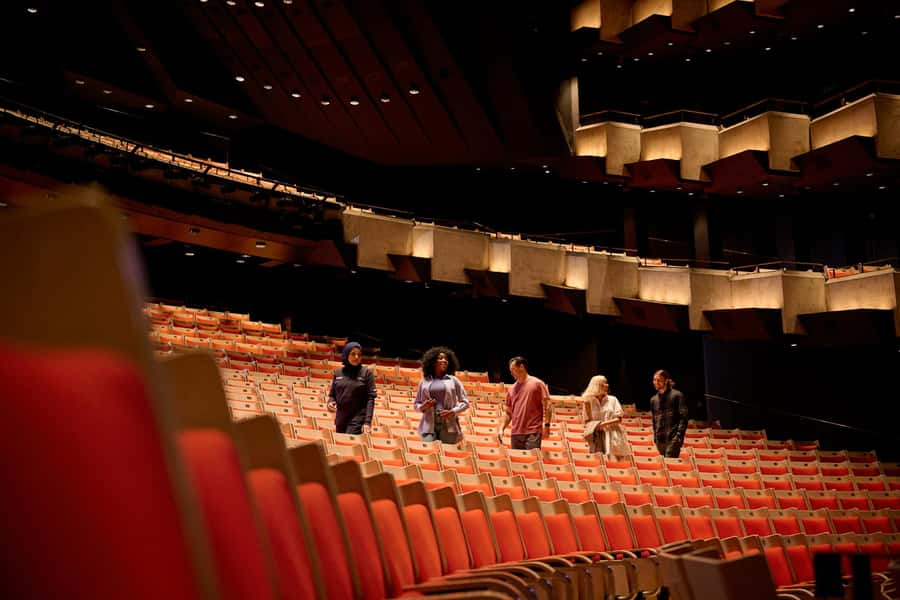
The physical demands deserve plain warning. The tour includes more than 300 stairs, and it is not suitable for wheelchair users or people with mobility impairments.
You must wear flat, enclosed shoes with rubber soles. This is partly about comfort and partly about safety in working areas. Sandals, high heels, and smooth-soled shoes are poor choices for a morning of stairs and backstage walking.
The route may feel tiring even if you are generally active. Breakfast comes at the end, so you should not expect the meal to break up the walking halfway through. If stairs are difficult for you, the access benefits will not outweigh the strain.
Children aged 10 and under are not permitted. Older children may enjoy the engineering and performance stories, but the early start, stair count, and quiet backstage setting are better suited to teenagers and adults.
Large luggage and backpacks must be cloaked. Bring only what you need for the tour. Cameras and video recording are not allowed, so do not plan to document every room. That rule can be disappointing for anyone who wants photographs of restricted areas, but it also keeps the visit focused on listening and moving safely through working spaces.
Face masks are strongly recommended. You should also follow any instructions from the guide, since access can change when rehearsals, performances, or crew activity require privacy.
Is $140 good value?
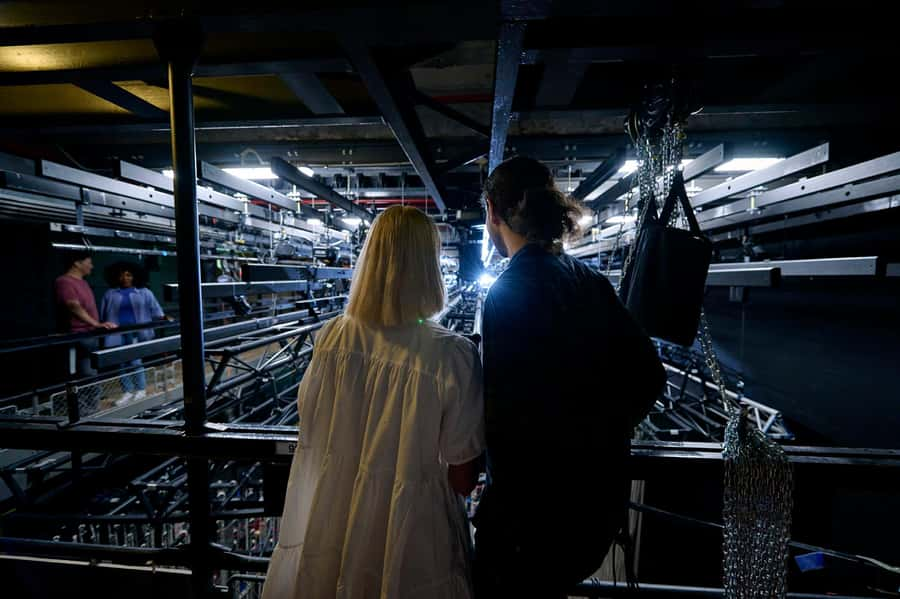
At $140 per person, this is a premium Sydney activity. Its value depends on what you want from the Opera House.
For a casual sightseer, the cost may be difficult to justify. The Opera House exterior, forecourt, and harbour setting can be enjoyed without this booking. You also need to manage an early start, a long stair count, restrictions on cameras, and the possibility that some areas will not be available.
For someone interested in theatre, the price makes more sense. You get 150 minutes with a live English-speaking guide, a small group, access to backstage areas, stories about performers and construction, and breakfast in the Green Room. A standard public tour cannot offer the same working perspective.
The strongest value comes from the combination. The tour is not only a history talk, not only an architecture visit, and not only a meal. Each part supports the next. Stage Door introduces the working world, the backstage route explains how performances happen, and breakfast lets you pause in a place connected to that world.
I would also consider the timing. A morning tour can give you access before the building becomes more restricted later in the day. If you plan to attend a performance during your Sydney visit, this experience may make that evening more meaningful because you will understand what is happening behind the curtain.
Who should book this backstage tour?
I would recommend it most strongly to:
- Theatre fans who want to see performer and crew spaces
- Architecture lovers interested in how a difficult building functions
- Visitors who enjoy small groups and plenty of questions
- People planning to attend an Opera House performance later
- Repeat Sydney visitors looking for something beyond the standard sightseeing route
- Adults and older children who can manage 300 or more stairs
I would be more cautious if you dislike early starts, have limited mobility, need a wheelchair-accessible route, or mainly want photographs. The no-camera rule removes one of the obvious benefits for keen photographers.
The guide also shapes the morning. A lively person such as Alan, Marcus, Bruce, or Suanne can make the technical material feel warm and memorable. The experience is at its best when you engage, ask questions, and let the guide follow the group’s interests.
Practical details for a smoother morning
Wear comfortable, flat, enclosed shoes with rubber soles. Do not treat footwear as a minor choice, since the rules are firm and the route is demanding.
Arrive 10 to 15 minutes before the start at Stage Door, beneath the Monumental Stairs, Sydney Opera House, Bennelong Point. Transfers are not included, so you need to make your own way there.
Leave large bags and backpacks ready to be cloaked. Do not bring a camera or plan to record video. The tour is conducted in English, and masks are strongly recommended.
You can cancel up to 24 hours before the tour for a full refund. You can also reserve now and pay later, which helps if your Sydney plans are still shifting.
Should you book the Sydney Opera House backstage tour?
Book it if you want to understand how the Opera House works, not just how it looks. The small group, early access, backstage stories, and Green Room breakfast create a more personal visit than a standard look around the public spaces.
Skip it if you want an easy architectural stroll, a photography session, or a wheelchair-friendly activity. The stairs are real, the price is high, and access can change with the venue schedule.
For the right person, this is one of the most worthwhile ways to visit the Opera House. It replaces the postcard view with stories about performers, stage crews, engineering, and the daily work behind a world-famous building.
FAQ
How long does the Sydney Opera House backstage tour last?
The tour lasts 150 minutes, including the guided backstage visit and breakfast in the Green Room.
Where does the tour meet?
Meet at Stage Door, beneath the Monumental Stairs at the Sydney Opera House, Bennelong Point, Sydney NSW 2000.
Is breakfast included?
Yes. Breakfast with your English-speaking guide in the Green Room is included.
How many stairs are involved?
The tour includes more than 300 stairs, so comfortable flat shoes with enclosed rubber soles are required.
Can I bring a camera or record video?
No. Cameras and video recording are not allowed during the experience.
Is the tour suitable for children or wheelchair users?
Children aged 10 and under are not permitted. The tour is also not suitable for wheelchair users or people with mobility impairments.
Just added around Sydney
- Opera Tickets: Turandot at Sydney Opera House★ 4.0 · 4 reviews
- Sydney LED Lit Kayak Tour of the Opera House and Bridge★ 5.0 · 3 reviews
- Sydney Opera House Architectural Tour★ 5.0 · 73 reviews
- Sydney Opera House VIP Experience: Guided Tour, Dinner & Drinks★ 4.5 · 61 reviews
- Sydney Private Full-Day Tour: Opera House, Bondi Beach & Secrets★ 5.0 · 10 reviews
- RENT at the Sydney Opera House★ 4.5 · 21 reviews
- Sydney City Tour | Bondi, Opera House, Bridge & Highlights★ 5.0 · 2 reviews
- Professional Photoshoot at Opera House★ 3.5 · 10 reviews
Opera House Tours, compared.
La Fenice Opera House Entry Ticket with Audio Guide
Read our review →
Sydney Opera House Official Guided Walking Tour
Read our review →
Ho Chi Minh: A O Show Bamboo Circus at Saigon Opera House
Read our review →
Sunrise Kayak, Opera House & Under Harbour Bridge
Read our review →
Browse the lists this tour appears in