
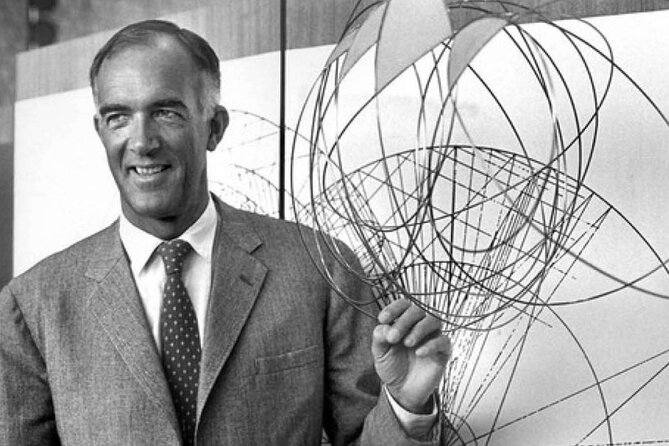
REVIEW · AUSTRALIA
Sydney Opera House Architectural Tour
Architecture can tell a national story. This 75-minute tour explains how Jørn Utzon’s bold design became Sydney’s defining symbol. I like the clear focus on the building’s design and construction, and I like that the story includes political fights, engineering problems, and the people behind the work. The main drawback is the brisk pace, especially if you want time to stop and ask questions or take photos.
You’ll walk inside and outside the Opera House, hear how its famous forms were made, and learn why the project took years to complete. Some sessions are led by guides with direct professional links to the building, including Peter, an architect who worked with Peter Hall on the interior. Arrive early, though. Late arrivals cannot join, and missing the start means losing the booking.
Key points at a glance
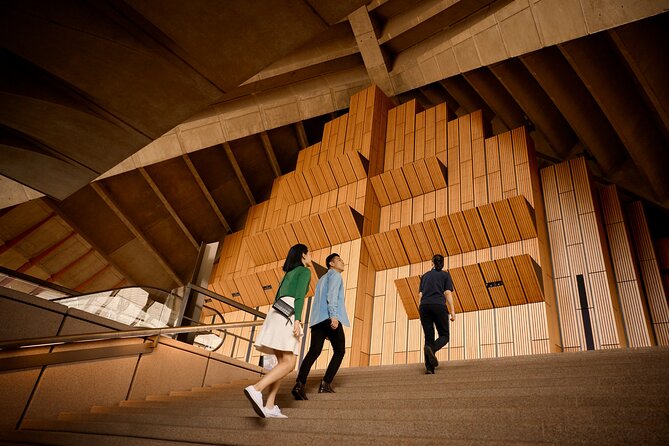
- A building story, not just a sightseeing walk: Follow the Opera House from the 1950s design competition through construction and later use.
- Real technical detail: Learn how architects and engineers tackled the famous roof forms, materials, and difficult construction problems.
- Insider-level guiding: Some guides, including Peter, have worked directly on or around the Opera House project.
- Indoor and outdoor access: The tour shows the building from both sides, including time in the Great Hall when available.
- A compact 75-minute visit: The short format works well in a Sydney itinerary, but the pace can feel quick.
- Plan for stairs and punctuality: The walking route can include 300 or more stairs, and you must arrive 15 minutes early.
Why the Opera House needs more than a photo
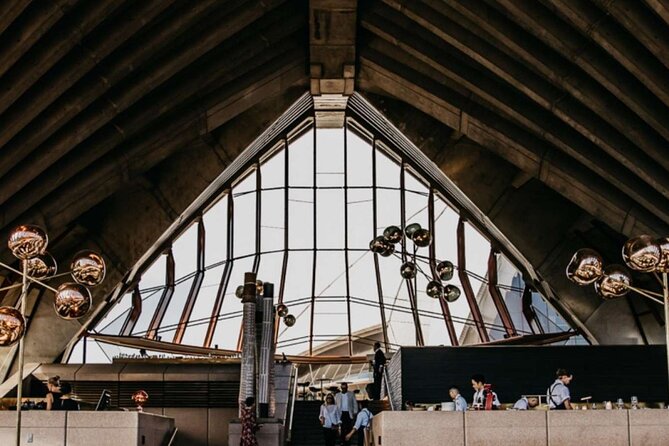
You can understand why people photograph the Sydney Opera House in seconds. Its white roof shells rise above the harbour like sails or shells, depending on the light and your imagination. A photo captures the shape, but not the argument, labor, or risk behind it.
This tour gives you that missing part. It explains how Australia and Danish architect Jørn Utzon came together in the mid-1950s to create a building that changed the course of twentieth-century architecture. The building was not simply a stylish cultural venue. It pushed architecture and engineering beyond what many people thought possible at the time.
I like that the tour does not treat the Opera House as a flawless design dropped into place. You hear about idealists, practical builders, artists, engineers, politicians, and administrators. Each group had a different idea of what the building should be and how it should be finished.
That tension gives the visit its shape. The tour covers the original concept, the difficult transition from drawing to construction, professional disagreements, political pressure, and the cultural demands placed on the finished building. It helps you see the Opera House as a long negotiation between imagination and reality.
More Opera House Tours around Sydney:
- Sydney: Opera House Guided Tour with Entrance Ticket
★ 4.8 · 8,312 reviews - Sydney Opera House Official Guided Walking Tour
★ 4.5 · 3,770 reviews - Sydney: Sunrise Kayak, Opera House & Under Harbour Bridge
★ 5.0 · 869 reviews
Inside the 1950s vision of Jørn Utzon
The tour begins at the Sydney Opera House and stays focused on the building itself. Rather than sending you across several Sydney sights, it uses one remarkable place as a case study in design, engineering, and public ambition.
You’ll hear how Utzon’s winning idea created a sculpture on Sydney Harbour. The striking part is not only the appearance of the roof. It is the gap between the original vision and the practical work needed to make that vision stand up, hold its surfaces, and serve as a working performance venue.
The story also places the project in its national setting. The Opera House helped change the way the world viewed Australia. That is why the tour has value even if you are not an architecture specialist. You are learning about a country deciding how it wanted to present itself to the world.
The guide’s role matters here. A good guide can turn technical facts into a human story, and that is where this experience earns its strong reputation. Peter is especially praised for explaining the building in a lively way, drawing on his work with Peter Hall, who handled much of the interior design. Another guide, Gaston, is also described as bringing strong knowledge and enthusiasm to the tour.
Guide assignments can vary, so you should not book on the assumption that a particular person will lead your group. Still, the professional background of some guides adds something you rarely get from a basic audio guide.
The engineering behind the famous roof
The best part of the tour is likely the explanation of how the Opera House was built. You will not simply hear that the project was difficult. You’ll learn about the design and engineering decisions that made construction possible.
The roof forms were far ahead of ordinary building methods in the 1950s. The architects had to work out how to turn an artistic idea into a structure that could be built, covered, maintained, and used. That process involved changes, compromises, and repeated technical challenges.
The tour also covers materials and maintenance. This is useful because the Opera House can look simple from the harbour, almost as if the shells were placed there with ease. Inside the building, the story is more complicated. Every curve and surface required careful planning.
You may hear technical terms and construction details that go beyond a standard sightseeing visit. That suits you if you enjoy seeing how a difficult object works. If you prefer only the visual side of the Opera House, parts of the explanation may feel dense.
The strongest guides make the technical sections easier to follow by linking them to people and decisions. Instead of listing dates and materials, they explain why a choice mattered and what made the work so hard. This is also why the experience can appeal to people with little architectural training. You do not need to know structural engineering before you arrive.
Politics, personalities, and years of controversy
A good building tour should explain more than its shape. This one also follows the conflicts around the Opera House.
The project involved artistic vision, professional pride, government control, public money, and changing expectations. Those pressures did not always point in the same direction. The building’s long construction period created room for frustration and controversy, and the tour uses those disagreements to explain how the final result took shape.
That human element keeps the visit from becoming a dry lecture. You hear about the people who wanted to protect the original idea and those who needed a workable building delivered within political and financial limits.
The story also helps explain why Utzon’s name is so closely tied to the building, while other architects, engineers, and designers played important roles in bringing it to completion. The final Opera House was shaped by more than one person. You get a clearer sense of the shared effort, and the disputes, behind the famous result.
One useful feature is the link between politics and design. Decisions about the building were not made in an artistic vacuum. Cultural needs, public expectations, and government priorities affected the work. That makes the Opera House easier to understand as a living institution rather than a frozen monument.
More Live Music around Sydney:
- Sydney: Great Opera Hits Ticket at the Sydney Opera House
676 reviews - Sydney: 1-Hour Opera House Tour with Meal and Drink
★ 4.7 · 546 reviews - Sydney Opera House Tour & Dine Experience
★ 4.5 · 404 reviews - Sydney Opera House Backstage Guided Tour with Breakfast
★ 5.0 · 329 reviews
Seeing the building from inside and outside
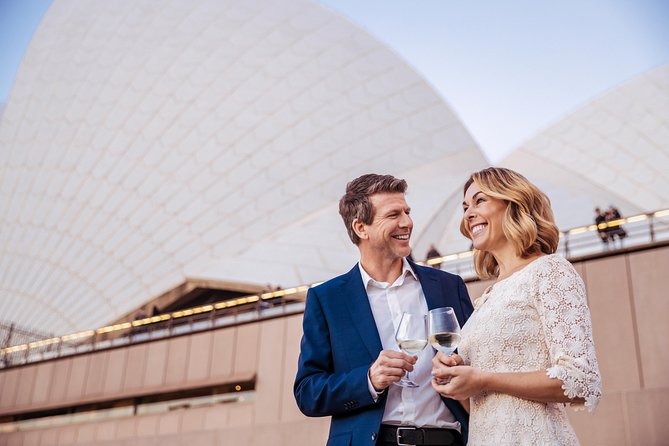
The route includes both exterior and interior areas. From outside, you can connect the guide’s explanation to the roof forms and the building’s position on Sydney Harbour. Inside, you get a better sense of scale, function, and the relationship between public rooms and performance spaces.
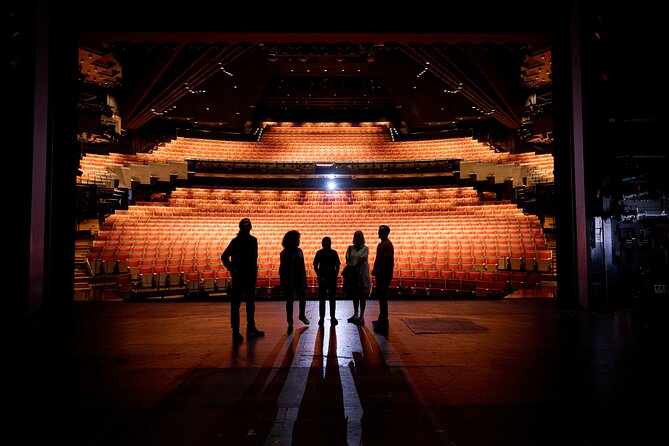
Time in the Great Hall is a highlight when access is available. Sitting there, even briefly, gives the architecture a practical purpose. You are not only looking at an exterior icon. You are inside a place designed for music, theatre, audiences, and the daily work of a major cultural venue.
Venue access can change before departure, so no particular room should be treated as guaranteed. The tour provider notes that access depends on availability at the time of the visit. That is a sensible limitation for a working performance building, but it is worth knowing if you are booking mainly to see one specific interior.
The route is a walking tour and can include more than 300 stairs. That is not a minor detail. Wear comfortable shoes and be ready for an active visit. The experience may be difficult for anyone who cannot manage repeated stairs, even though most people can participate.
A small group, or possibly a larger one
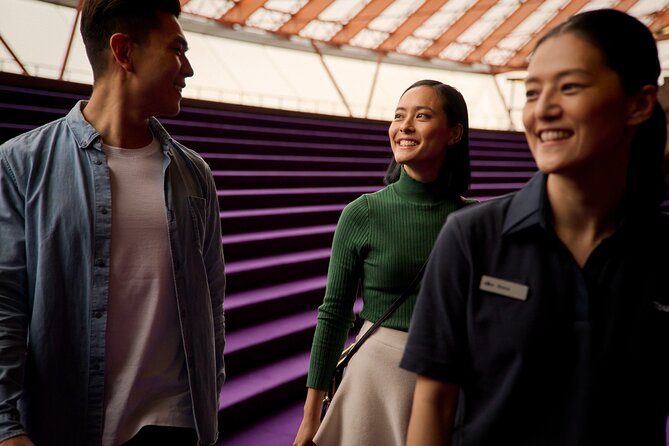
The published information gives a maximum of nine people, which would be excellent for an architectural tour. A small group lets you hear the guide clearly, stay close to exhibits and rooms, and ask a question without interrupting the whole visit.
However, one account describes a group of about 35 people. That does not match the stated maximum, so group size may vary by departure or operating arrangement. If a small group is important to you, confirm the current conditions before paying.
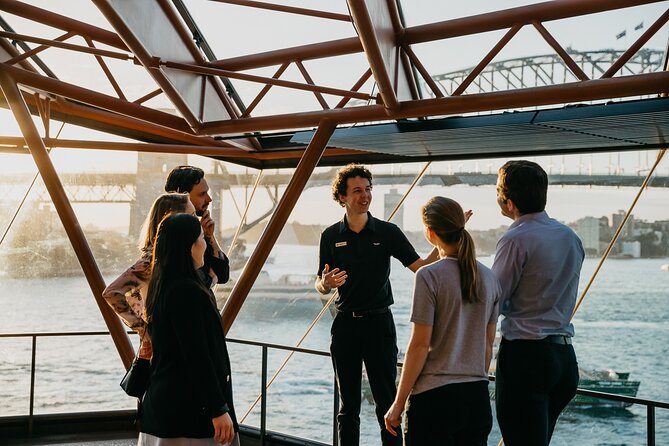
Headsets have been used on the tour and can make a real difference. They help people at the back hear the guide and are useful for anyone with hearing difficulties. One larger group still found the guide easy to follow because the sound system worked well.
The pace is another group-related issue. The tour lasts about one hour and 15 minutes, so the guide has a lot to cover. One session was praised for a steady pace and clear explanations, while another visitor wished there had been more chances to ask questions. You should expect a structured walk rather than a free-flowing conversation.
Is the $43.03 price fair?
At $43.03 per person, this is not the cheapest way to see the Opera House. You can admire the building from outside for free, and the harbour views cost nothing. The price makes sense if you want the story of how the place was designed, engineered, debated, and built.
The value depends on what you want from your visit. If you are mainly after photographs, the tour may feel unnecessary. If you want to understand why the building became so important, the guided explanation adds something you cannot get from a quick walk around the forecourt.
I think the price is fair for a focused tour with admission included and a guide covering both design and construction. The strongest value comes when your guide has direct architectural experience. You are paying for interpretation, not just entry into a famous building.
The visit also fits neatly into a day in Sydney. At 75 minutes, it does not consume half a day, though you should allow extra time for arrival, check-in, cloaking procedures, and movement through the venue. The scheduled start is 10:00 am for the experience described here.
How to prepare for the 10:00 am start
Arrive at the Welcome Centre 15 minutes before departure. The venue needs time for check-in and cloaking, and the late-arrival rule is strict. If you are more than five minutes late after the start time, the tour is forfeited.
Do not rely on rushing in from another appointment. The Opera House is near public transportation, but the booking instructions still require an early arrival. Give yourself time to reach the building, find the Welcome Centre, and complete the entry process.
A mobile ticket is provided, so keep it easy to access on your phone. Wear shoes that can handle stairs and a standing or walking route. Since the visit can include more than 300 stairs, this is not the time for uncomfortable footwear.
Cancellation is free if you cancel at least 24 hours before the local start time. Cancellations or changes made inside that window are not refunded or accepted. That policy matters because strict timing at the venue makes last-minute changes harder to accommodate.
Who will enjoy this tour most?
I would choose this tour if you have already admired the Opera House and want to know how it became possible. It suits people interested in architecture, engineering, design, politics, cultural institutions, and large public projects.
It also works well for families with older children who enjoy practical questions. How do you build a curved roof? Why did the project take so long? How do artistic plans change when real construction begins? Those questions give younger visitors a way into the subject.
You do not need an architecture degree. The tour is designed for people with high or low interest in the subject, and the best explanations connect complex ideas to visible parts of the building.
I would think twice if you have limited mobility because of the stair count, or if you want a relaxed photo walk with plenty of free time. I would also avoid booking it back-to-back with another fixed appointment, since late arrival means losing the experience.
Should you book the Sydney Opera House Architectural Tour?
Yes, if you want the Opera House to become more than a striking backdrop. The tour gives you the building’s full story: Utzon’s daring idea, the engineering problems, the political pressure, the interior work, and the long path to completion.
Book it for the explanation, not just the admission. Guides such as Peter and Gaston have been praised for making the subject clear, personal, and engaging, while headsets can help you follow every word. Just plan carefully for the early arrival, stairs, possible room changes, and a fairly brisk schedule.
For most first-time visitors who care about how places are made, this is a worthwhile addition to a Sydney day.
FAQ
How long is the Sydney Opera House Architectural Tour?
The tour lasts approximately one hour and 15 minutes.
What time does this tour start?
The listed start time is 10:00 am.
Where should I go before the tour?
You should arrive at the Welcome Centre 15 minutes before the scheduled start for check-in and cloaking procedures.
Can I join if I arrive late?
No. If you are more than five minutes late after the start time, the tour is forfeited, and late arrivals cannot join.
Is the tour suitable for people who cannot manage many stairs?
The tour is a walking experience that can include 300 or more stairs. You should consider that stair count before booking.
Can I cancel for a refund?
Yes. You can cancel for a full refund if you cancel at least 24 hours before the local start time. Cancellations and changes made less than 24 hours in advance are not accepted.
Just added around Sydney
- Opera Tickets: Turandot at Sydney Opera House★ 4.0 · 4 reviews
- Sydney LED Lit Kayak Tour of the Opera House and Bridge★ 5.0 · 3 reviews
- Sydney Opera House VIP Experience: Guided Tour, Dinner & Drinks★ 4.5 · 61 reviews
- Sydney Private Full-Day Tour: Opera House, Bondi Beach & Secrets★ 5.0 · 10 reviews
- RENT at the Sydney Opera House★ 4.5 · 21 reviews
- Sydney City Tour | Bondi, Opera House, Bridge & Highlights★ 5.0 · 2 reviews
- Professional Photoshoot at Opera House★ 3.5 · 10 reviews
- Private Sydney Tour Including Sydney Opera House, Bondi and Manly★ 5.0 · 64 reviews
Opera House Tours, compared.
La Fenice Opera House Entry Ticket with Audio Guide
Read our review →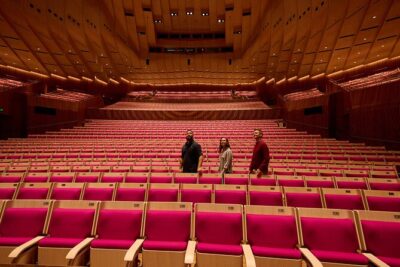
Sydney Opera House Official Guided Walking Tour
Read our review →
Ho Chi Minh: A O Show Bamboo Circus at Saigon Opera House
Read our review →
Sunrise Kayak, Opera House & Under Harbour Bridge
Read our review →
Browse the lists this tour appears in