
REVIEW · VARANASI
Romantic Sunrise Boat with Live Banaras Gharana Classical music
Wake up before the city stirs. This two-hour boat ride pairs sunrise on the Ganges with live Banaras Gharana classical music, turning a sightseeing trip into a calm cultural morning. I especially like the small maximum group of 10 and the route past eight major ghats, from Assi to Panchganga. The main drawback is the 5:00 am start, plus the strict non-refundable booking policy.
The setting does much of the work here, but the live musicians give the ride a human touch. A guide, coffee or tea, bottled water, and included fees add useful value to the $57.35 price. Aman is named as a particularly good guide and trip planner, with strong local knowledge. Just remember that transport to and from BrijRama Palace is not included.
Key points at a glance
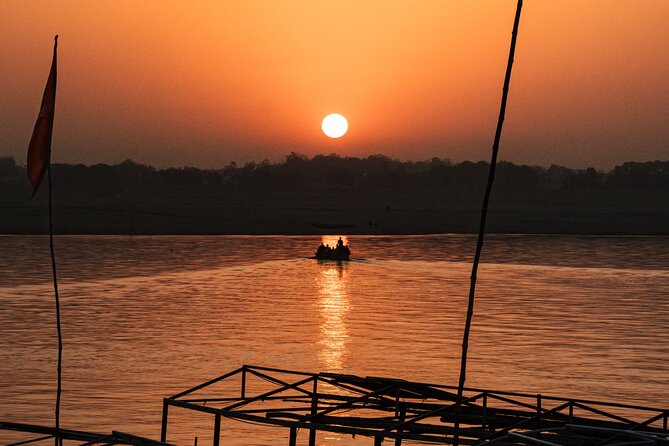
- Sunrise from the Ganges: The early departure gives you changing sky colors, cool morning air, and a quiet view of Varanasi from the water.
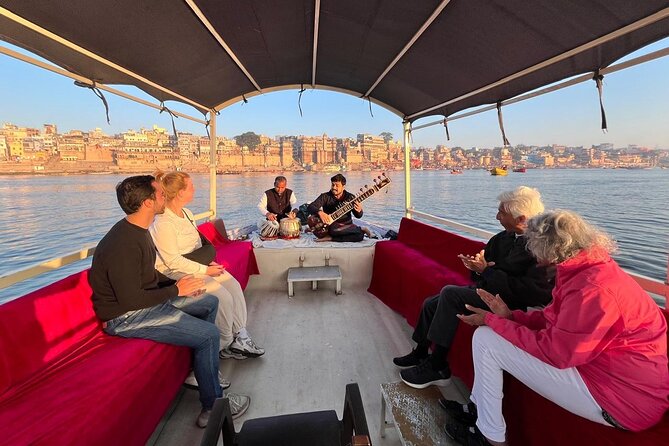
- Live Banaras Gharana music: Classical instrumental music adds a strong local character to the ride, rather than leaving you with only scenery.
- Eight ghats in about two hours: The route includes Assi, Tulsi, Shivala, Kedar, Dashashwamedh, Manmandir, Manikarnika, and Panchganga.
- Small group size: With no more than 10 people, the boat should feel less crowded than a large sightseeing cruise.
- Tea, coffee, and water included: These simple extras matter at a 5:00 am meeting time.
- Return to BrijRama Palace: You begin and end at the Ganges-side meeting point, but your own transport there and back is not provided.
Why a sunrise boat is a smart way to see Varanasi
Varanasi can feel intense at street level. The lanes are narrow, the ghats are busy, and the city’s sacred life unfolds beside ordinary daily work. From a boat, you get breathing room and a broad view of the riverfront.
This experience uses that perspective well. You are not simply being carried past buildings. The route moves along a long run of ghats, each with its own religious or historical character. Sunrise also changes the mood. The river, temples, steps, and old facades take on softer colors before the heat and noise build.
The music is the other reason to choose this outing. Live Banaras Gharana classical music gives the morning a distinctly local sound. One past account describes the ride as an exceptional morning experience with Indian instrumental music and morning arati. That combination can make the trip feel more connected to Varanasi’s daily spiritual rhythm.
I would think of this as a cultural introduction rather than a full guided history tour. You will see many important places in a short time, but the 15-minute timing at each stop means the boat will keep moving. If you want long visits inside temples or detailed architectural study, you need a separate walking tour.
More Classical Concerts around the world:
- Vienna: Vivaldi’s Four Seasons Concert in Karlskirche
★ 4.7 · 14,951 reviews - Vienna: Classical Concert in the World-Famous Musikverein
★ 4.6 · 6,673 reviews - Vienna: Mozart Concert at the Musikverein – Golden Hall
★ 4.6 · 5,194 reviews
Meeting at BrijRama Palace at 5:00 am
The meeting point is BrijRama Palace by the Ganges, at Darbhanga Ghat in the Dashashwamedh area. The listed start time is 5:00 am, so plan your morning carefully. The activity ends back at the same meeting point.
That return is convenient if you are staying nearby or already have transport arranged. It is less convenient if you are lodging far from the river, since pick-up and drop-off by public or private transportation are not part of the price. You should confirm how you will reach the palace before booking, especially at that hour.
The early start is not a minor detail. It is the reason you see the first light over the water, but it also means this may not suit anyone who struggles with very early mornings. The included tea or coffee and bottled water are welcome touches at the dock.
The group limit is 10 people. That does not guarantee a private boat, but it does keep the outing on a more personal scale. A smaller group can make it easier to hear the guide and music, and it avoids the feeling of being one face in a large crowd.
Assi Ghat and Tulsi Ghat: the southern beginning
The first stop is Assi Ghat, one of Varanasi’s best-known riverfront points. It takes its name from the Assi River, which meets the Ganges here. The location has religious importance, but it also gives you an immediate sense of how Varanasi combines sacred traditions with everyday life beside the river.
You have about 15 minutes at Assi Ghat. That is enough to take in the setting and get your first clear view of the riverfront, but not enough for a long wander. Keep your camera ready, since the boat’s position and the sunrise colors may be as important as the stop itself.
Next comes Tulsi Ghat, named for the poet and saint Tulsidas. He is associated with the Ramcharitmanas, one of the best-known works in North Indian devotional literature. This stop gives the guide a useful chance to connect the physical ghats with Varanasi’s literary and religious traditions.
The short timing works well here. You get a series of focused glimpses instead of spending the entire morning at one location. Still, if Tulsidas or devotional poetry interests you, ask the guide for more detail. The route offers context, but it cannot provide a long lecture at every ghat.
Shivala and Kedar: quieter riverfront views
Shivala Ghat is described as a more peaceful place, with old buildings and temples around it. It is dedicated to Lord Shiva, whose presence is central to Varanasi’s religious identity. Compared with the city’s best-known waterfront sites, Shivala can offer a calmer visual pause.
That change in pace matters. A good river excursion needs more than famous photo stops. Shivala gives you time to notice the architecture and the way the ghats are used as part of daily religious life, not only as tourist sights.
Kedar Ghat follows. It is linked with the Kedar Nath temple in the Himalayas and is known for its calm atmosphere and Ganges views. The guide may help explain that connection, giving this stop a wider religious context beyond what you can see from the boat.
Each stop receives about 15 minutes, so I would not expect a detailed visit to the nearby temples. The value is the overall sequence: Assi introduces the route, Tulsi adds literature, Shivala brings a quieter setting, and Kedar adds another layer of devotional tradition.
More Morning Tours around the world:
- Sydney: Sunrise Kayak, Opera House & Under Harbour Bridge
★ 5.0 · 869 reviews - New Orleans: Creole Queen Weekend Morning Jazz Cruise
★ 4.2 · 139 reviews - Sydney Sunrise Private Kayak – Opera House & Harbour Bridge
★ 4.7 · 14 reviews
Dashashwamedh Ghat and the morning arati
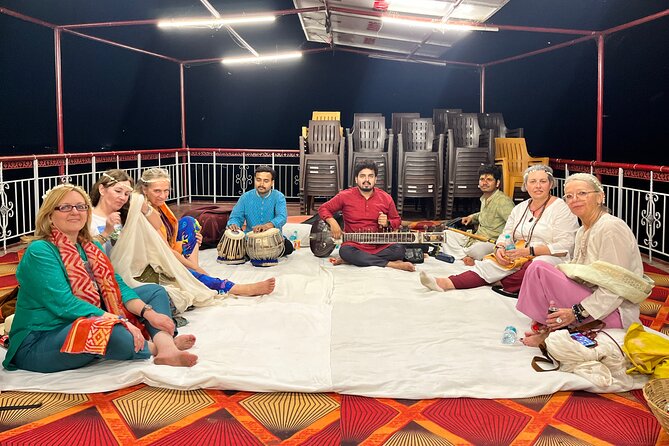
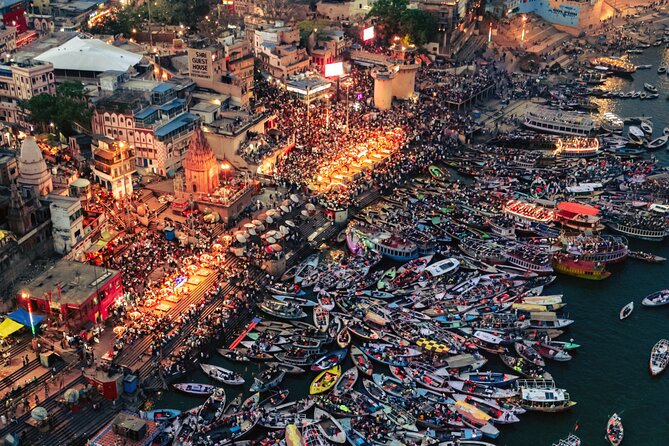
Dashashwamedh Ghat is one of the most famous points along the river. It sits near the city center and is a major gathering place for local religious activity and sightseeing. Its location makes it an important part of the boat route, even if you have already seen it from land.
This is also the area associated with the famous evening Ganga arati, though this excursion takes place at sunrise. A past account specifically praised the morning boat ride alongside morning arati. Since the supplied details do not promise a separate ceremony as a formal part of the tour, treat that possibility as a pleasant part of the setting rather than a guaranteed scheduled performance.
The guide and musicians are especially useful here. Dashashwamedh can be visually overwhelming, and the live music provides a calmer thread through the scene. You can listen while watching the riverfront instead of trying to process every sight at once.
At $57.35 per person, the value depends on what you want from this stop. You are paying for the boat, guide, music, refreshments, and access to a carefully timed route, not simply for a river crossing. If you only want a basic boat ride, cheaper options may exist. If you want music and interpretation in a small group, the price is easier to justify.
Manmandir Ghat and the city’s intellectual side
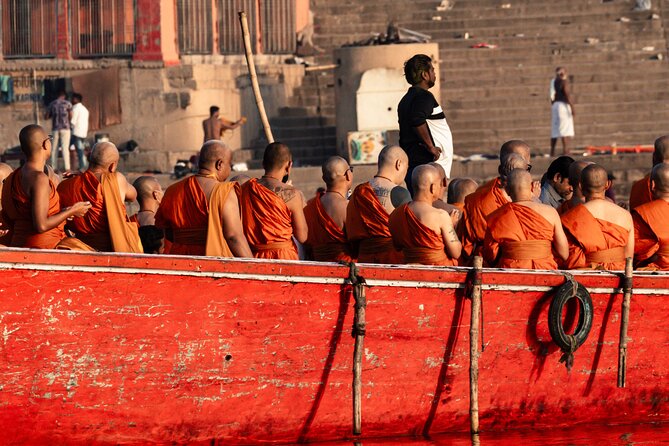
Manmandir Ghat was built in the 17th century by Maharaja Man Singh of Amber, a general associated with the Mughal period. The ghat is known for its architecture and cultural importance, giving you a look at Varanasi beyond temples and cremation grounds.
The stop is listed as free of admission charges. That does not change the overall tour price, but it shows that the experience is built around seeing the riverfront rather than collecting extra entry fees along the way.
Manmandir is a good place to pay attention to the guide’s commentary. The architecture reflects royal patronage, while the ghat itself remains part of the living city. You may find the contrast more interesting than a polished monument that has been separated from daily use.
Again, 15 minutes is brief. I would focus on the main structures and the view from the boat rather than expecting time to explore every corner. The music can help keep this stop reflective, particularly as the route moves toward more solemn sites.
Manikarnika Ghat: approach with respect
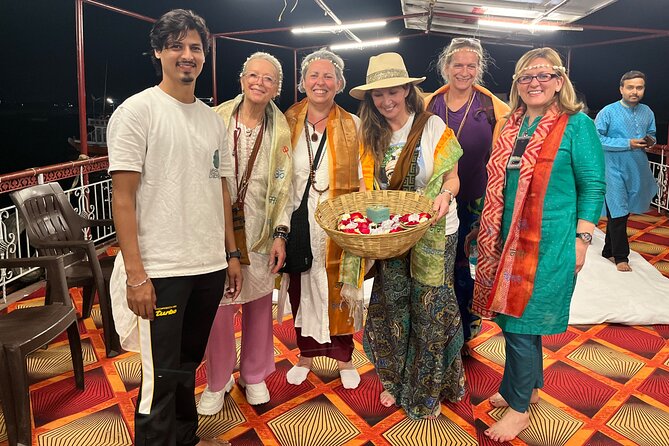
Manikarnika Ghat is one of Varanasi’s main cremation grounds and one of the most sacred sites for Hindus. It is traditionally connected with liberation from the cycle of rebirth, making it a place of serious religious importance.
This is the stop where respectful behavior matters most. Keep your camera use discreet and follow the guide’s instructions. You are looking at an active sacred place, not a staged attraction. The boat gives you a way to observe from the river without walking directly into the activity, but distance does not remove the need for care.
Some people find this part of the route moving. Others may find it difficult, especially if they are not prepared to see funeral practices in progress. The tour description makes the significance clear, so I would not book this morning if you only want light sightseeing and music.
The live classical performance may feel especially different here. The gentle music does not make the setting less serious, but it can help frame the visit as an act of observation and respect rather than spectacle.
Panchganga Ghat and the final stretch
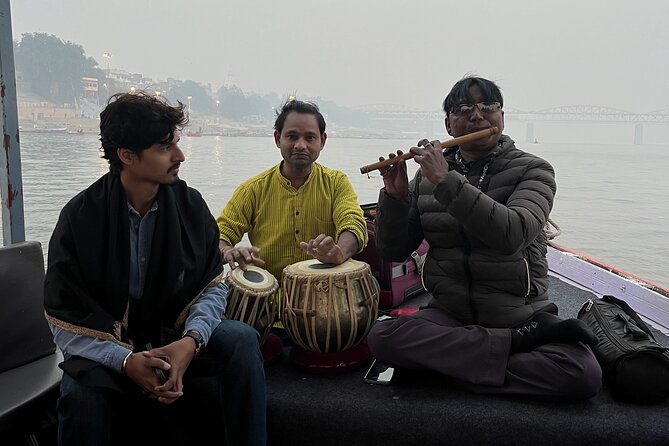
Panchganga Ghat is associated with the meeting of five sacred rivers: the Ganges, Yamuna, Saraswati, Godavari, and Krishna. This is a religious belief rather than a visible geographic junction, and the idea gives the site its spiritual importance.
As the final listed stop, Panchganga provides a fitting end to the route. You have moved through literary, royal, devotional, and funerary places, then finish at a ghat tied to sacred geography. The sequence helps you see how many traditions overlap along a single riverfront.
The final 15-minute stop also gives you time to gather your impressions before returning to BrijRama Palace. Since the activity lasts about two hours, the schedule is fairly full. You should expect a moving river tour with short stops, not a slow morning spent at one ghat.
Live music, guide quality, and the small group
The music is the heart of this particular boat ride. Classical music played live on the Ganges can make the experience feel less like a standard sightseeing circuit. It also suits the early hour, when the river and city are quieter.
Aman is specifically identified as a strong guide and trip planner. His local knowledge and attention to the place’s history are useful qualities for a route with eight stops. The experience does not provide a full biography or language list for the guide, so you should confirm any special communication needs when booking.
The group limit of 10 is another practical advantage. You are more likely to hear explanations and ask a question than you would on a large boat. A small group also fits the romantic label without making the outing exclusive to couples. Families, friends, and solo customers can all use the setting in their own way.
I like that the tour does not force romance into the format. Sunrise, music, and the river create the mood, but the experience remains suitable for a family outing or a special occasion with friends.
Is $57.35 good value?
At $57.35 per person, this is not the cheapest way to get on the Ganges. Its value comes from the combination of elements: a two-hour route, live music, a licensed guide, a small group cap, tea or coffee, bottled water, and included fees.
The price makes more sense if you want a planned cultural experience and do not want to arrange the boat, route, music, and guide separately. It is also useful for a first morning in Varanasi, since the route covers many of the key ghats in one sitting.
The value is weaker if you mainly want a long, quiet cruise. Eight stops in two hours means a fairly active schedule, with roughly 15 minutes associated with each ghat. You are paying for range and interpretation, not extended time in one place.
Transport is the main extra cost to consider. You must reach BrijRama Palace yourself, and the activity does not include a return transfer after it ends. The mobile ticket is convenient, but it does not remove the need to plan that early-morning journey.
Who should book this morning on the Ganges?
I would recommend this tour if you want:
- An early look at Varanasi from the river
- Live Indian classical music as part of the sightseeing
- A small group rather than a large cruise
- A guide who can connect the ghats with local history and religion
- A single route covering eight important riverfront sites
- A calm, memorable start to a day in the city
I would be more cautious if you dislike early starts, need flexible cancellation, or want a long visit at each ghat. The experience is non-refundable and cannot be changed for any reason. If poor weather cancels the trip, you are offered another date or a full refund. The same applies if the minimum number of customers is not reached.
Service animals are allowed, the activity is near public transportation, and most people can participate. Those details make the outing broadly accessible, but the very early meeting time and river setting still deserve consideration.
FAQ
What time does the boat tour start?
The tour starts at 5:00 am.
Where does the experience begin?
It begins at BrijRama Palace by the Ganges, at Darbhanga Ghat, Dashashwamedh, Bangali Tola, Varanasi.
Where does the tour end?
The activity ends back at the same meeting point.
How long does the boat ride last?
The experience lasts approximately two hours.
What is included in the price?
The price includes all fees and taxes, coffee or tea, bottled water, live classical music, and a licensed guide.
Is transportation to the meeting point included?
No. Pick-up and drop-off by public or private transportation are not included.
Should you book it?
Book this sunrise boat if you want Varanasi presented through music, river views, and a compact route through its major ghats. The strongest features are the live Banaras Gharana performance, the small group limit, and the chance to see places such as Manikarnika and Dashashwamedh from the water.
I would skip it if you want a relaxed late-morning start or a flexible reservation. For everyone else, the $57.35 price is reasonable when you value a guided cultural experience rather than a basic boat ride. Set your alarm, arrange your own transport to BrijRama Palace, and approach the sacred sites with respect. That preparation should help you get the most from this memorable two-hour introduction to Varanasi.
Just added around the world
- Warsaw: Guided Walking Tour with a Private Chopin Concert★ 5.0 · 13 reviews
- Wrocław: Chopin & Friends piano concerts★ 4.6 · 28 reviews
- Wine, Jazz and Magic: A Night at Malkhaz Jazz Club★ 5.0 · 2 reviews
- Warsaw: Candlelight Concert at Fryderyk Concert Hall★ 4.7 · 110 reviews
- Warsaw: Chopin Concert Ticket With Glass of Champagne★ 4.7 · 59 reviews
- Vienna: Romantic Classics Piano, Violin, and Cello Concert★ 4.7 · 60 reviews
- Vienna: Sunday Brunch Danube Cruise & Live Music★ 4.2 · 42 reviews
- Vienna: Concert by the Vienna Baroque Orchestra★ 4.6 · 56 reviews
Classical Concerts, compared.
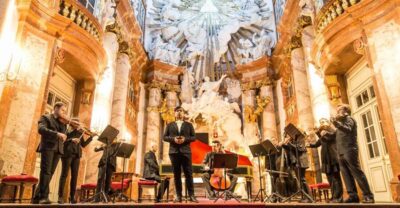
Vivaldi’s Four Seasons Concert in Karlskirche
Read our review →
Classical Concert in the World-Famous Musikverein
Read our review →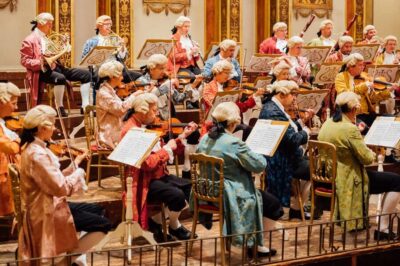
Mozart Concert at the Musikverein – Golden Hall
Read our review →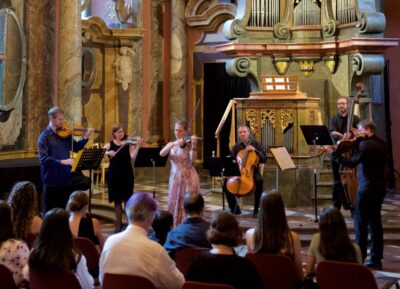
Entry Ticket Classical Concert at the Mirror Chapel
Read our review →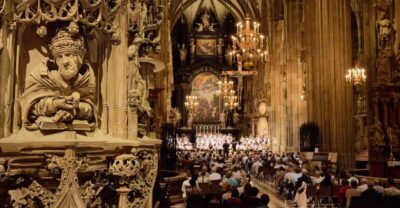
Classical Concert in St. Anne’s Church (Annakirche)
Read our review →
Browse the lists this tour appears in