
REVIEW · NORWAY
Oslo Private Tour: From The Opera to Vigeland Sculpture Park
Oslo reveals itself in layers. This private three-hour walk and tram outing links modern Bjørvika with old streets, a fortress, and Gustav Vigeland’s remarkable sculptures. I like the clear route from the Opera House to Vigeland Park, and I like that your guide can adjust the pace and focus for your group. The main drawback is time: there is a lot to cover, so some stops are more of a guided look than a full visit.
The tour also earns points for its personal feel. You have your own guide, not a large crowd, and past guides Annette and Christoffer were praised for useful local advice, prompt service, and strong knowledge of Oslo’s past. You should still expect plenty of walking, uneven cobbles, and an extra public transport cost.
Key points at a glance
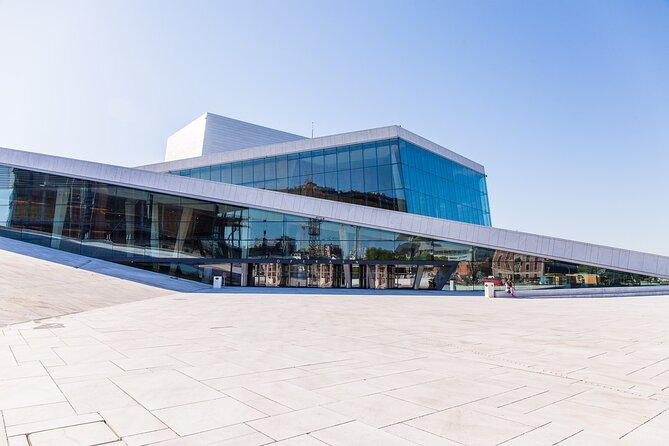
- Walk across the Opera House roof: Enjoy fjord and city views from one of Oslo’s most unusual public spaces.
- See old and new Oslo together: Bjørvika’s glass towers and waterfront sit close to Kvadraturen’s older streets.
- Hear the fortress story from outside: Akershus reveals its royal and military past through walls, towers, and harbor views.
- Use the city like a local: A tram ride carries you from central Oslo to Vigeland Sculpture Park.
- Finish with more than 200 sculptures: Vigeland Park gives the tour a calm, artistic finale.
- Best for private groups: Up to six people can share one guide and shape the pace to suit their interests.
Why this route works so well in Oslo
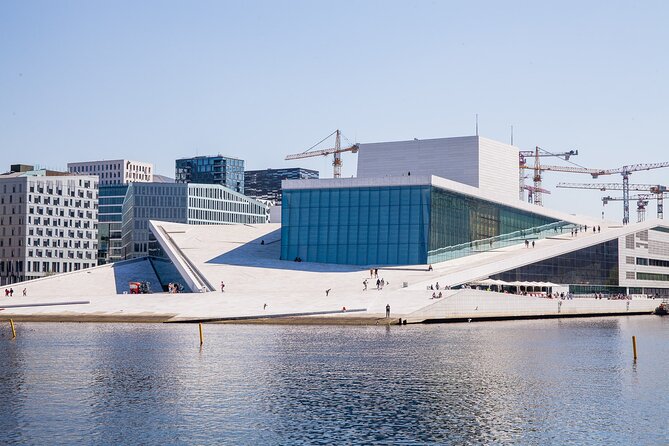
This tour makes sense because Oslo’s key sights are spread across several distinct areas. You begin at the waterfront in Bjørvika, walk through the older center, pass the city’s civic landmarks, then ride west to Vigeland Park.
That sequence gives you a useful picture of the city. Oslo is not presented as one old center surrounded by modern additions. Instead, you see a city that mixes medieval defenses, 17th-century streets, 20th-century civic buildings, new cultural institutions, and broad public parks.
I especially like the contrast between the start and finish. At the Opera House, the city feels polished and forward-looking. At Vigeland Park, the setting is quieter and more reflective, with human figures in stone, bronze, and wrought iron.
The private format matters here. Your guide can spend more time on architecture if that interests you, or give greater attention to royal history, art, or practical questions about getting around Oslo. The tour is for your group only, with up to six people included in the price.
More Live Music around the world:
- Vienna: Vivaldi’s Four Seasons Concert in Karlskirche
★ 4.7 · 14,951 reviews - Venice: La Fenice Opera House Entry Ticket with Audio Guide
★ 4.6 · 11,742 reviews - Sydney: Opera House Guided Tour with Entrance Ticket
★ 4.8 · 8,312 reviews
Starting on the Oslo Opera House roof
The meeting point is at Operagata 2, close to the Opera House. Your first stop uses the building itself as a viewing platform.
The Opera House has a sloping marble roof that you can walk up. This is not simply a photo stop at the entrance. The roof gives you changing views across the Oslo Fjord, the city skyline, and the surrounding waterfront. It is one of the easiest places in Oslo to get a broad sense of the city without paying for a separate lookout.
Allow about 30 minutes here. Your guide can point out the building’s design choices and explain how the Opera House combines public space with a working cultural venue. The inside lobby is also part of the visit, where you can look at the materials, craftsmanship, and modern design.
The practical benefit is that you get both a view and an introduction to Oslo’s recent architectural growth. The limitation is that a short stop will not provide a full performance venue tour or an in-depth look at every interior detail. Think of it as a guided architectural visit, not a ticketed show or backstage experience.
Wear shoes with a good grip. The roof is walkable, but your comfort matters more than dressing up for the Opera House.
Bjørvika and Barcode, Oslo’s new waterfront
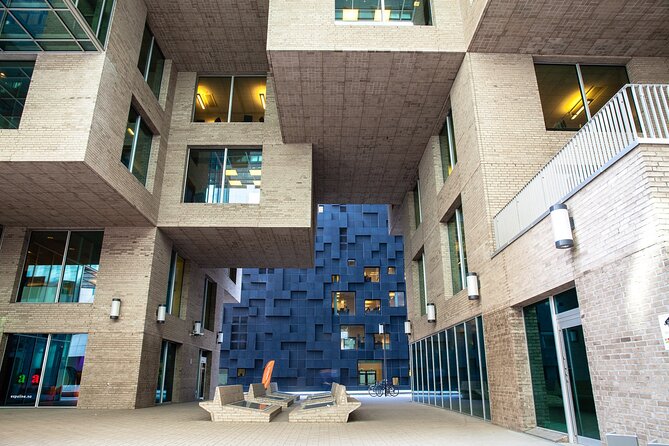
From the Opera House, the route continues through Bjørvika and the Barcode district. This area shows how Oslo has reshaped parts of its waterfront with offices, apartments, cultural buildings, galleries, restaurants, and public paths.
The Barcode Project is easy to recognize because of its row of narrow, varied buildings. The gaps between them create the effect of a barcode when viewed from a distance. Your guide can help connect the architecture to the wider changes taking place around the harbor.
Plan on roughly 30 minutes here. The waterfront walk gives you more views of the fjord and a chance to compare the Opera House with the newer buildings around it. This is a good section for anyone interested in city planning and contemporary architecture.
You may also pass the Munch Museum. The tour does not list a museum visit, so treat it as an exterior glimpse rather than an art museum stop. The building is linked to Edvard Munch, Norway’s best-known artist, whose work includes The Scream. If Munch is a major reason for your visit, you would need a separate museum visit and more time than this tour allows.
The Deichman Library may also be included if you wish. Admission is free, but the stop is optional. Even from outside, its glass and steel design makes it an important part of Bjørvika’s cultural center. Ask about adding it when you book or at the start of the tour, since every extra stop uses time from an already full schedule.
Kvadraturen and Christiania Torv
The mood changes as you enter Kvadraturen, Oslo’s historic center. The name refers to the district’s grid pattern, and the streets offer a clear contrast to the angular waterfront buildings.
The walk takes about 30 minutes. You will see cobbled streets, older buildings, and a mix of classic and modern architecture. Christiania Torv is one of the key points, with its distinctive fountain and links to Oslo’s earlier development.
This section is valuable because it helps you read the city rather than simply photograph it. Your guide can explain how Oslo changed over time and show where older urban patterns still survive. The streets also make the case for comfortable shoes. Cobblestones can slow your pace, especially if you are carrying a day bag or traveling with young children.
The tour description places Akershus Fortress within this part of the route, then gives the fortress its own 30-minute stop. That arrangement means the walk and the fortress visit work together. You move from the city’s streets to the defensive structure that shaped much of Oslo’s waterfront.
Same city, a different sound:
- New Orleans Steamboat Natchez Jazz Cruise with Dinner Option
★ 4.0 · 7,533 reviews - Budapest Danube Cruise and Dinner Options, Live Music and Dance
★ 4.5 · 7,428 reviews - Paris: 3-Course-Dinner Cruise on the Seine with live music
★ 4.7 · 7,248 reviews - Vienna: Classical Concert in the World-Famous Musikverein
★ 4.6 · 6,673 reviews
Akershus Fortress from walls to harbor views
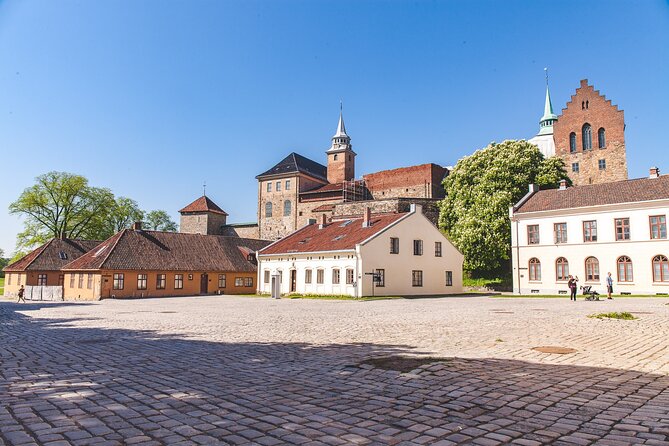
Akershus Fortress is one of the strongest historical stops on the route. It began as a medieval castle and later served royal, military, and prison functions. You will walk along the old stone defenses, see bastions and guard towers, and look across the Oslo Fjord.
This is an exterior tour, so do not expect extended access to every interior room. The value comes from the setting and the explanation. Stone walls make more sense when you understand why the site mattered, how it protected the harbor, and how its purpose changed over time.
I like this stop because it places Oslo’s history in front of you at full scale. A guide can point out defensive features that are easy to miss when you visit alone. The fortress also provides some of the route’s best views toward the water and city.
The 30-minute schedule is enough for a focused introduction. It is not enough for a slow, room-by-room exploration of the full complex. If military architecture or royal history is your main interest, you may want to return later and spend more time here.
Oslo City Hall and the civic heart
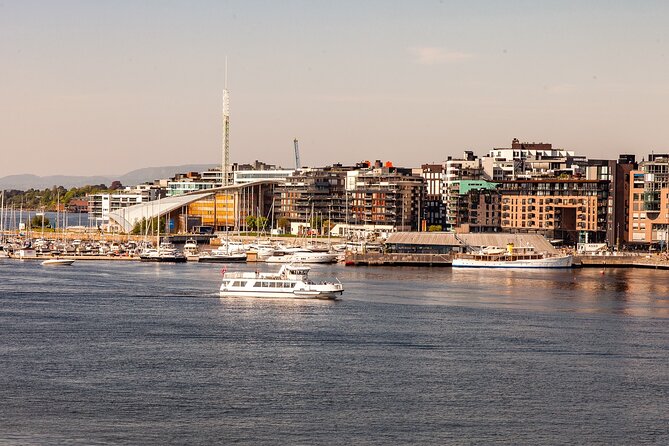
The route also passes Oslo City Hall. This building is important for more than its red-brick exterior. Its large halls and murals present scenes from Norwegian history and ordinary daily life.
Your guide can explain the building’s role in Oslo’s civic life and its connection to the Nobel Peace Prize ceremony. The surrounding grounds also offer views toward the fjord.
The exact time spent here is not listed as a separate stop, so consider it part of the broader walk rather than a full interior tour. That distinction matters. You will gain context and see the building, but you should not plan on a long, detailed examination of every fresco.
For a first visit, this is a sensible inclusion. It links the fortress and old center to present-day public life, giving the tour a useful political and cultural thread.
The tram ride to Vigeland Park
After the central walking portion, you take a tram from Kontraskjæret toward Vigeland Sculpture Park. The public transport ticket is not included. A 24-hour pass costs NOK 127 for an adult, or NOK 64 for a child or senior, and you can buy it through the Ruter app or at several locations around Oslo.
Your guide can help with the ticket and the route. That assistance is useful if you are new to Oslo’s public transport system, but remember to budget for the pass when comparing the tour price with other private options.
The tram ride is more than a transfer. It lets you see parts of Oslo between the central waterfront and the park, including city streets, older buildings, and green spaces. It also gives your feet a break after the cobbled walking sections.
Because the tour is listed at about three hours, timing may feel brisk. The route includes several 30-minute stops, a 45-minute park visit, and the tram ride. A private guide can adjust the order or shorten a stop, but you should tell the guide early if one place matters most to you.
Vigeland Sculpture Park and its human stories
The tour ends at Vigeland Sculpture Park, at Nobels gate 32. The park contains more than 200 sculptures by Gustav Vigeland, displayed among landscaped paths and open grounds.
The works are made from bronze, granite, and wrought iron. Their subjects are human bodies, relationships, age, struggle, joy, and the stages of life. Even if you are not an art specialist, the arrangement makes the park easy to explore because the sculptures are placed along a planned route rather than hidden in separate galleries.
The visit lasts about 45 minutes. That gives you time to see the main areas and hear about Vigeland’s ideas, but it will not allow a slow study of every sculpture. I would pay attention to the guide’s explanation, then leave a few minutes to look on your own. The park rewards quiet observation.
Ending here is a smart choice. After the traffic, architecture, and military stories of central Oslo, the park feels spacious and calm. You also finish near public transport and can continue exploring the area after the tour.
Price, pace, and what you receive
The price is $301.09 per group of up to six people. For a full group, that works out to about $50 per person before the public transport ticket. For two people, the cost is much higher per person, but you are paying for a private guide rather than a standard group walk.
That value depends on how much you use the flexibility. A group interested in Oslo’s history, architecture, and public art can ask questions and shift attention as they go. A group of six also gets a more personal experience than it would on a large coach tour.
The tour includes an authorized local Oslo guide and the ability to adjust the itinerary and pace. It does not include the 24-hour transport pass, food, or admission to any paid attraction. The main listed stops themselves have free admission, including the Opera House visit, Barcode walk, Kvadraturen, Akershus exterior, and Vigeland Park.
I would see the tour as a strong orientation for a first day in Oslo. It connects major sights and helps you decide where to return. It is less suitable if you prefer to spend an hour or more inside each museum or historic building.
Guides who add value
Guide quality is central to this experience. Annette was praised for explaining Oslo’s past clearly and giving practical advice about getting around the city. That combination is useful because a good city guide should help you both understand the place and use it with confidence.
Christoffer was described as prompt, professional, and a self-described history enthusiast with strong insight. That fits this route particularly well, since the tour moves through royal, military, civic, artistic, and architectural subjects in a short time.
You cannot choose a guide from the information provided, so the exact style may vary. Still, the private format gives you a chance to ask for the kind of explanation you prefer. Tell your guide if you want more history, more art, more architecture, or more practical help with the rest of your Oslo visit.
Who should book this Oslo tour?
I would recommend it to first-time visitors who want a useful city overview without joining a large group. It also suits families and small groups who value a flexible pace, though children may need breaks during the walking portions.
History fans will appreciate Kvadraturen and Akershus Fortress. Art lovers will enjoy the Opera House, the Munch Museum glimpse, the Deichman Library, and the final hour at Vigeland Park. Architecture fans get a particularly good mix of modern Bjørvika, the Barcode buildings, City Hall, and older central streets.
You should think twice if your main goal is a full museum visit. The Munch Museum, Deichman Library, and City Hall are mainly seen from outside or in passing, unless time can be adjusted. You should also be comfortable walking on uneven surfaces and taking public transportation.
The booking policy allows free cancellation up to 24 hours before the start time. Changes or cancellations made less than 24 hours before the tour are not accepted for a refund.
FAQ
How long is the Oslo private tour?
The tour lasts approximately three hours.
Where does the tour start?
It starts at Operagata 2, 0150 Oslo, Norway, near the Oslo Opera House.
Where does the tour finish?
The tour ends at Vigeland Sculpture Park, at Nobels gate 32, 0268 Oslo.
Is public transportation included?
No. The 24-hour public transportation ticket costs NOK 127 for adults and NOK 64 for children or seniors.
How many people can join the private tour?
The price covers one private group of up to six people.
Is entry to Vigeland Sculpture Park included?
Yes. Admission to the park is free.
Can the itinerary be changed?
Yes. The guide can adjust the itinerary and pace to suit your group. A visit to the Deichman Library can also be included if you wish, and admission is free.
Should you book it?
Book this tour if you want a private introduction to Oslo that combines major sights with useful context. The route is well chosen, the guides can tailor the experience, and the finish at Vigeland Park gives you something more memorable than a string of quick city-center stops.
Skip it if you want long indoor visits or prefer to explore each attraction at your own speed. For everyone else, especially a group of four to six people, the price is reasonable for a personal guide, a strong overview, and a practical first look at Oslo.
Just added around the world
- Warsaw: Guided Walking Tour with a Private Chopin Concert★ 5.0 · 13 reviews
- Wrocław: Chopin & Friends piano concerts★ 4.6 · 28 reviews
- Wine, Jazz and Magic: A Night at Malkhaz Jazz Club★ 5.0 · 2 reviews
- Warsaw: Candlelight Concert at Fryderyk Concert Hall★ 4.7 · 110 reviews
- Warsaw: Chopin Concert Ticket With Glass of Champagne★ 4.7 · 59 reviews
- Vienna: Romantic Classics Piano, Violin, and Cello Concert★ 4.7 · 60 reviews
- Vienna: Sunday Brunch Danube Cruise & Live Music★ 4.2 · 42 reviews
- Vienna: Concert by the Vienna Baroque Orchestra★ 4.6 · 56 reviews
Tours, compared.
Liverpool: City & Beatles Tour with Live Guide & Live Music
Read our review →Sydney Opera House Official Guided Walking Tour
Read our review →
Alfama Tour and Live Fado with Traditional Dinner
Read our review →
Schönbrunn Palace Evening Tour, Dinner and Concert
Read our review →Browse the lists this tour appears in