
REVIEW · DUBAI
Dubai: Walking, Architecture and History Tour of Dubai Opera
Backstage Dubai is more than a pretty facade. I like the chance to see the trap room and the seat storage area, two working parts of the building that most ticket holders never see. I also like the focus on the opera house itself, from its dhow-inspired architecture to its commissioned art and sculptures. The main consideration is that the tour involves walking, standing, and stairs, and access can change when the building is preparing for an event.
This is a short, focused visit rather than a performance experience. You do not attend a concert or opera during the hour, but you do get a guided look at the venue, dressing rooms, backstage spaces, and the way the auditorium can change shape. Recent tours led by Richard were praised for their friendly, entertaining approach, and guides may use videos to explain the building’s backstage work.
Key points to know before you go
- The trap room is a rare backstage stop: You get a look at one of the opera house’s less obvious technical spaces.
- The auditorium can change format: You can see where seats are stored when the hall is converted to a flat-floor setup.
- Dubai Opera is the UAE’s only opera house: Its cultural role gives the building more meaning than a simple photo stop.
- Architecture is part of the tour: The guide explains the design, decorative details, artworks, and sculptures made for the venue.
- Richard has earned warm praise: If he is leading your tour, expect an engaging style with plenty of explanation and humor.
- The visit lasts one hour: It fits neatly into a Dubai itinerary, especially around time at Dubai Opera Plaza.
Why Dubai Opera deserves an hour
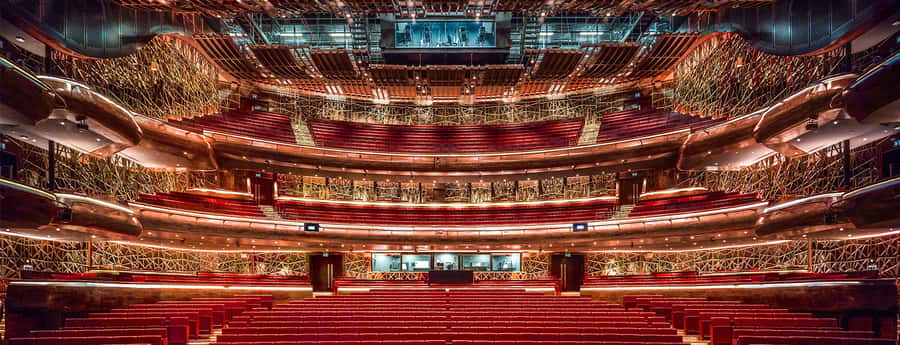
Dubai has no shortage of grand buildings, but Dubai Opera offers a different kind of spectacle. Its purpose is not only to look impressive. It is a working home for music, theater, and performing arts, and the tour helps you understand how that purpose shapes the building.
The venue opened in 2016 and is the only opera house in the United Arab Emirates. That fact gives the visit useful context. You are not simply walking through a fancy interior. You are seeing a national cultural venue designed to host major performances in a city better known for shopping, towers, and large-scale attractions.
I like this focus because it gives your time in Dubai a bit more variety. The tour is about architecture, but it is also about the machinery behind live shows. You see how rooms, seats, and backstage areas support the polished event happening in front of the curtain.
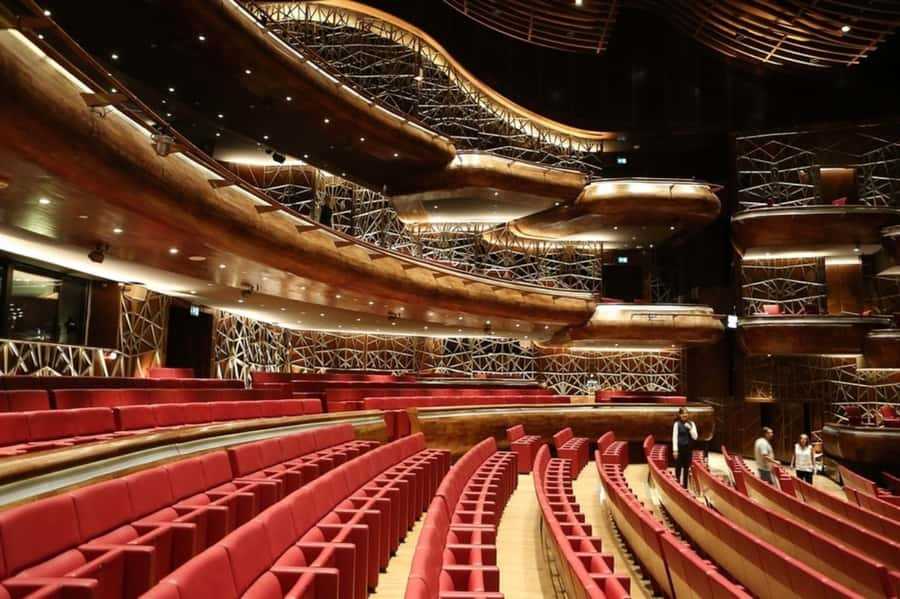
The design is presented as a dhow-inspired form, linking the building to Dubai’s maritime past. The outside shape is striking, but the more interesting details appear once you begin looking closely at the interior. The guide points out how specific spaces and decorative elements support the building’s identity.
More History and Heritage Tours around the world:
- Porto: An Intimate Fado Show in a Historical Tavern
★ 4.8 · 2,055 reviews - Vienna Mozart Concert in Historical Costumes at the Musikverein
★ 4.5 · 888 reviews - Tenerife: History The Evolution of Music Show Entry Ticket
★ 4.8 · 620 reviews
Meeting at the Plaza Box Office
Your starting point is the Plaza Box Office. This keeps the arrival simple, since you meet at the opera house rather than beginning at a separate city meeting point.
I recommend arriving with enough time to locate the box office and settle in. The tour lasts only an hour, so a late arrival can take a meaningful bite out of the experience. One recent booking arrived early and was moved onto an earlier tour, but that sort of flexibility should be treated as a pleasant possibility, not a guarantee.
The guide leads the group from the public areas into parts of the venue that ordinary ticket holders do not normally see. The pace is designed for looking and listening rather than rushing from room to room, although the time is still compact.
The tour is offered in English and Arabic. That matters if you want architectural details explained rather than simply pointed out. If English is not your strongest language, a small group can make a real difference. One visitor who had limited English found a private or very small tour especially helpful because the guide could give more personal attention.
Reading the architecture instead of just photographing it
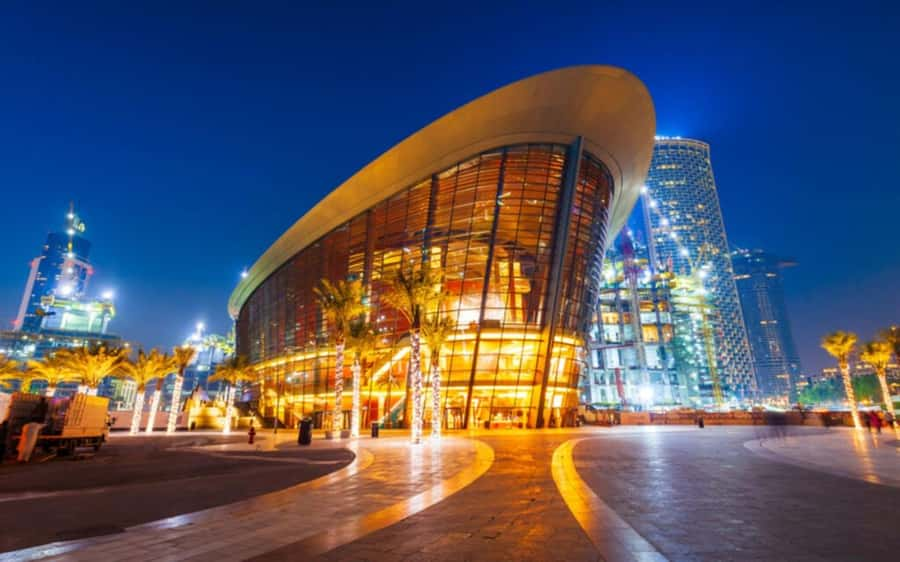
Dubai Opera’s shape is likely to catch your eye before you know anything about the building. The tour gives you a chance to move past the quick photograph and learn why the design looks the way it does.
Your guide explains the architectural details and the thinking behind them. The building is designed to work as more than a traditional opera house. It can host different types of performances, which helps explain why the interior and auditorium require flexibility.
The artworks and sculptures were created specifically for Dubai Opera. This is an important point. You are not looking at decoration chosen at random to fill empty walls. The pieces were commissioned to belong to this venue and to support its cultural setting.
I enjoy this part of the tour because it gives you something to look for as you walk. Instead of seeing mirrors, walls, and sculptural forms as expensive decoration, you begin to connect them with the building’s role as a performance space.
The guide also shares stories about the venue’s development and its place in Dubai’s performing arts scene. The information is likely to be most useful for anyone who enjoys architecture, design, or modern cultural buildings. If your main interest is ancient history, the tour will feel different from a museum visit because the building itself opened in 2016.
Dressing rooms and the backstage view
The backstage section is one of the strongest reasons to book this experience. You get to see the dressing rooms, including their mirrors, and learn more about the practical side of preparing performers for a show.
This is the point where Dubai Opera becomes less like a grand public monument and more like a workplace. A performance may look effortless from a seat in the auditorium, but backstage spaces reveal the careful preparation that happens before the audience arrives.
The dressing-room mirrors are a small detail, yet they help make the visit feel concrete. You are not only hearing that performers use the building. You are seeing one of the spaces that supports them.
The guide may also use videos to explain processes. That can help when a backstage area is not active or when equipment is difficult to understand from a quick look. Richard, in particular, was praised for making the tour entertaining and for explaining how the building is packed away and rearranged.
Do not expect access to every backstage room on every departure. Dubai Opera is a working building, and areas may be restricted when an event is taking place. That limitation is reasonable, but it is worth knowing before you arrive. The exact route can change.
More Live Music around the world:
- Vienna: Vivaldi’s Four Seasons Concert in Karlskirche
★ 4.7 · 14,951 reviews - Venice: La Fenice Opera House Entry Ticket with Audio Guide
★ 4.6 · 11,742 reviews - Sydney: Opera House Guided Tour with Entrance Ticket
★ 4.8 · 8,312 reviews - New Orleans Steamboat Natchez Jazz Cruise with Dinner Option
★ 4.0 · 7,533 reviews
The trap room and the theater’s working machinery
The trap room is one of the tour’s most appealing stops. The name alone suggests that you are seeing something outside the usual public route, and it gives you a glimpse of the technical systems that help create stage effects.
The available information does not promise a full technical demonstration, so I would not book the tour expecting machinery to be operating on demand. Instead, think of this as a chance to see an important backstage space and hear how it fits into the venue’s production work.
For me, this is more valuable than another view of a lobby. Grand public rooms are easy to admire, but technical spaces explain how a theater actually functions. You get a clearer idea of the amount of planning hidden behind a live performance.
The stop is also a reminder that Dubai Opera is not simply a building to admire from outside. It has to adapt to musicians, actors, stage crews, concerts, theater productions, and other events. That flexibility is part of the architecture’s story.
Seeing the seat storage area
Another useful stop is the seat storage area. Dubai Opera’s auditorium can be converted into a flat-floor space, and the seats have to go somewhere when that happens.
This detail makes the venue’s flexibility easy to understand. From the audience, you may never think about how a hall changes from a traditional seated arrangement to a level floor. Seeing the storage area connects the design idea with a physical solution.
I find this kind of information especially helpful because it answers a basic question: how does a modern performance venue serve different kinds of events? The answer is not only in the stage or the seating plan. It is also in the storage and movement systems behind the scenes.
The visit may not show a full transformation while you are there. The special appeal is seeing the part of the building that makes the transformation possible. If the auditorium is being prepared for an event, this area or another section may not be available.
What the one-hour format does well
One hour is enough to give you a proper introduction without turning the visit into a long architectural lecture. You can see the main design features, hear the venue’s story, and visit selected backstage areas before the information starts to feel repetitive.
The short format also works well in Dubai’s heat. You can plan it around other time in the Opera District without giving up half a day. It is a good addition to an itinerary that already includes the downtown area and Dubai Opera Plaza.
The tradeoff is that the tour cannot cover every corner in detail. A guide has to choose between spending longer on the architecture, explaining technical spaces, or allowing more time for questions. If you want a slow, specialist study of the building, one hour may feel brief.
I suggest deciding what you most want from the visit. If you want a lively introduction and access to areas you would not otherwise see, the timing works well. If you want extensive historical research or a long technical workshop, you may leave wanting more.
Is $27 a fair price?
At $27 per person, the tour offers reasonable value if you care about architecture, performing arts, or unusual access. You are paying for a live guide and a structured route through a working cultural venue, not just entry to a public foyer.
The value improves if you are already spending time in the Opera District. You do not need to set aside a full day, and the one-hour visit gives you a stronger understanding of a building you might otherwise photograph and leave behind.
The price may feel less compelling if you have no interest in theaters or modern design. Dubai Opera is impressive, but this is not a broad city history tour. The subject remains tightly focused on one venue and its operation.
I also think the guide has a strong effect on the value. Recent feedback gives special praise to Richard for being friendly, entertaining, and clear. Other guides may have their own style, but the live explanation is a major part of what you are buying.
Who will enjoy this Dubai Opera tour?
I would recommend it to several types of visitors:
- Architecture fans who want to understand the building’s form and design choices.
- Performing arts fans who want to see dressing rooms, backstage areas, and theater systems.
- First-time Dubai visitors looking for a cultural stop that is different from a tower or shopping center.
- Families with older children who are curious about how stages and auditoriums work.
- Photographers and design lovers who appreciate sculptures, mirrors, and purpose-built interior details.
Children under 16 must be accompanied by an adult. Infants under age two are free. The activity is wheelchair accessible, but it includes stairs and walking, so anyone with mobility restrictions should contact the provider before attending to discuss the route and available help.
The tour is also a good fit for solo visitors. A recent early arrival was moved onto an earlier departure, and small groups can sometimes make it easier to ask questions. Still, do not count on a private experience every time.
Practical limits to keep in mind
The building remains active, so the route can vary. An event may close off a backstage area or limit access to part of the auditorium. That is the main uncertainty, but it is also part of visiting a real performance venue rather than a preserved museum.
Wear comfortable shoes. You will walk and stand, and stairs are part of the experience. The tour is not described as physically demanding, but it is not a sit-down presentation either.
Guided tours are available in English and Arabic. Cancellation is free up to three days in advance for a full refund. Check the available starting times before booking, since the tour runs at scheduled departures rather than whenever you happen to arrive.
Should you book Dubai Opera’s walking tour?
Book it if you want to see the practical side of Dubai Opera, not only its polished public rooms. The trap room, dressing rooms, and seat storage area give the visit real substance, while the architecture and commissioned artwork make it visually rewarding.
I would skip it if your Dubai schedule is already packed and you have little interest in modern buildings or performing arts. The tour is focused, and its one-hour length leaves no room for a broad survey of Dubai’s history.
For most people who enjoy seeing how places work, $27 is a fair cost for a guided look behind the scenes. Go with flexible expectations, wear sensible shoes, and remember that the route may change when a show is being prepared. That small uncertainty is a reasonable price for visiting an active opera house rather than a static display.
FAQ
How long does the Dubai Opera tour last?
The guided tour lasts one hour.
How much does the tour cost?
The listed price is $27 per person.
Where do I meet the guide?
Meet the guide at the Plaza Box Office.
Which languages are available?
The tour is offered in English and Arabic.
Is a live guide included?
Yes, a live tour guide is included.
What areas can I see during the tour?
The route can include backstage areas, dressing rooms, the trap room, and the seat storage area used when the auditorium changes to flat-floor mode.
Can the tour route change?
Yes. Dubai Opera is a working building, so events may cause some areas to close or restrict access.
Is the tour wheelchair accessible?
The activity is listed as wheelchair accessible, but it also involves walking, standing, and stairs. Contact the activity provider before attending if you have mobility restrictions or use a wheelchair.
Can children join the tour?
Yes. Children under 16 must be accompanied by an adult.
Are infants charged?
Infants under two years old are free of charge.
What is the cancellation policy?
You can cancel up to three days in advance for a full refund.
Just added around the world
- Warsaw: Guided Walking Tour with a Private Chopin Concert★ 5.0 · 13 reviews
- Wrocław: Chopin & Friends piano concerts★ 4.6 · 28 reviews
- Wine, Jazz and Magic: A Night at Malkhaz Jazz Club★ 5.0 · 2 reviews
- Warsaw: Candlelight Concert at Fryderyk Concert Hall★ 4.7 · 110 reviews
- Warsaw: Chopin Concert Ticket With Glass of Champagne★ 4.7 · 59 reviews
- Vienna: Romantic Classics Piano, Violin, and Cello Concert★ 4.7 · 60 reviews
- Vienna: Sunday Brunch Danube Cruise & Live Music★ 4.2 · 42 reviews
- Vienna: Concert by the Vienna Baroque Orchestra★ 4.6 · 56 reviews
Historical Tours, compared.

Vienna Mozart Concert in Historical Costumes at the Musikverein
Read our review →
Tenerife: History The Evolution of Music Show Entry Ticket
Read our review →
Live Fado Show in Historic Alfama with Port Wine
Read our review →
New Orleans Jazz History and Music Walking Tour
Read our review →

Fado Show with Port Wine at Historic Lisboa em Fado
Read our review →
“Porto: Fado Show with Guided Tour in a Historic Monastery”
Read our review →Browse the lists this tour appears in