
REVIEW · CUSCO
Cusco: Historic Walking Tour with Pisco Sour and Music Show
Cusco reveals itself on foot. This two-hour tour packs the main square, Qoricancha, San Blas, Inca stonework, an instrument maker’s workshop, Andean music, and a drink into a short city introduction. I especially like the small groups, capped at 10 people, and the chance to see places beyond the standard Plaza de Armas circuit.
The guides, including Erick, Nilo, and Niki, have earned praise for clear history lessons, humor, and useful advice for settling into Cusco. The main drawback is that the music stop may not always be open, and the tour’s free walking tour format can make the $10 booking fee feel unclear, since some guides accept walk-up participants who tip at the end.
Key points to know before you book
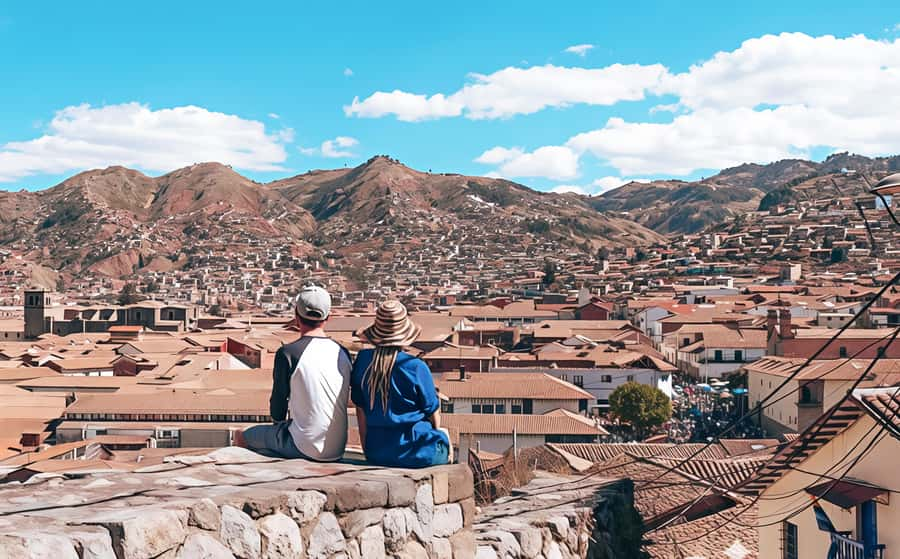
- The route links Cusco’s biggest sights: You see the Cathedral, Company of Jesus, Qoricancha, famous Inca stones, and San Blas in one compact walk.
- The group limit is 10 people: A small English or Spanish group gives you a better chance to ask questions and hear the guide on busy streets.
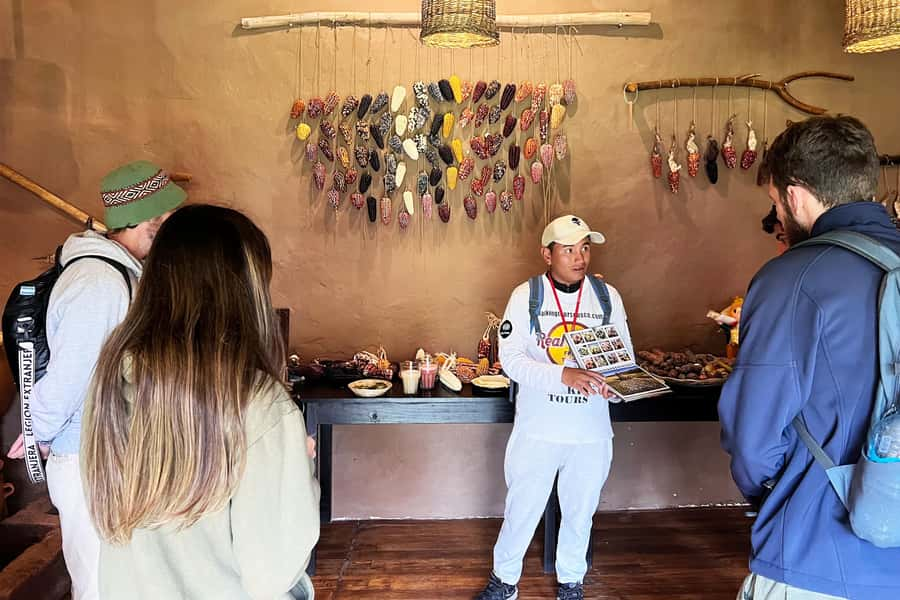
- The luthier visit adds local character: You visit an instrument maker rather than moving only between grand churches and plazas.
- The final drink is part of the price: Choose a Pisco Sour or Chicha Morada, a non-alcoholic purple corn drink.
- The itinerary can shift: The Andean music stop has occasionally been closed, so do not book this solely for the performance.
- It is best early in your Cusco stay: The history, orientation, views, and practical tips make it a useful first activity.
Starting beside the Inca Fountain in Plaza de Armas
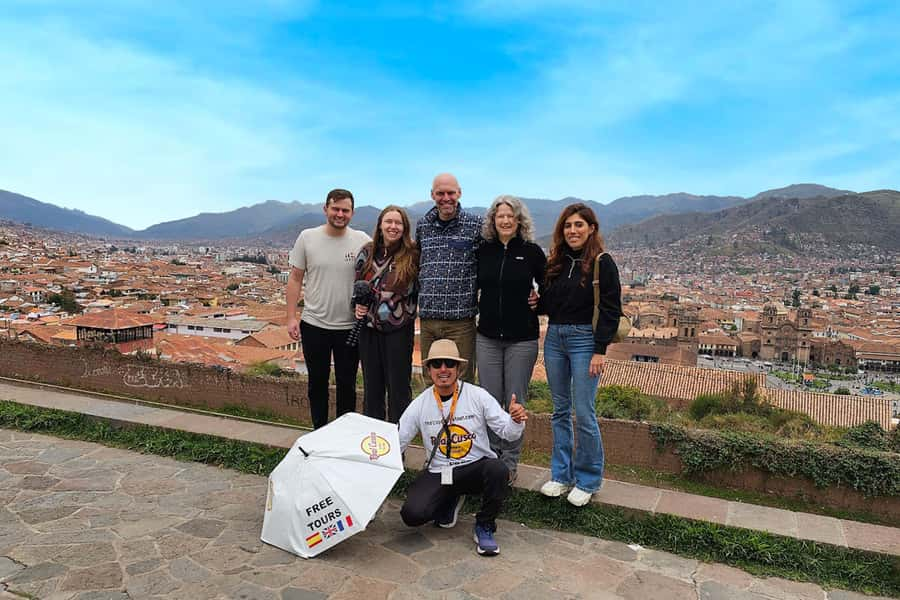
Your meeting point is beside the Inca Fountain in Cusco’s Plaza de Armas, at coordinates -13.516772, -71.9787231. Look for the guide holding a white umbrella. That detail matters in a crowded square, where tour groups gather around the gardens, cathedral steps, and arcades.
The Plaza de Armas is a good place to begin because Cusco’s past is visible in layers. Spanish colonial churches frame a square built over the Inca capital, while the surrounding streets lead quickly to walls made from carefully fitted stone. Your guide sets the basic story here, helping you understand how the city changed after the Spanish conquest.
The tour is offered in English and Spanish. The group size is limited to 10, though actual attendance can be smaller. One English-language outing had only three people, making it feel close to a private tour. That is a real advantage if you want to ask about Inca religion, colonial architecture, food, or practical matters such as adjusting to Cusco.
The listed duration is two hours. That is enough for a useful orientation, but not enough for long museum visits or slow exploration inside every church. Think of this as a street-level introduction, not a full archaeological tour.
More History and Heritage Tours around the world:
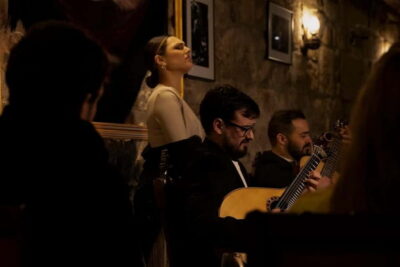
- Porto: An Intimate Fado Show in a Historical Tavern
★ 4.8 · 2,055 reviews - Vienna Mozart Concert in Historical Costumes at the Musikverein
★ 4.5 · 888 reviews - Tenerife: History The Evolution of Music Show Entry Ticket
★ 4.8 · 620 reviews
The Cathedral and Company of Jesus
The first section focuses on the two grand churches facing the main square. The Cathedral is the larger landmark, with a heavy presence at the heart of Cusco. The Company of Jesus, built by the Jesuits, is known for its ornate colonial appearance and strong position beside the square.
You should expect to view these buildings as part of the walking route rather than assume that every interior is included. Museum and other optional entry fees are not part of the tour price. If you want a detailed look inside, plan a separate visit and allow extra time.
This part of the walk works best when your guide explains the mixture of Spanish Catholic design and local Andean traditions. Cusco is not simply an old Spanish city, nor is it only an Inca site. The appeal comes from seeing both cultures pressed into the same streets, sometimes in the same wall.
The guides have received strong praise for making this history easy to follow. Erick, in particular, is described as entertaining while still giving useful historical information. Nilo has also been praised for keeping the group in good spirits, and Niki for clear communication. Guide quality can vary from one departure to another, but the named guides have set a high standard.
Qoricancha, the Sun Temple, and the Inca wall
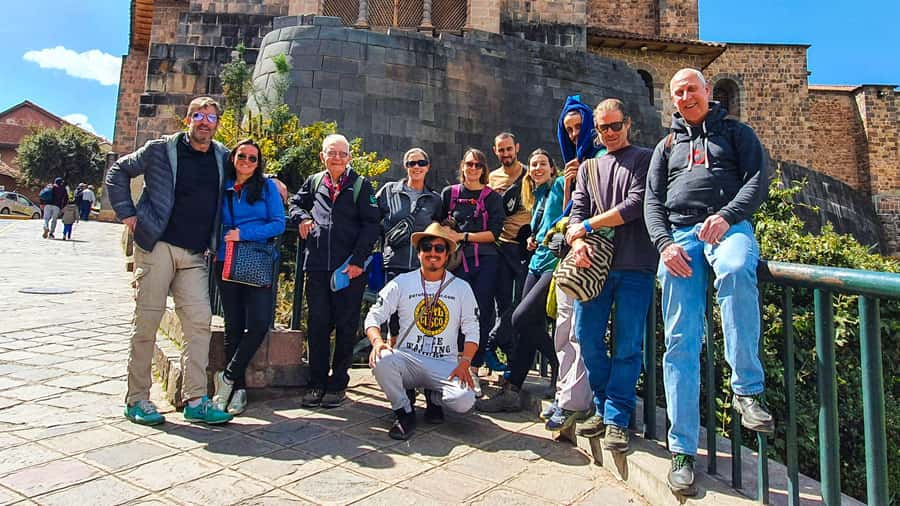
From the main square, the walk continues to Qoricancha, the famous Sun Temple. This is one of Cusco’s essential stops because it shows how important the city was under Inca rule. The Spanish later built the Santo Domingo church and convent over the site, creating one of the clearest examples of Cusco’s layered past.
The tour gives you context from the street and explains why Qoricancha matters. It does not include museum entry, so confirm what you will see inside if viewing the interior is a priority. Even from outside, the stop helps connect the city’s religious center with the wider Inca road and temple system.
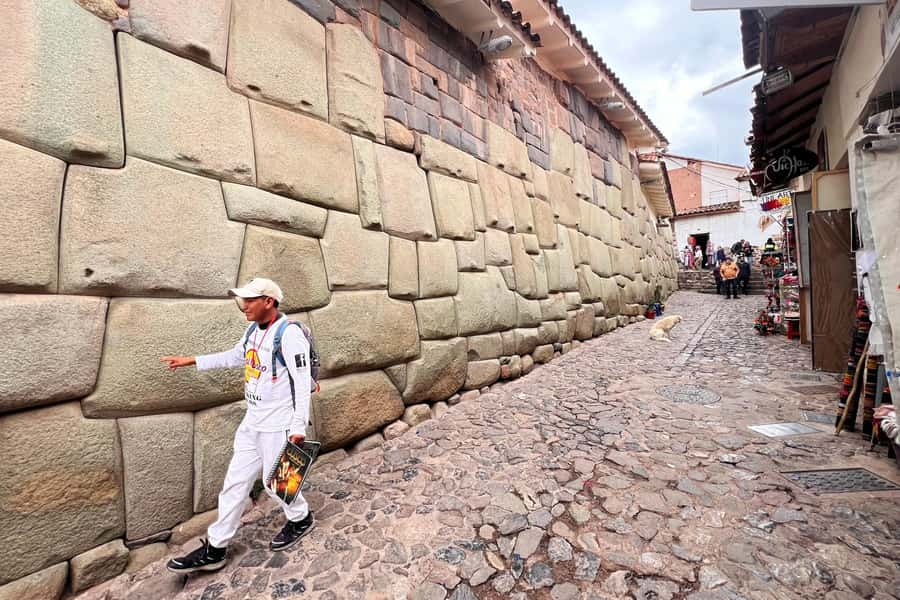
The route also pauses at the famous 12-angled and 13-angled stones. These stones are not large monuments, but they are excellent examples of Inca masonry. Their tightly fitted edges make a strong point: Inca builders could create stable walls without modern mortar, and they treated stonework as both structure and craft.
Your guide also points out the Andean Trilogy, represented by the condor, puma, and snake. These animals relate to different levels of Andean thought and appear in local art and interpretation. The carved forms in the wall are easy to miss if you hurry past. This is exactly the kind of detail a walking guide earns their fee by pointing out.
San Blas, seven narrow bends, and city views
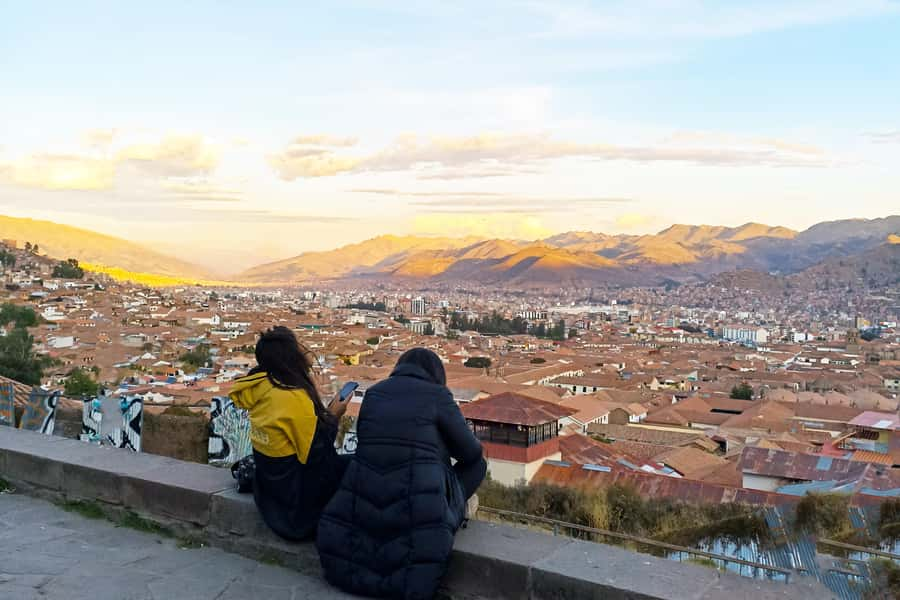
The route then climbs toward San Blas, one of Cusco’s most appealing neighborhoods. Its streets are narrower and more irregular than those around the main square, with steep sections and changing views across the city.
You need reasonable walking ability for this portion. The activity is not suitable for wheelchair users or people with mobility impairments, and the combination of uneven streets and uphill walking may be tiring. Wear shoes with a firm grip and avoid treating this as a flat city stroll.
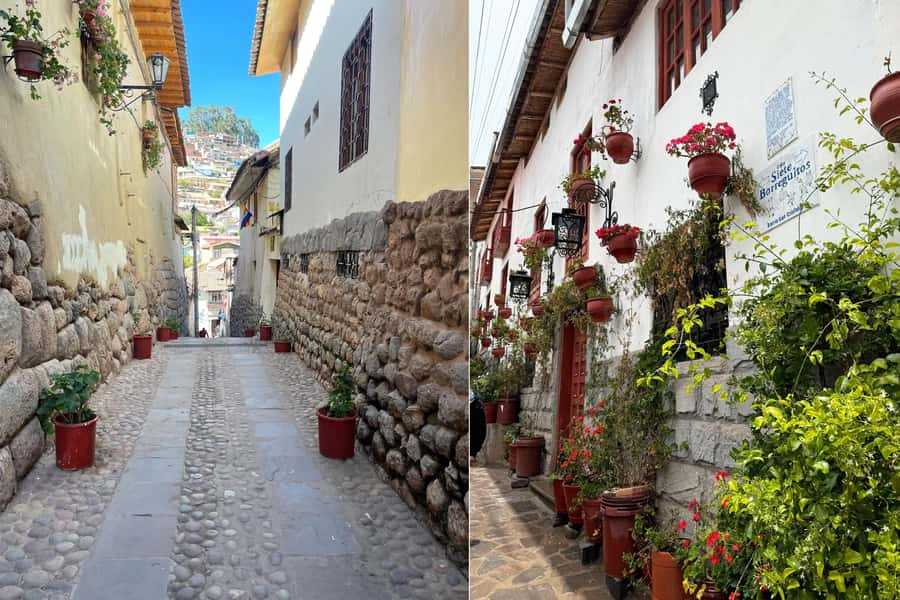
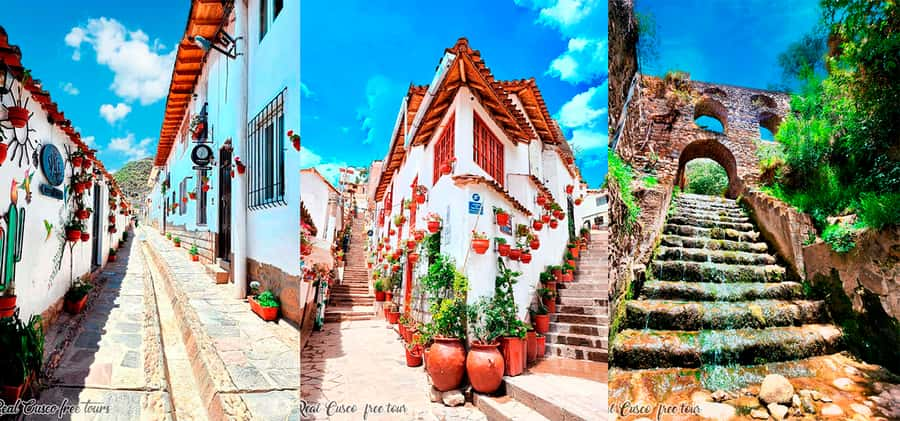
San Blas feels more intimate than the ceremonial center. You walk through small streets and see a side of Cusco tied to craftspeople, local workshops, and hillside views. The route includes 7 Borreguitos Street, known as one of the city’s most picturesque lanes. It is a worthwhile photo stop, but remember that a pretty street is still a working public passage, so keep your group moving when needed.
The views are another strong point. One departure included a beautiful sunset viewpoint, while the standard description promises broad views over Cusco. Timing will affect the light, and the exact viewpoint may change with the guide or conditions. If sunset photography matters to you, check the start time rather than assuming every departure reaches the viewpoint at dusk.
More Live Music around the world:
- Vienna: Vivaldi’s Four Seasons Concert in Karlskirche
★ 4.7 · 14,951 reviews - Venice: La Fenice Opera House Entry Ticket with Audio Guide
★ 4.6 · 11,742 reviews - Sydney: Opera House Guided Tour with Entrance Ticket
★ 4.8 · 8,312 reviews - New Orleans Steamboat Natchez Jazz Cruise with Dinner Option
★ 4.0 · 7,533 reviews
A luthier’s workshop and Andean music
The visit to a luthier’s workshop gives the tour a useful change of pace. A luthier makes and repairs musical instruments, and this stop connects the city’s craft traditions with its music. It is more personal than another quick photograph outside a church.
You can expect the workshop to be a short visit within the larger walk. The experience is included, so you do not need to arrange a separate craft stop. It also gives you a chance to see how local music is tied to handmade instruments rather than treated only as a staged evening performance.
The tour also includes an Andean music show. This can be a memorable addition, especially if you have just arrived and want a first taste of regional music without committing to a full evening program. Still, keep your expectations flexible. One outing found the music venue closed, even though the rest of the route went well. The guide suggested a local dance show afterward, and that alternative turned into a successful evening, but it was an extra plan rather than a guaranteed part of the booked route.
That experience points to a practical rule: choose this tour for its history, route, guide, and drink first. Treat the music performance as a welcome extra, not the sole reason to reserve.
The Temple of Manco Capac
Near the end, the walk visits the Temple of the First Inca Ruler, Manco Capac. This stop adds a different focus from the major colonial churches and Qoricancha. Manco Capac is traditionally regarded as the first Inca ruler, so the temple connects the city tour with the origin story of the Inca state.
The stop is valuable because it moves beyond the most photographed sights. You get a broader sense of how Cusco’s identity is built from royal legends, sacred places, stonework, Spanish buildings, and living neighborhoods.
As with the churches and Qoricancha, the tour’s purpose is interpretation and orientation. Optional museum entries are not included. If the temple is operated as a paid attraction at your visit time, ask the guide whether entry is separate before paying.
Pisco Sour or Chicha Morada to finish
The final toast is simple but well chosen. You can select a Pisco Sour, Peru’s national cocktail, or Chicha Morada, a sweet non-alcoholic drink made from purple corn. This gives non-drinkers and people avoiding alcohol an equal option.
The drink is served as the tour wraps up, often in a pleasant restaurant or local setting. One outing ended at a cute restaurant where the group toasted with pisco. That finish gives the walking tour a social close instead of ending abruptly on a street corner.
The Pisco Sour is a useful first taste of a Peruvian classic, but this is a sample rather than a dedicated cocktail class. If you are sensitive to alcohol at altitude, choose the Chicha Morada or sip slowly. Cusco sits high, and a drink can affect you more than expected after two hours of walking.
Is $10 good value for two hours?
At $10 per person, this is inexpensive for a small-group city orientation that includes a bilingual guide, a luthier visit, music, and one drink. I consider it good value if you want a quick introduction and will use the guide’s context to plan later visits.
The pricing needs a little explanation. This is described as a free walking tour in practice, with some participants joining through the main square and tipping at the end. A booking through the paid option costs $10, and you may still feel social pressure to tip, depending on how the tour operates that day.
That does not make the walk poor value, but it does mean you should understand what you are paying for. The paid reservation offers a planned place and time, while the street-based format may allow people to join without the same booking. If avoiding confusion matters to you, ask at the start how the payment and tip work.
The small group helps justify the fee. A guide who can answer questions and adjust explanations for three to 10 people offers more than a large group passing through Cusco. The strongest value comes from the guide’s interpretation, not from entry tickets, since museum admissions are excluded.
Free cancellation is available up to 24 hours before the activity for a full refund, and you can reserve now and pay later. Those terms are useful when your Cusco plans may change, especially during a longer Peru trip.
Who should take this Cusco walk?
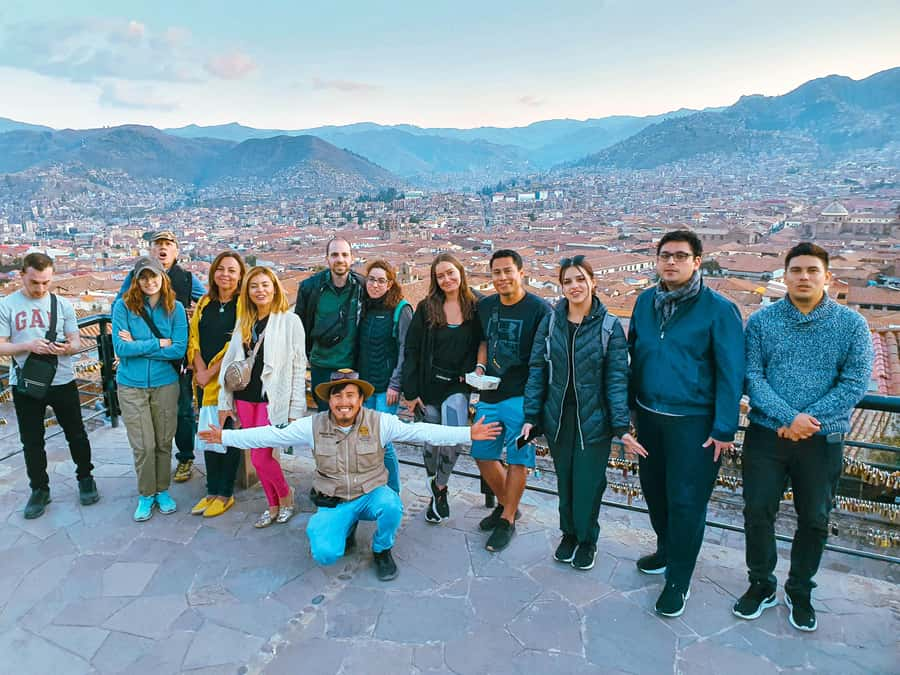
I would choose this tour for a first day or second day in Cusco. It helps you locate the main square, understand the city’s Inca and colonial layers, see San Blas, and collect practical suggestions from someone who knows the streets.
It suits you if you want:
- A short introduction before longer Sacred Valley or Machu Picchu visits
- A balance of major sights and smaller street stops
- A small group rather than a large coach tour
- History explained in English or Spanish
- A drink and local music included in a low-cost activity
- A route that reaches San Blas and city viewpoints
It is less suitable if you need step-free access, dislike uphill walking, or want extensive interior visits. It is also not ideal if the Andean music show is the main purpose of your afternoon, since that stop is not guaranteed to operate.
The activity is not suitable for babies under one year, people over 95, or people with hearing impairments, according to the stated restrictions. Families should also consider the two-hour walking time and the uphill San Blas section.
Should you book it?
Book it if you want a compact, affordable first look at Cusco with strong historical explanation, a small group, San Blas views, and a local drink at the end. The guides Erick, Nilo, and Niki have been praised for making the walk both informative and fun, which matters more than a long list of stops.
Go in with two clear expectations: museum entry is extra, and the music portion can change. If those limits suit you, $10 buys a useful orientation with more personality than a basic plaza walk. I would take it near the start of a Cusco stay, then return to Qoricancha, the Cathedral, or San Blas later at your own pace.
FAQ
How long does the Cusco walking tour last?
The tour lasts two hours.
How much does the tour cost?
The listed price is $10 per person.
Where is the meeting point?
Meet beside the Inca Fountain in Cusco’s Plaza de Armas. The guide will be holding a white umbrella.
What languages are available?
The tour is available in English and Spanish. A French guided tour requires at least four customers to proceed.
What drinks are included?
You can choose a Pisco Sour or Chicha Morada, which is a non-alcoholic Peruvian drink.
Is the music show guaranteed?
The tour includes an Andean music show, but the venue may occasionally be closed. The itinerary can change if the planned music stop is unavailable.
Are museum entrance fees included?
No. Museum entry is optional and is not included in the tour price.
How large is the group?
The group is limited to 10 participants. Some departures may be smaller.
Is the tour suitable for people with mobility impairments?
No. The activity is not suitable for people with mobility impairments or wheelchair users. It is also not suitable for babies under one year, people over 95, or people with hearing impairments.
Just added around the world
- Warsaw: Guided Walking Tour with a Private Chopin Concert★ 5.0 · 13 reviews
- Wrocław: Chopin & Friends piano concerts★ 4.6 · 28 reviews
- Wine, Jazz and Magic: A Night at Malkhaz Jazz Club★ 5.0 · 2 reviews
- Warsaw: Candlelight Concert at Fryderyk Concert Hall★ 4.7 · 110 reviews
- Warsaw: Chopin Concert Ticket With Glass of Champagne★ 4.7 · 59 reviews
- Vienna: Romantic Classics Piano, Violin, and Cello Concert★ 4.7 · 60 reviews
- Vienna: Sunday Brunch Danube Cruise & Live Music★ 4.2 · 42 reviews
- Vienna: Concert by the Vienna Baroque Orchestra★ 4.6 · 56 reviews
Historical Tours, compared.
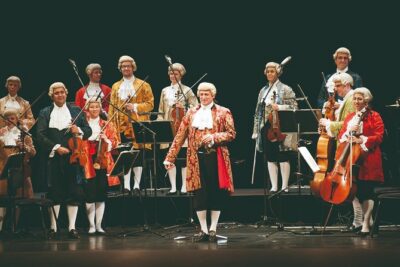
Vienna Mozart Concert in Historical Costumes at the Musikverein
Read our review →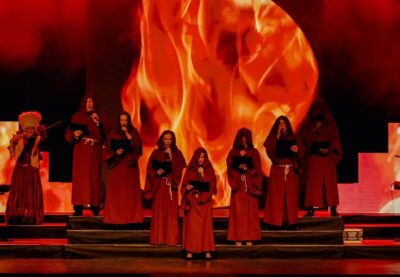
Tenerife: History The Evolution of Music Show Entry Ticket
Read our review →
Live Fado Show in Historic Alfama with Port Wine
Read our review →
New Orleans Jazz History and Music Walking Tour
Read our review →

Fado Show with Port Wine at Historic Lisboa em Fado
Read our review →
“Porto: Fado Show with Guided Tour in a Historic Monastery”
Read our review →Browse the lists this tour appears in