
REVIEW · COPENHAGEN
Copenhagen: The Opera House Guided Tour
Light steals the show here. Copenhagen’s Royal Danish Opera House offers a 75-minute English tour through its glowing foyer, impressive auditorium, and working backstage areas. I like the chance to see Olafur Eliasson’s light sculptures up close, and I like that the tour explains the practical machinery behind grand performances, not just the building’s polished public rooms.
The main drawback is that this is an architectural and theater-production tour, not an opera performance. Children under seven are not recommended, and the ban on strollers, food, drinks, luggage, and large bags means you need to plan your visit with some care.
Key points at a glance
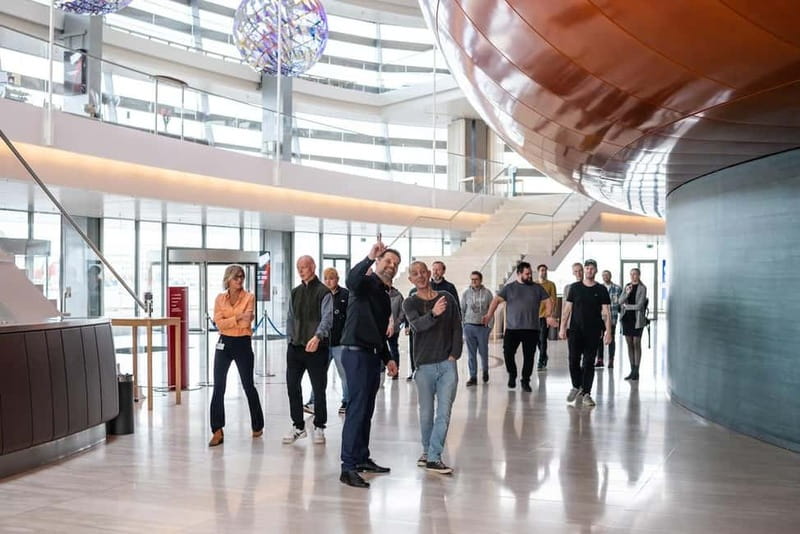
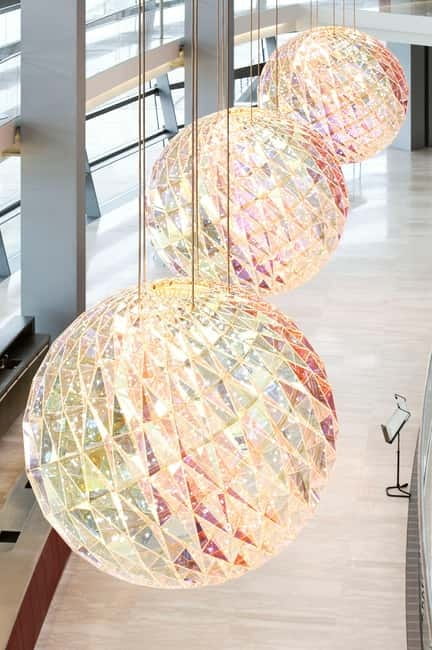
- The foyer is the first major surprise: Expect strong natural light, Olafur Eliasson’s sculptural fixtures, and a glossy maple shell around the Main Stage.
- The auditorium feels theatrical even when empty: Its gilded ceiling and glowing woodwork create the mood of a performance before the curtain rises.
- Backstage machinery gets real attention: Movable stage fields help shift large, complex scenery and support elaborate stage illusions.
- The tour explains more than architecture: You learn how staging, costumes, scenography, and technical solutions work together.
- The price is reasonable for access: At $24 per person, the tour offers a focused look inside one of Copenhagen’s major modern cultural buildings.
- Plan around the meeting point: Enter at the harbor-facing main entrance, just around the corner from Ekvipagemestervej 10, and arrive 15 minutes early.
Why the Opera House is worth seeing
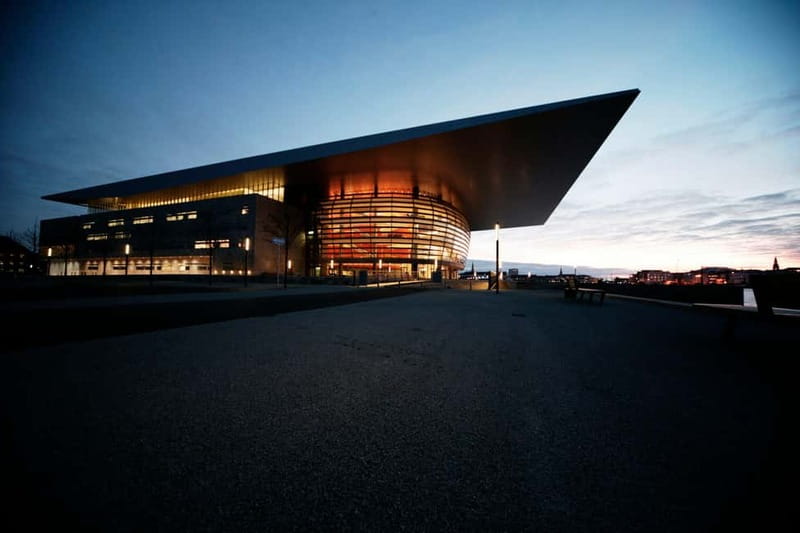
The Royal Danish Opera House is not an old palace converted into a theater. It is a modern opera house given to the Danish people by shipowner Mærsk Mc-Kinney Møller. That background helps explain the building’s scale and polished finish. This was designed as a major national stage, with public spaces that feel grand and technical systems intended to support very large productions.
I find the building most interesting when the tour connects its beauty to its job. The foyer is not only a place where people gather before a performance. The auditorium is not only a pretty room. The backstage machinery is not just industrial equipment hidden from view. Each part serves the complicated process of putting opera and theater on stage.
That practical focus gives the tour more value than a quick photo stop. You get a sense of how many people and systems are needed to make a performance appear effortless. A singer may be the focus of attention, but the building depends on stage crews, costume teams, designers, lighting specialists, and technical operators working together.
More Opera House Tours around the world:
- Venice: La Fenice Opera House Entry Ticket with Audio Guide
★ 4.6 · 11,742 reviews - Sydney: Opera House Guided Tour with Entrance Ticket
★ 4.8 · 8,312 reviews - Sydney Opera House Official Guided Walking Tour
★ 4.5 · 3,770 reviews
The bright foyer and Eliasson’s light sculptures
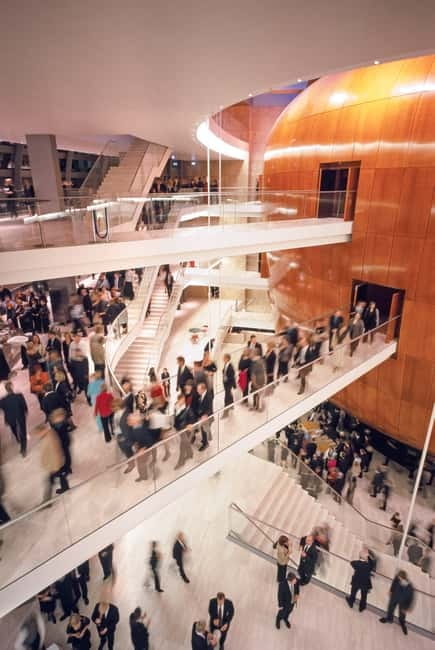
The tour begins in the large foyer by the main entrance. This is the first place where the Opera House makes its strongest visual impression. Light fills the space, and Olafur Eliasson’s world-renowned light sculptures provide one of the building’s most memorable details.
I would give yourself a few minutes to look upward and around before following the guide. The foyer’s light can feel overwhelming, especially after walking in from Copenhagen’s often gray or subdued outdoor weather. The effect is not intimate or cozy. It is spacious, bright, and deliberately dramatic.
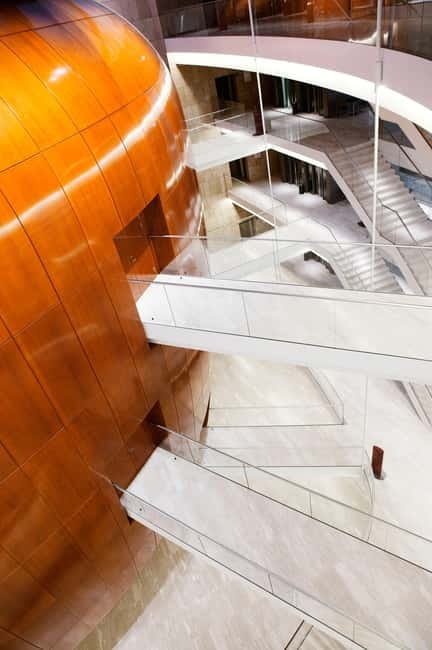
A glossy maple shell wraps around the Main Stage. This warm wood surface helps keep the foyer from feeling like a cold glass-and-concrete hall. It also offers a useful contrast with Eliasson’s cooler, more abstract light work. You see the Opera House balancing art, craft, and function in one space.
The foyer is a good part of the tour for visitors who care about modern architecture and design. It also works for anyone who simply wants an impressive indoor sight in Copenhagen. The lighting and woodwork give you plenty to look at, though the brightness may be less appealing if you prefer older buildings with worn stone, narrow corridors, and visible age.
Inside the auditorium: gilded details and glowing wood
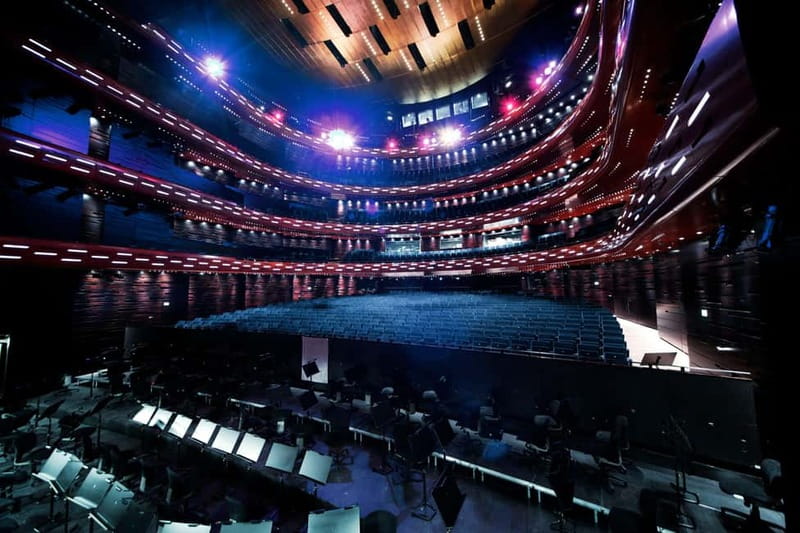
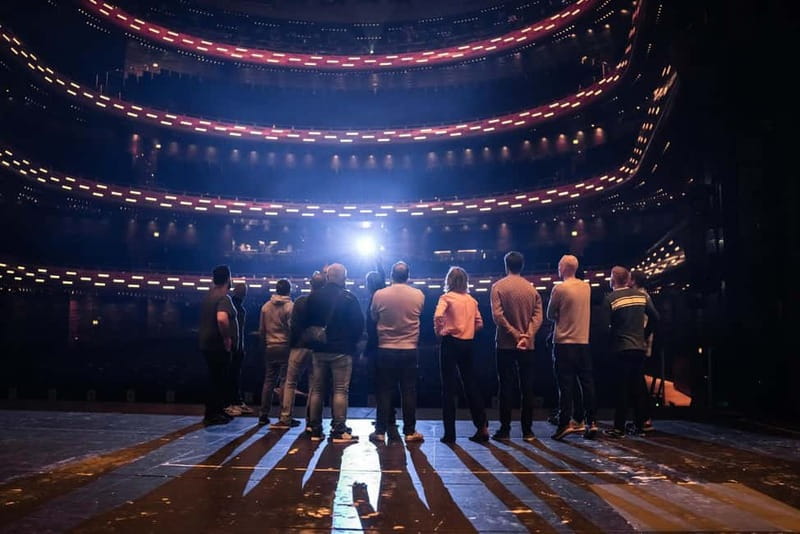
From the foyer, the guide takes you into the auditorium. Here, the mood changes. The open brightness of the entrance gives way to a more focused theatrical atmosphere, with a gilded ceiling and glowing woodwork drawing your attention toward the stage.
The room is designed to make the act of attending a performance feel special. Even without singers, music, or costumes, the auditorium suggests ceremony. I like this section because it shows how a theater uses materials and light to prepare an audience emotionally before the story begins.
The gilded ceiling provides a clear sense of spectacle. The warm wood helps soften the room and adds visual depth. These details are not presented as isolated decoration. They form part of the Opera House’s larger purpose: to make a night at the theater feel unlike an ordinary evening out.
You should also expect some time to look rather than touch or explore freely. This is a guided visit through an active cultural venue, not an open-ended museum. The guide controls the route, and access to certain areas can depend on what is happening inside the building.
For photographers, the auditorium may be one of the best stops. Still, keep your attention on the explanation. The tour’s value comes from understanding how the room fits into the larger production process, not from collecting a few pictures of the ceiling.
Behind the scenes with movable stage fields
The backstage portion gives the tour its strongest practical edge. You learn how movable stage fields allow gigantic and complex scenery to be shifted. These systems help crews create changes that would be impossible with a fixed stage alone.
This is where an opera house begins to feel less like a beautiful public building and more like a huge working machine. Scenography, the design of the stage world, depends on space, timing, machinery, and careful coordination. A set must appear at the right moment, move in the right way, and support the action without distracting from it.
The tour explains how high-tech solutions help create theatrical magic and illusions. The important point is not simply that the Opera House has advanced equipment. It is that the equipment lets designers and performers create effects that cannot be produced in a simpler venue.
You might see how stage sections are arranged or learn how large pieces are moved, but the exact backstage view can vary. Opera houses are working spaces, and rehearsals, performances, or technical work may affect the route. I would treat the backstage area as a chance to understand the system rather than expect a full tour of every department.
This part also helps explain why stage productions cost so much and require such large teams. The scenery you see for a few minutes during a performance may involve complex movement and careful planning behind the curtain. For me, that makes the final show more impressive, even if you do not attend an opera during your Copenhagen visit.
More Guided Tours around the world:
- Liverpool: City & Beatles Tour with Live Guide & Live Music
★ 4.7 · 5,944 reviews - Palermo: Teatro Massimo Opera House Guided Tour
★ 4.5 · 1,573 reviews - Budapest: Opera House Guided Tour
★ 4.6 · 1,533 reviews - Sydney Opera House Backstage Guided Tour with Breakfast
★ 5.0 · 329 reviews
Costumes, staging, and scenography explained
The guide also discusses costumes, staging, and scenography. These subjects broaden the tour beyond building design. You learn about the many visual and technical choices that shape a performance.
Costumes help define characters, period, movement, and mood. Scenography creates the physical world around them. Staging brings performers, scenery, light, and movement together in time. The tour presents these parts as connected tasks rather than separate departments.
That explanation makes the experience useful for people who have never attended an opera. You do not need to know the difference between a stage field and another technical term before arriving. The tour is built to introduce you to how a major performance is made.
It is also a good choice for anyone who has already seen stage productions and wants to understand what happens outside the audience’s view. The guide’s job is especially important here. The strongest feedback about this tour praises the guide for being informative, while the backstage section earns particular approval for its interest. That tells me you should listen closely during the explanations, since the facts and working details are a major part of what you are paying for.
Is $24 a fair price?
At $24 per person, I consider this a fair price for a 75-minute guided visit to a major national opera house. You are not paying only to enter a grand building. The fee includes the entrance and a live English-language guide who provides access to public areas and backstage subjects that you would not understand as well on a self-guided walk.
The value is strongest if you care about design, theater, architecture, or the mechanics of performance. It is also useful if the weather is poor and you want a substantial indoor activity rather than a short look around a shop or gallery.
The value is weaker if you want to see a live opera. This tour does not include a performance, and a building visit cannot replace the sound and energy of singers on stage. If your main goal is music, check the Royal Danish Theatre’s performance schedule separately.
The 75-minute length is well judged for most adults. It is long enough to cover the foyer, auditorium, and backstage themes without taking up an entire afternoon. You still have time afterward for other Copenhagen sights, meals, or a walk near the harbor.
Who will enjoy this tour most?
I would recommend this experience to adults and older children with an interest in:
- Modern architecture and interior design
- Opera, theater, and stage production
- Technical machinery and large-scale scenery
- Olafur Eliasson’s light-based art
- The behind-the-scenes work that audiences rarely see
The tour may be less suitable for very young children. Children under seven are not recommended, and the subject requires some listening. If your child enjoys machinery, stage tricks, and large buildings, an older child may get a lot from it. If they need constant movement or hands-on activities, the guided format may feel slow.
The Opera House is wheelchair accessible, which makes it a practical choice for visitors who need step-free access. The supplied information does not promise access to every backstage area under every condition, so it is sensible to confirm any specific mobility needs before booking.
Meeting point and what to bring
The meeting point is in the lobby at the harbor-facing main entrance. It is just around the corner from the official address, Ekvipagemestervej 10, so do not rely on the street address alone. Arrive 15 minutes early to find the correct entrance and join the group without a last-minute rush.
Leave large bags and luggage behind. Food and drinks are not allowed, and baby strollers are also not permitted. Pets cannot come inside, except for assistance dogs.
The tour is in English. If you prefer Danish, the Royal Danish Theatre offers Danish guided-tour information through its own website. This English tour is the better fit if you want the guide’s explanations without needing to translate along the way.
Free cancellation is available up to 24 hours before the tour for a full refund, and a reserve-now, pay-later option helps if your schedule is still changing. These policies are useful in Copenhagen, where weather and ferry, train, or day-trip plans can shift.
Should you book the Opera House tour?
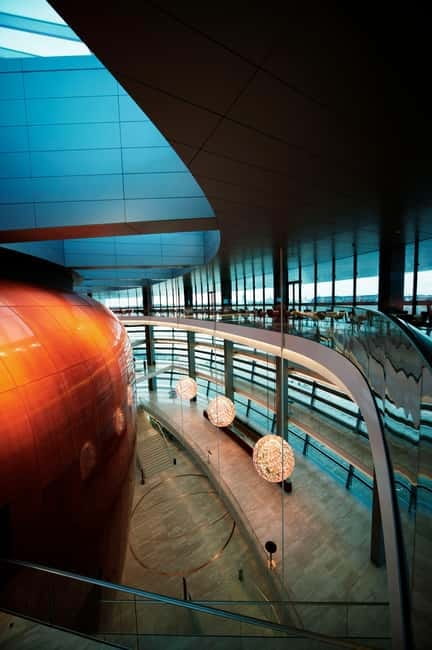
I would book this tour if you want more than a quick look at an impressive building. The foyer, Eliasson light sculptures, maple shell, gilded ceiling, and glowing woodwork provide the visual highlights. The backstage explanation gives the visit its real substance.
Book it especially if you enjoy knowing how things work. The movable stage fields and complex scenery systems turn a beautiful building into a working theater, and the guide helps connect the machinery to costumes, staging, and scenography.
Skip it if you are looking specifically for a live opera or if your schedule is too tight for a 75-minute guided visit. For most adults, design fans, theater lovers, and curious visitors, though, $24 is a sensible price for a focused look inside one of Copenhagen’s most impressive modern cultural spaces.
FAQ
How long is the Copenhagen Opera House guided tour?
The tour lasts 75 minutes.
What language is the tour conducted in?
The live guided tour is conducted in English. Danish guided-tour information is available through the Royal Danish Theatre.
Where is the meeting point?
Meet in the lobby at the harbor-facing main entrance. It is just around the corner from the official address, Ekvipagemestervej 10.
How early should I arrive?
You should arrive 15 minutes before the tour begins.
Is the Opera House tour wheelchair accessible?
Yes, the activity is wheelchair accessible.
Are young children allowed on the tour?
Children under seven are not recommended for this experience. Baby strollers are not allowed.
Just added around the world
- Warsaw: Guided Walking Tour with a Private Chopin Concert★ 5.0 · 13 reviews
- Wrocław: Chopin & Friends piano concerts★ 4.6 · 28 reviews
- Wine, Jazz and Magic: A Night at Malkhaz Jazz Club★ 5.0 · 2 reviews
- Warsaw: Candlelight Concert at Fryderyk Concert Hall★ 4.7 · 110 reviews
- Warsaw: Chopin Concert Ticket With Glass of Champagne★ 4.7 · 59 reviews
- Vienna: Romantic Classics Piano, Violin, and Cello Concert★ 4.7 · 60 reviews
- Vienna: Sunday Brunch Danube Cruise & Live Music★ 4.2 · 42 reviews
- Vienna: Concert by the Vienna Baroque Orchestra★ 4.6 · 56 reviews
Opera House Tours, compared.
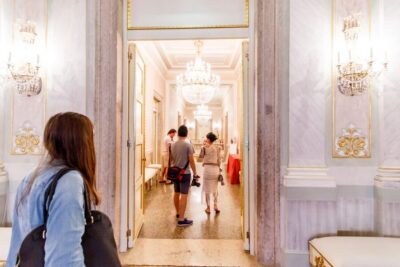
La Fenice Opera House Entry Ticket with Audio Guide
Read our review →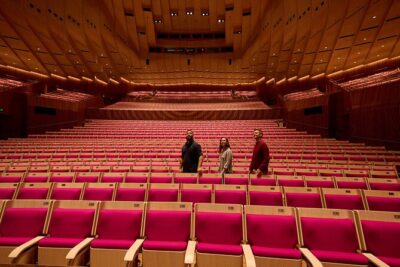
Sydney Opera House Official Guided Walking Tour
Read our review →
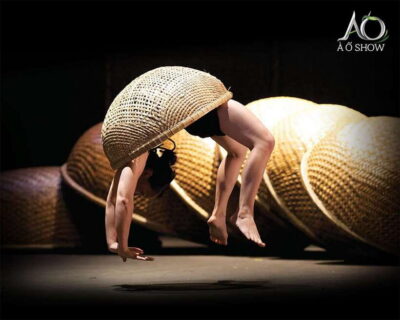
Ho Chi Minh: A O Show Bamboo Circus at Saigon Opera House
Read our review →
Sunrise Kayak, Opera House & Under Harbour Bridge
Read our review →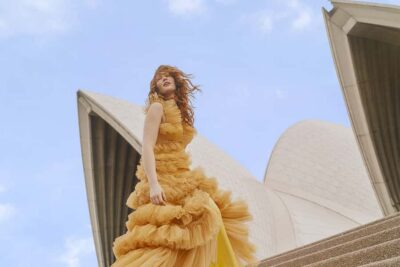
Browse the lists this tour appears in