
REVIEW · USA
Walking Tour of 1970’s Music Venues of the East Village
New York still sings through these old addresses. This two-hour East Village walk follows the places where punk, rock, disco, and singer-songwriters found an audience, from the Fillmore East to CBGB’s and The Bottom Line. I like the focus on actual sites and the small group size, capped at 12 people, which should leave room for questions and stories.
I also like the range of music covered. You will hear about The Who, Pink Floyd, Patti Smith, Bruce Springsteen, the New York Dolls, and the disco club Infinity, all within a compact part of Manhattan. The main caution is reliability: one booking resulted in a guide no-show after an email was missed, though Ann McDermott later offered a free tour and reimbursement for travel expenses.
The East Village can be enjoyed without a tour, but this experience gives your walk a clear purpose. It connects ordinary-looking streets with the clubs, theaters, and music rooms that helped shape 1970s New York. If you care about music history, that context is the real value.
Key points about this East Village music walk
- 1970s New York in two hours: Follow the story of a cheaper, rougher East Village, when concert tickets had to be bought in person.
- Major venues and lost clubs: Visit the former sites of the Fillmore East, CBGB’s, The Bottom Line, Club 82, On the Rocks, and Great Gildersleeves.
- Rock history with a disco detour: The route includes the New York Dolls, Patti Smith, Bruce Springsteen, The Who, Pink Floyd, and the club Infinity.
- Small group format: The tour is limited to 12 people, a useful size for questions and personal discussion.
- Simple downtown finish: The walk ends at 15 E 4th Street, near the R/W trains and Washington Square Park.
- A weather-dependent outdoor activity: Poor weather can lead to a new date or a full refund.
Why the East Village makes such a good music tour
The East Village works well for this subject because the story is tied to specific street corners, buildings, and former club locations. You are not sitting in a museum looking at old posters. You are walking through the neighborhood where performers, club owners, fans, and aspiring bands once crossed paths.
The tour looks back to a time when apartments were cheap and music tickets required an in-person visit. That detail helps explain the social side of 1970s music. Going to a show was not only about the performance. You had to find the venue, buy a ticket at the box office, and be physically present in the scene.
Many of the famous rooms are gone. That is both the appeal and the limitation. You will not walk into the old CBGB’s or sit in the original Fillmore East. Instead, the guide uses the present-day streets to explain what happened there, which makes the storytelling especially important.
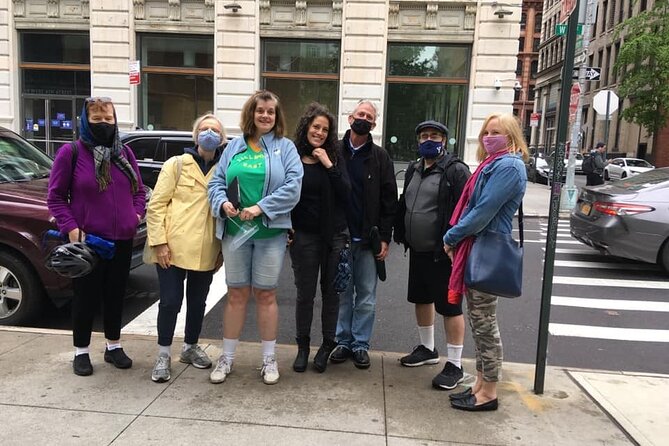
The small group cap of 12 is a strong feature here. A music-history walk can become flat if you are standing behind a large crowd listening to a distant voice. With a smaller group, you have a better chance to ask about a band, a venue, or a particular performance that interests you.
More Live Music around New York City:
- NYC: Harlem Hallelujah! Gospel Wednesday Concert
★ 4.7 · 1,638 reviews - New York City: Harlem Gospel Live Music Concert
★ 4.7 · 1,479 reviews - New York City: Gourmet Dinner Cruise with Live Music
★ 4.2 · 1,074 reviews
Starting at 105 2nd Avenue and meeting the Fillmore East
The tour begins at 105 2nd Avenue at 11:00 in the morning. Starting in the East Village gives you an early look at the neighborhood before moving through its music story. The morning schedule also leaves the rest of your day open for Washington Square Park, Greenwich Village, or another museum and performance venue.
One of the major early subjects is the Fillmore East. This was one of the most important concert rooms associated with the period, and the walk recalls appearances by The Who and Pink Floyd. Those examples give you a sense of the venue’s scale and reputation, even though the room itself is no longer operating as it did in the 1970s.
For a music fan, the Fillmore East section should be one of the strongest parts of the experience. It places major touring acts within the same neighborhood as smaller clubs where new artists were still trying to build an audience. That contrast matters. The East Village was not simply a place where famous bands passed through. It was also a place where careers began in much smaller rooms.
You should expect this part of the tour to rely on the guide’s explanation rather than preserved interiors. That means the quality of the experience depends heavily on how well the story is told. Ann McDermott is identified as the provider, but no additional guide biography or guide name is supplied, so you should not book expecting a particular personality beyond the experience offered by the provider.
CBGB’s and the East Village punk story
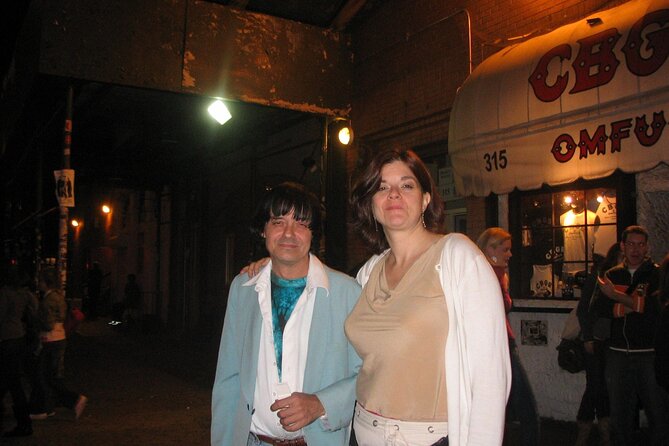
The former CBGB’s site is another central stop. The club has become shorthand for the early New York punk scene, and the tour places it within the wider East Village setting rather than treating it as an isolated shrine.
The itinerary specifically recalls Patti Smith after the release of Horses in 1976. That detail gives the stop a useful focus. You are not just hearing that CBGB’s was important. You are considering a moment when an artist with a new record could appear in a small club and help define a new sound in front of a local audience.
This is also where the difference between a music fan and a general visitor becomes clear. If you know Patti Smith, the New York Dolls, or the early punk movement, the former club location will carry real weight. If you do not, the guide’s stories may help, but you should expect a site-based history walk rather than live music, a concert, or an entrance into a preserved club.
The appeal comes from seeing how close these musical landmarks were to everyday city life. The route does not present rock history as something sealed away in a distant past. It connects it with apartment buildings, sidewalks, and working streets that still form part of the East Village.
Smaller venues where careers took shape
The tour does not stop with the best-known names. It also visits Club 82, On the Rocks, and Great Gildersleeves. These lesser-known locations are important because they show how performers developed an audience before reaching larger stages.
That is a valuable choice. A list of famous venues can make music history look inevitable, as if major artists simply appeared fully formed. Smaller rooms tell a more useful story. They point to the local performances, early audiences, and modest stages that helped artists gain confidence and recognition.
The provided information does not specify exactly what remains at each site today. You might find that some locations are easier to identify than others, and some may require the guide’s description to make their significance clear. This is another reason the group size matters. You can ask for the detail that makes one lesser-known venue worth remembering.
Club 82, On the Rocks, and Great Gildersleeves also broaden the tour beyond punk. They help show that the East Village music scene was not one single style. Rock, experimental performance, dance music, and club culture all overlapped in the same part of Manhattan.
Same city, a different sound:
- NYC: Holiday Yacht Cruise with Jazz, Cocoa & Carols
★ 4.7 · 568 reviews - New York City Dinner Cruise with Live Music
★ 4.0 · 377 reviews - New York City Harlem Highlights w/ Gospel Concert & Transfer
★ 4.5 · 326 reviews - NYC: Evening Jazz Cruise on the Yacht Manhattan
★ 4.8 · 285 reviews
The Mercer Arts Center and the New York Dolls
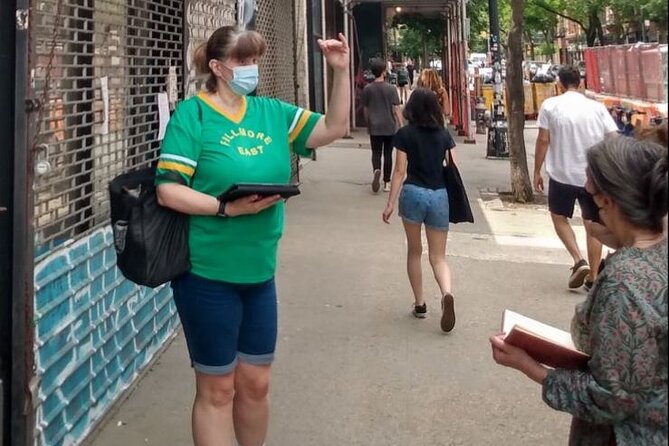
The route also recalls the New York Dolls at the Mercer Arts Center. This stop adds a performance venue that was important to the city’s glam and proto-punk story.
The New York Dolls are a good example of why location matters. Their image and sound are often discussed as part of a broad music movement, but a walking tour puts that story in a real neighborhood. You get a better feel for how close these different clubs and performance spaces were to one another, and how musicians could move through the same downtown circuit.
The Mercer Arts Center stop should appeal to anyone interested in the period before punk became a widely recognized category. It also helps explain the tour’s broader purpose. This is not just a walk to the most famous club names. It follows the chain of places where new styles were tested, noticed, and passed from one audience to another.
As with the other stops, the main experience is the account of what happened there. You should not expect a functioning music venue or a formal exhibit at the former site. The value is in putting the story on the street where it unfolded.
The disco chapter at Infinity
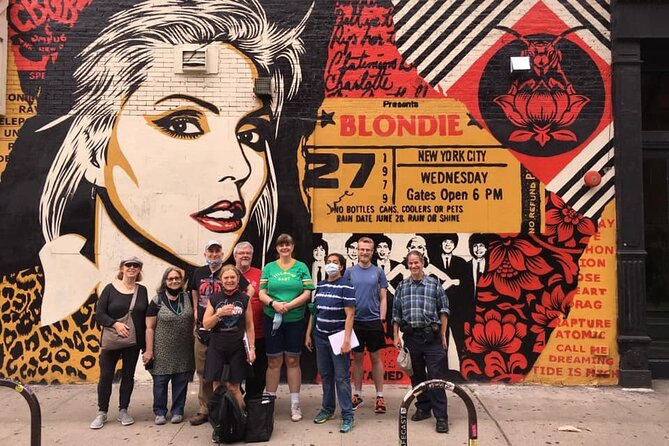
Not every stop is about guitar bands. The walk also reaches the former site of Infinity, a dance club destroyed by fire in 1979. This short turn toward disco is one of the route’s useful surprises.
The inclusion of Infinity keeps the tour from becoming a narrow account of rock and punk. New York’s 1970s music life included dance clubs as well as small rock rooms, and the route acknowledges that difference. The fire also adds a sobering reminder that some venues disappeared not because their music faded, but because the physical place was lost.
You may find this stop especially useful if your interests extend beyond the artists named in the tour description. It gives the period more range and helps you see that the East Village was part of several music worlds at once.
Finishing at The Bottom Line on East 4th Street
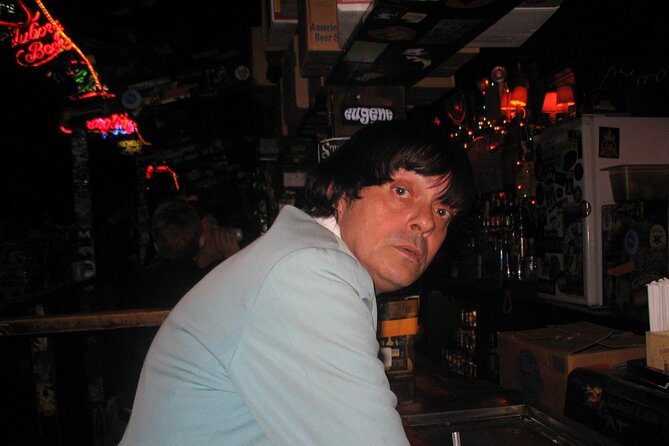
The walk ends at 15 E 4th Street, in front of what used to be The Bottom Line. The finish is practical as well as symbolic. You are near the R/W trains and Washington Square Park, so you can continue sightseeing without a difficult transfer across town.
The Bottom Line section centers on Bruce Springsteen in 1975, around the time of Born to Run. That example captures the tour’s main theme: an artist on the edge of a major breakthrough, playing a respected downtown room before reaching an even larger audience.
Ending with The Bottom Line gives the route a natural closing point. You have moved from major concert acts to local clubs, from punk and glam to disco, and then back to a venue tied to one of the era’s best-known singer-songwriters.
The final location also makes planning easy. You can stop for lunch, walk toward Washington Square Park, or use the nearby subway. Since the tour lasts about two hours, it fits well into a half-day East Village plan rather than taking over your entire day.
What $50 gets you
The price is $50 per person. That is not the cost of admission to a concert or museum, since the sites are viewed from the street and the itinerary lists no separate entrance charge. You are paying for the guide’s organization, interpretation, and ability to connect several locations into one story.
I think the price can be fair for a music fan who would otherwise walk past these addresses without knowing what happened there. The route includes a good number of venues and covers several styles, while the 12-person limit gives the experience a personal scale.
The value is lower if you already know the East Village music story well and prefer to explore independently. You could visit the neighborhood on your own, but you would need to research the sites and arrange them into a route. This tour saves that preparation time.
The two-hour duration is another plus. It is long enough to cover the major locations without requiring a full day of standing and walking. At the same time, the listing does not provide a precise walking distance or information about rest stops, so anyone with mobility concerns should consider contacting the provider before booking.
Practical details before you book
The tour is offered in English and uses a mobile ticket. The meeting time is 11:00 in the morning at 105 2nd Avenue, New York, New York 10003. Plan to arrive with enough time to locate the starting point, since a missed start could be difficult to recover from on a walking tour.
The experience is near public transportation, and it ends near the R/W trains and Washington Square Park. Service animals are allowed, and most people can participate. Since this is an outdoor walk, comfortable shoes and weather-appropriate clothing make sense, though the supplied information does not state a required dress code or exact walking distance.
There is one reliability issue worth taking seriously. A booking for November 20 followed a reservation made on November 18, but the guide did not arrive and the message went unanswered at the time. Ann McDermott later explained that she had missed the email and offered to provide the tour for free and reimburse travel expenses, but the delayed response came too late.
That appears to be an isolated problem rather than a pattern established by the available information, but it is still a reason to confirm the appointment before setting out. The tour requires a minimum number of participants, and poor weather can also cause cancellation. In either case, you will be offered another date or experience, or a full refund.
Free cancellation is available if you cancel at least 24 hours before the 11:00 start time. Changes or cancellations made inside that window are not accepted for a refund, so keep the local cutoff in mind.
Who should choose this tour
I would point this experience toward music fans who want place-based history rather than a general East Village orientation. It is particularly well suited to people interested in 1970s punk, rock, glam, disco, and singer-songwriters.
It also suits visitors who prefer a small group and a focused two-hour activity. The maximum of 12 makes conversation more practical than on a large bus or crowded city tour. You can ask about a favorite artist, compare venues, and follow the parts of the story that interest you most.
You may want to skip it if you need indoor attractions, dislike walking, or want to enter preserved historic music venues. The former clubs and theaters are treated as sites along the route, not as functioning attractions with guaranteed interiors.
Should you book this East Village music tour?
Book it if the names Fillmore East, CBGB’s, The Bottom Line, Patti Smith, the New York Dolls, or Bruce Springsteen make you want to know what the neighborhood looked and felt like around them. The route offers a compact way to connect major artists with the smaller clubs and streets that supported them.
I would also book it if you value stories about lesser-known venues, not just famous ones. The $50 price makes the most sense when you want the guide’s research and a ready-made route, especially in a group limited to 12.
Before booking, confirm the meeting details and check the weather. If you want a street-level look at the East Village’s 1970s music scene, this is a thoughtful, manageable choice, with one reported communication failure worth keeping in mind.
FAQ
How long does the walking tour last?
The tour lasts approximately two hours.
What time does the tour start?
The tour starts at 11:00 in the morning.
Where does the tour begin?
It begins at 105 2nd Avenue, New York, New York 10003, USA.
Where does the tour end?
It ends at 15 E 4th Street, in front of what used to be The Bottom Line.
What venues are included?
The route includes the former sites of the Fillmore East, CBGB’s, The Bottom Line, Club 82, On the Rocks, Great Gildersleeves, the Mercer Arts Center, and Infinity.
Which language is the tour offered in?
The tour is offered in English.
How many people can join the tour?
The tour has a maximum of 12 participants.
How much does the tour cost?
The price is $50 per person.
Can I cancel for a full refund?
Yes. You can cancel at least 24 hours before the experience starts for a full refund. Poor weather or failure to meet the minimum number of participants may also lead to an alternative date or a full refund.
Just added around New York City
- New York City Sunset Jazz Sail aboard Clipper City★ 4.5 · 104 reviews
- New York City Live Jazz Sail★ 5.0 · 14 reviews
- New York Harbor Wine and Jazz Sail aboard Clipper City★ 4.5 · 21 reviews
- New York Harbor Live Holiday Jazz Cruise★ 5.0 · 35 reviews
- New York City Dinner Cruise on Luxury Yacht with Live Music★ 4.0 · 11 reviews
- Harlem Jazz Tour: NYC Speakeasies and Juke Joints – Live Jazz★ 4.5 · 7 reviews
- Manhattan Evening Jazz Cruise★ 5.0 · 123 reviews
- Harlem Jazz Series★ 4.5 · 42 reviews
Tours, compared.
Liverpool: City & Beatles Tour with Live Guide & Live Music
Read our review →Sydney Opera House Official Guided Walking Tour
Read our review →
Alfama Tour and Live Fado with Traditional Dinner
Read our review →
Schönbrunn Palace Evening Tour, Dinner and Concert
Read our review →Browse the lists this tour appears in