
REVIEW · PORTUGAL
Porto: What is Fado? Commented Live Concert with Port Wine
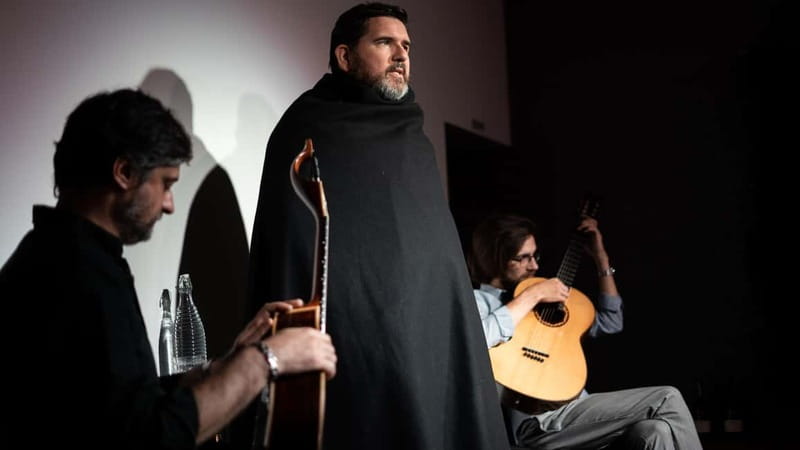
Fado can make a room go quiet. In Porto’s Ribeira district, Fado na Baixa turns a one-hour concert into a clear introduction to Portugal’s most emotional musical tradition. I like the mix of live singing and short historical films, and I like hearing both Lisbon Fado and the less familiar Coimbra style. The main consideration is time: one hour gives you a tidy introduction, but you may wish the music lasted longer.
The setting also helps. This licensed auditorium occupies a 19th-century building near the Douro River, with four performers in an intimate room rather than a large concert hall. The Tawny Port is a thoughtful local touch, although anyone avoiding alcohol should check what alternative, if any, is available.
Key points at a glance
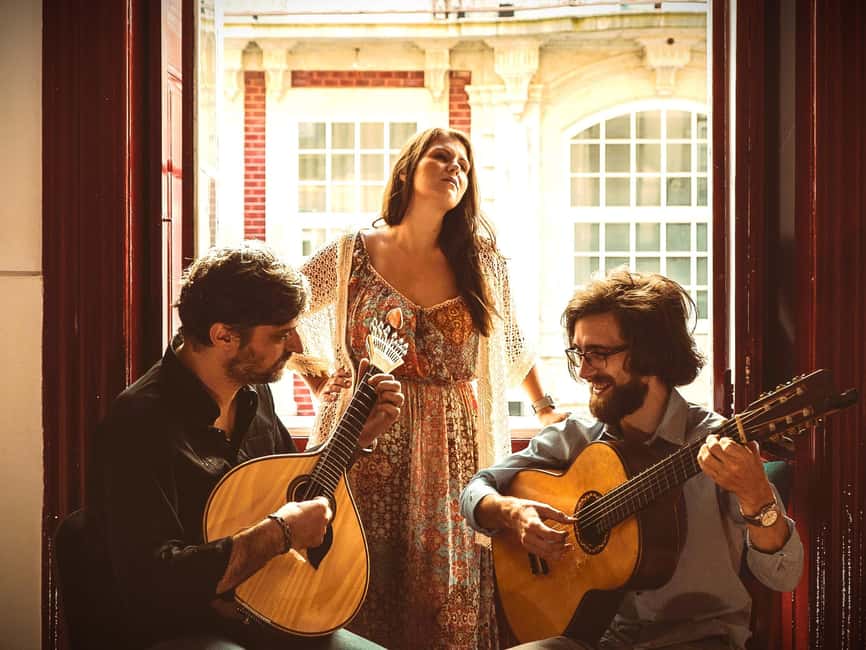
- Two branches of Fado in one show: You hear the intense Lisbon tradition alongside Coimbra Fado, traditionally sung by a male former university student.
- A working lesson in the Portuguese guitar: The concert explains the instrument and compares Lisbon and Coimbra playing styles.
- Amália Rodrigues gets her proper place: A dedicated segment shows how Portugal’s best-known Fado singer changed the music and its reach.
- History without a long lecture: Short films and personal testimonials in several languages explain the music between live performances.
- A glass of Tawny Port is included: You taste the wine during the concert, making the evening feel distinctly Portuguese.
- A compact Ribeira location: The auditorium at R. de São João 99 is in the heart of Porto’s old riverside district.
Why this one-hour Fado show works for first-timers
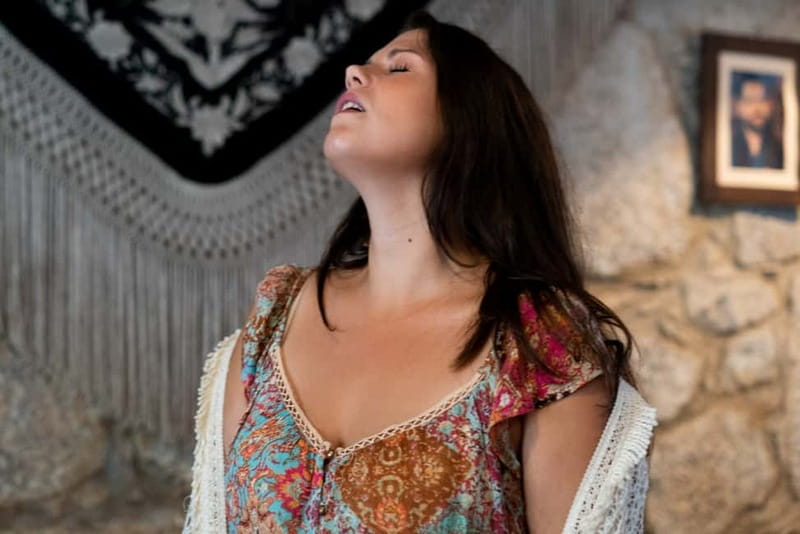
Fado is easy to hear but harder to understand without context. The songs can sound mournful, proud, romantic, or quietly fierce, yet the meaning may pass you by if you do not know the traditions behind them. Fado na Baixa addresses that problem directly.
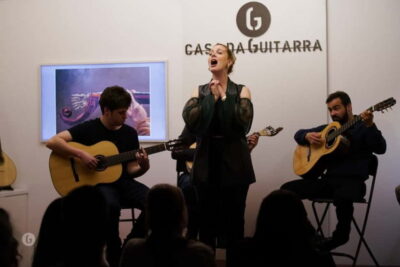
The format combines four performers, including male and female Fado singers and two highly skilled musicians. The live music is broken into sections with filmed material and spoken explanation. That gives you a chance to listen, then understand what you just heard, instead of sitting through an hour of songs with no guide.
I particularly like this approach for a first evening in Porto. The program explains Fado in plain terms, introduces its instruments, and follows its movement from older forms to newer interpretations. The historical material is presented through brief films and personal testimonials in Portuguese, Spanish, English, and French, with an audio guide available in those languages as well.
It is not simply background music over dinner. You sit and pay attention to the singers and instruments, with the Port wine served as part of the cultural setting. The result is more focused than a restaurant performance and less demanding than a full academic presentation.
More Fado Shows around Porto:
- Porto: Live Fado Show with Glass of Port Wine
★ 4.8 · 6,498 reviews - Porto: Cálem Cellar Tour, Fado Show & Wine Tasting
★ 4.4 · 3,530 reviews - Porto: Fado & Port Wine in Traditional Portuguese Music Shop
★ 4.8 · 2,906 reviews
Entering the Ribeira auditorium on R. de São João
The venue is at Fado na Baixa, R. de São João 99, 4050-553 Porto. That puts you in the heart of Ribeira, near the Douro River and within Porto’s old central district.
The building dates to the 19th century, and the small auditorium suits Fado well. This music depends on the voice, the silence between phrases, and the sharp response of the Portuguese guitar. A close room lets those details matter.
The seating has a vintage look. One Portuguese audience member felt the chairs could use an upgrade, though the same comment noted that they were adequate for a one-hour performance. That is a fair way to think about it. Do not book this expecting a polished modern theater, but do expect a characterful setting that fits the music.
The auditorium is wheelchair accessible. Hosts or greeters can assist in Portuguese, Spanish, English, or French, and the audio guide is offered in those same four languages.
The opening: what Fado means to the Portuguese
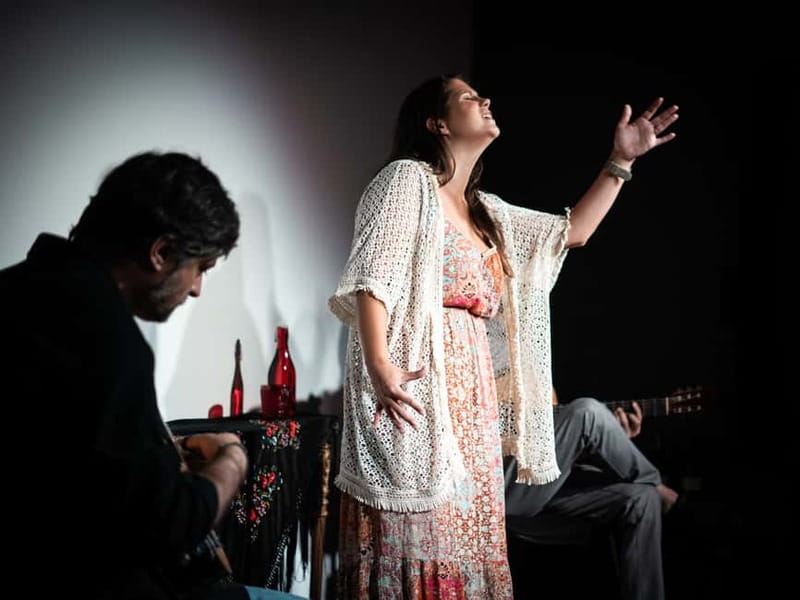
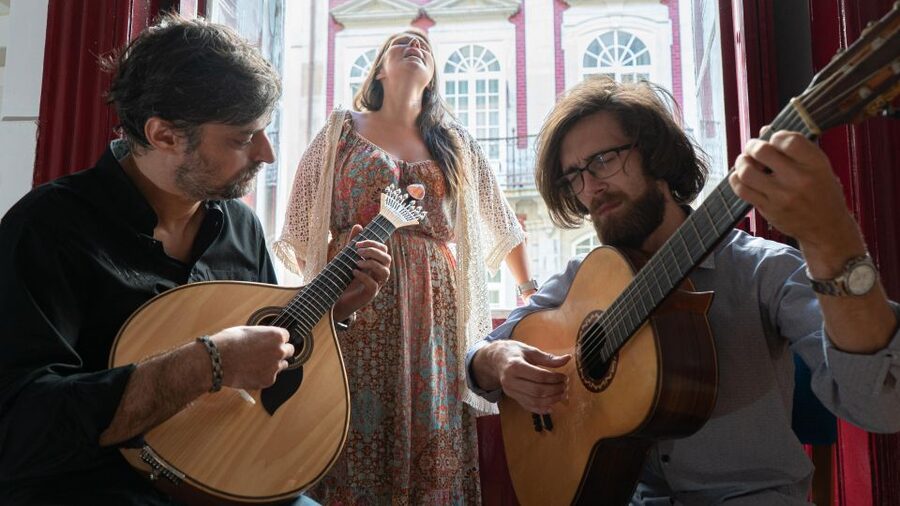
The first section introduces traditional Fado, the style most closely associated with Lisbon. You hear a female and male voice across the program, which gives the music useful contrast. The singers are backed by a standard guitar and the distinctive Portuguese guitar, an instrument that immediately changes the color of the performance.
The program also asks what Fado means to Portuguese people. The answer is not just sadness. Fado often deals with fate, longing, separation, love, work, the sea, and the lives of ordinary people. Its emotional force comes from the singer’s delivery as much as from the words.
The filmed testimonials help here. Hearing people describe Fado in your own language makes the music less distant, especially if you do not speak Portuguese. The show also includes moments when the audience is guided to sing along. This does not turn the evening into a noisy group performance. It gives you a small role and helps you feel how Fado can belong to a community rather than only to the person onstage.
Several listeners particularly valued this blend of explanation and performance. The short films clarify what you are about to hear without interrupting the concert for long stretches. One person found the history section slightly lengthy, so if you want uninterrupted music from start to finish, this format may feel more instructional than expected.
The Portuguese guitar and the Tawny Port pairing
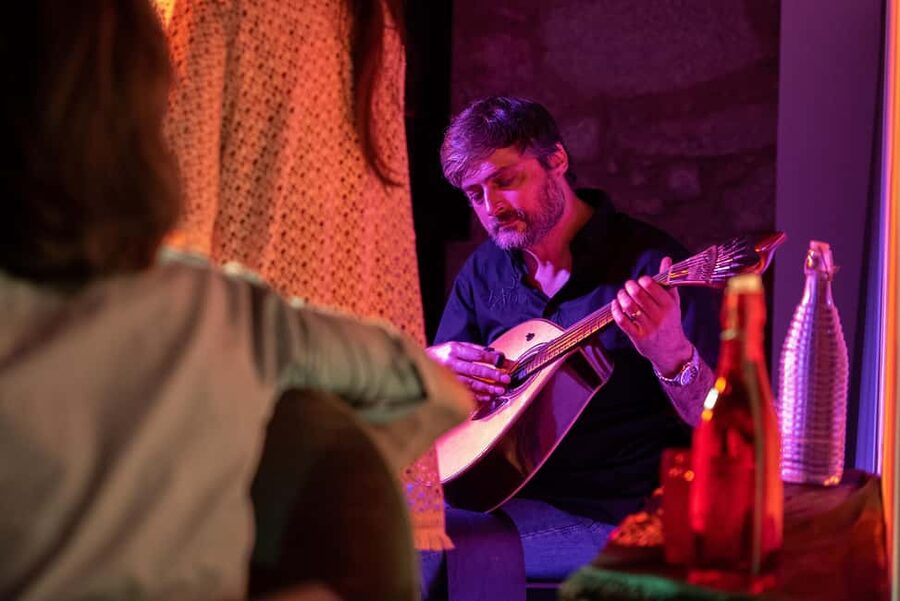
The Portuguese guitar deserves its own attention. It is smaller and more ornate in sound than the familiar six-string guitar, with a bright, ringing quality that can seem almost conversational beside the singer. The program explains the instrument and points out the different playing techniques used in Lisbon and Coimbra.
This is one of the strongest parts of the evening if you already play an instrument or simply enjoy listening closely. A guitar player attending the show was especially fascinated by the Portuguese guitarist’s skill. The concert does not leave the musicians in the background. Their work is treated as a central part of Fado’s identity.
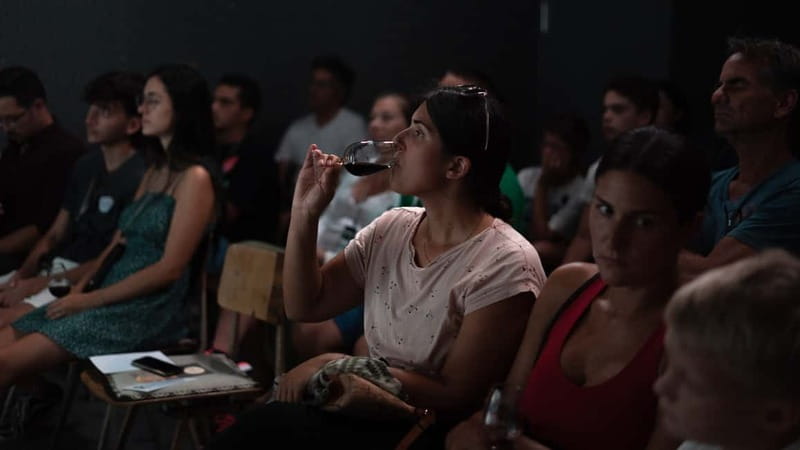
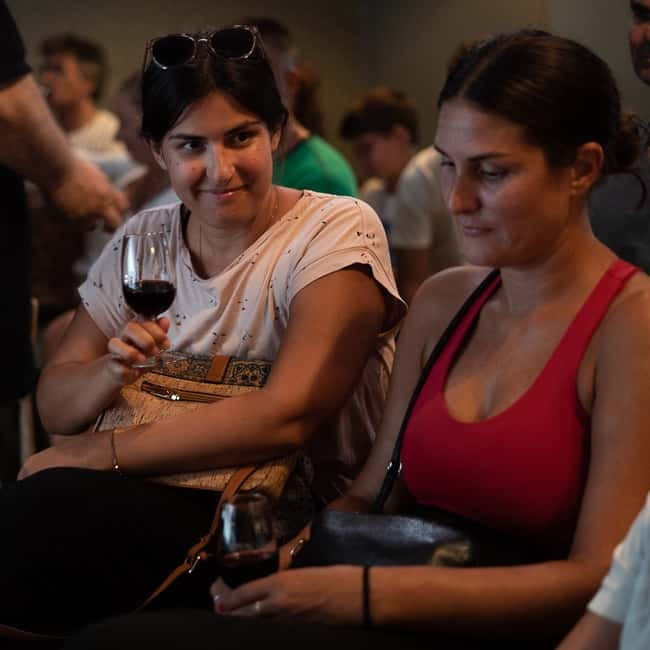
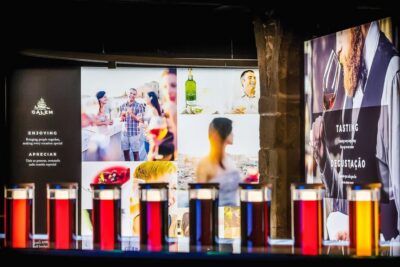
During this portion, you taste a glass of Tawny Port. The pairing makes sense: the wine gives you something local to taste while the music moves through another part of Portuguese culture. The serving is included in the $18 ticket, and many people found it a pleasant addition rather than a gimmick.
The Port is served during the performance, so you do not need to add a separate wine stop to your evening. If you do not drink alcohol, the provided information does not specify a non-alcoholic option. One person specifically wished for one, so it is worth asking the venue before booking if that matters to you.
More Wine Tours around Porto:
- Porto: Intimate Fado Show & Port Wine in Trindade Noble Hall
★ 4.9 · 1,281 reviews - Porto: Live Portuguese Fado Experience with Port Wine
★ 5.0 · 554 reviews - Porto: Cálem Cellar Tour, Live Fado Show and Wine Tasting
★ 4.0 · 295 reviews - Porto: Fado Live Music, Wine & Cultural Introduction
★ 4.9 · 150 reviews
Coimbra Fado and the student tradition
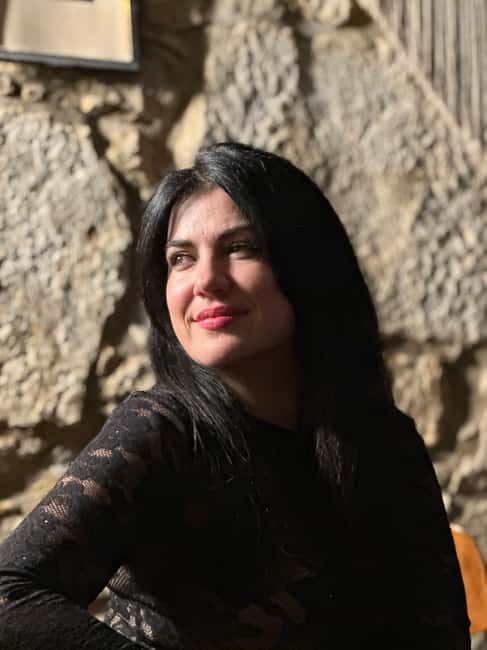
The Coimbra section is the program’s most distinctive feature. Lisbon Fado is the version most often promoted abroad, but Coimbra Fado has its own sound, history, and rules.
Traditionally, Coimbra Fado is sung by men connected to the University of Coimbra. The performer here is a former Coimbra University student, which gives the presentation a direct link to that tradition. His part of the show explains the student connection and offers a different mood from the Lisbon material.
This is valuable because many short Fado concerts stay with the better-known Lisbon style. Here, you hear both traditions and can compare them. The program also explains how the two guitar approaches differ, so the change is not left for you to guess.
Songs connected with students, farewell, fishermen, and loved ones left behind give the music a human scale. You do not need to understand every Portuguese word to recognize the feeling of parting. A performance of Balada de Despedida was particularly moving for one audience member, which tells you how strongly the Coimbra material can land when the song’s theme connects with your own memories.
Amália Rodrigues and the changing face of Fado
A later section focuses on Amália Rodrigues, widely regarded as the queen of Portuguese Fado. Her importance goes beyond fame. She helped reshape traditional Fado, brought new recognition to the style, and introduced it to much larger audiences.
The show uses her story to explain how Fado can change without losing its identity. You see how older forms can be carried forward through new voices, new poetry, and different arrangements.
This is a useful turning point in the program. Without it, you might leave thinking Fado is a fixed art form from the past. Instead, you see a living tradition that honors its earlier singers while making room for fresh interpretations.
The final segment looks at modern Fado and its continued survival. It touches on different poetic styles and links with other musical genres. The point is not to provide a full survey of every modern artist. In one hour, that would be unrealistic. It gives you enough background to listen with better ears when you later encounter Fado elsewhere in Portugal.
What the live performance feels like
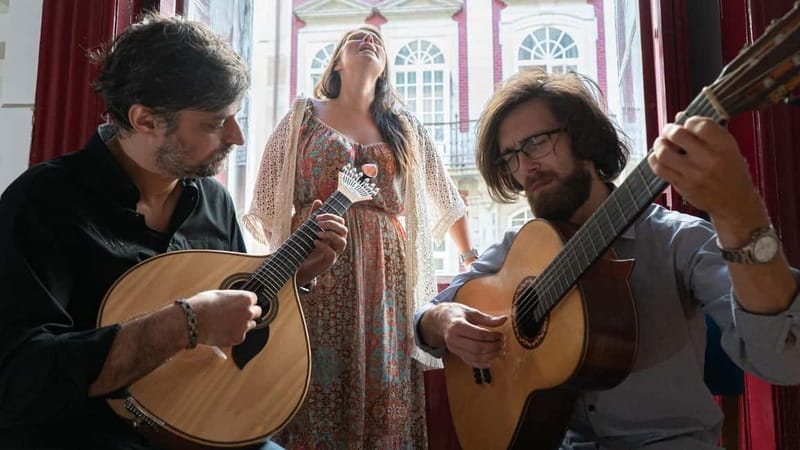
The strongest praise consistently goes to the singers and musicians. The male and female voices provide variety, while the two instrumentalists keep the sound focused and precise. The combination feels intimate because the room is small and the music is presented without the distractions of a meal service.
The performance is emotional, but it is not presented as a solemn ceremony. Audience participation adds a light touch, and the Port gives people a relaxed way to settle into the evening. You may even find yourself singing along for a short passage under the singers’ direction.
That interaction is one reason this works well for families and mixed-age groups. A teenager who might not choose a traditional music concert could still follow the films, learn about the instruments, and take part in the sing-along. At the same time, someone who already knows Fado can focus on the quality of the voices and the Portuguese guitar.
There is one honest limit. The music is not continuous because the historical films and explanations are part of the design. If you want a long, uninterrupted Fado recital, seek out a dedicated concert instead. If you want to know why the music matters, the pauses are useful.
Is $18 good value in Porto?
At $18 per person, this is a strong value for an evening cultural activity. The ticket includes the live performance, multimedia content, an audio guide, and a glass of Port. You are also paying for a central venue and a program that presents several forms of Fado rather than one narrow style.
The value is greatest if you are new to Portuguese music. A standard concert may give you beautiful singing, but this program gives you a framework. Afterward, you can recognize the Portuguese guitar, understand why Coimbra Fado differs from Lisbon Fado, and place Amália Rodrigues in the larger story.
It is also easy to fit into a Porto schedule. The performance lasts one hour, so you can place it before or after dinner in Ribeira without giving up half a day. The short format suits a busy city break, though people who love the music may leave wanting another hour.
The ticket can be canceled up to 24 hours before the activity for a full refund, and you can reserve now and pay later. Those options are helpful if your Porto plans are still shifting.
Who should book this Fado experience?
I would choose Fado na Baixa for a first-time visitor who wants more than a pretty song and a glass of wine. It is especially useful if you do not speak Portuguese, since the commentary, films, and audio guide help you follow the story.
It also suits you if you want:
- A short evening activity in central Porto
- A clear introduction to Fado’s history and meaning
- Both Lisbon and Coimbra traditions
- A close look at the Portuguese guitar
- Live music in a small historic auditorium
- A Port tasting included in the ticket
- An accessible venue with multilingual support
You may want another option if your priority is a long, uninterrupted concert, a large theatrical production, or a more informal restaurant setting. The program is designed to teach as well as perform, and one hour is enough for an introduction, not a complete survey of Fado.
Practical details before you go
The meeting point is the Fado na Baixa auditorium at R. de São João 99 in Ribeira. Check the available starting times when booking, since the exact performance time is not fixed in the basic activity details.
The host or greeter languages are Portuguese, Spanish, English, and French. The audio guide is available in those four languages as well. The venue is wheelchair accessible.
Allow yourself enough time to find the address in Porto’s old central streets. The experience itself lasts one hour, and the Port is included, so you do not need to arrange a separate tasting.
Should you book Fado na Baixa?
Book it if you want a well-paced first look at Portugal’s national song tradition, with enough explanation to make the emotion understandable. The strongest reasons are the excellent singers and musicians, the contrast between Lisbon and Coimbra Fado, the Portuguese guitar lesson, and the thoughtful use of short films.
Skip it only if you want music without commentary or if you already know Fado well and prefer a longer specialist recital. For most first-time visitors, $18 buys a compact, central, and genuinely useful cultural evening, with a glass of Tawny Port to round it out.
FAQ
Where is the Fado concert held?
It is held at the Fado na Baixa auditorium at R. de São João 99, 4050-553 Porto, in the Ribeira district near the Douro River.
How long does the experience last?
The performance lasts one hour.
How much does the experience cost?
The listed price is $18 per person.
Is Port wine included?
Yes. The ticket includes a glass of Tawny Port served as part of the Fado experience.
What else is included in the ticket?
The ticket includes the live performance, multimedia content, and an audio guide.
Which languages are available?
The host or greeter languages are Portuguese, Spanish, English, and French. The audio guide is also available in Portuguese, Spanish, English, and French.
Is the venue wheelchair accessible?
Yes, the venue is wheelchair accessible.
Can I cancel for a refund?
Yes. You can cancel up to 24 hours in advance for a full refund.
Can I reserve now and pay later?
Yes. The activity allows you to reserve your place and pay later, which keeps your plans flexible.
Just added around Porto
- Porto: Authentic Fado Music by the River★ 5.0 · 88 reviews
- Porto Heritage Night Tour With Fado Show And Dinner Included★ 4.5 · 88 reviews
- Fado Concert with Welcome Drink★ 5.0 · 75 reviews
- Fado Dinner Show and Night Lights Tour in Porto★ 4.5 · 25 reviews
- Porto Moonlight Walk and Fado Dinner★ 5.0 · 2 reviews
- Fado Concert in one of Porto’s most beautiful houses!★ 5.0 · 40 reviews
- Fado Tour with Guide, Dinner & Live Show in Porto★ 4.5 · 19 reviews
- 1-hour Intimate Fado Concert in a Typical Venue★ 4.5 · 35 reviews
Fado Shows, compared.
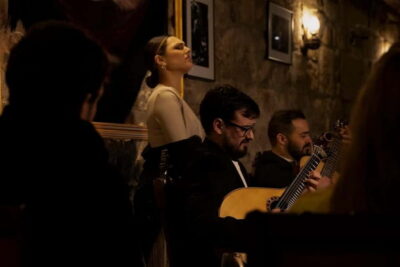

Live Fado Show with Port Wine at Lisboa em Fado
Read our review →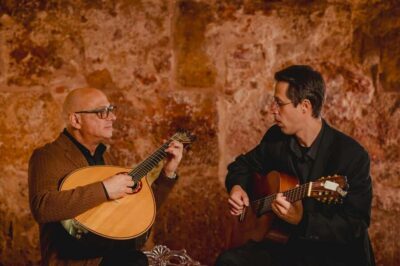

Fado & Port Wine in Traditional Portuguese Music Shop
Read our review →
The highest-rated traditional fado concert (downtown)
Read our review →Browse the lists this tour appears in