
REVIEW · CHINA
Jinjiang Theater: Eight-Face Changing-Legendary Sichuan Opera
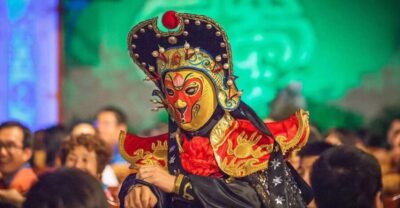
Faces change in the blink of an eye. At Jinjiang Theater, a 70-minute evening show brings Chengdu’s Sichuan opera traditions together with acrobatics, puppetry, martial arts, fire breathing, and the rare eight-face changing technique. I like the mix of serious stagecraft and good old-fashioned spectacle, and I especially like that your ticket includes a cup of Sichuan gaiwan tea. The main drawback is that the program moves quickly, so you may appreciate the visual tricks more than the story if you do not already know the opera tradition.
The theater is at 54 Hua Xing Zheng Jie near Luomashi and Tianfu Square, with public transportation nearby. The 8 p.m. start works well after dinner, though the late hour may be less convenient for very young children.
Five Things to Know Before You Go
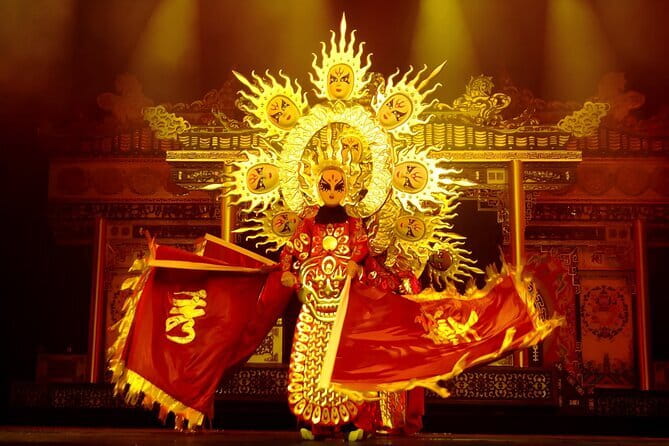
- Eight-face changing: The signature act adds another layer to Sichuan’s famous rapid mask changes, with remarkable speed and precision.
- A full variety program: Opera excerpts, hand shadows, puppetry, fashion, dance, acrobatics, and martial arts keep the evening from feeling repetitive.
- Little Sanqing’s story: The central thread follows a performer’s struggle to master face-changing and introduces the debut of the eight-face technique.
- Tea included: A traditional Sichuan gaiwan tea gives you a small taste of local theater customs before the action begins.
- Short, easy evening plan: The show lasts about 1 hour and 10 minutes and begins at 8 p.m., making it simple to fit into a Chengdu sightseeing day.
- Good value at $18: For the price of a casual meal in many tourist areas, you get a full stage production rather than a single short demonstration.
Why Jinjiang Theater Makes Sense for a Chengdu Evening
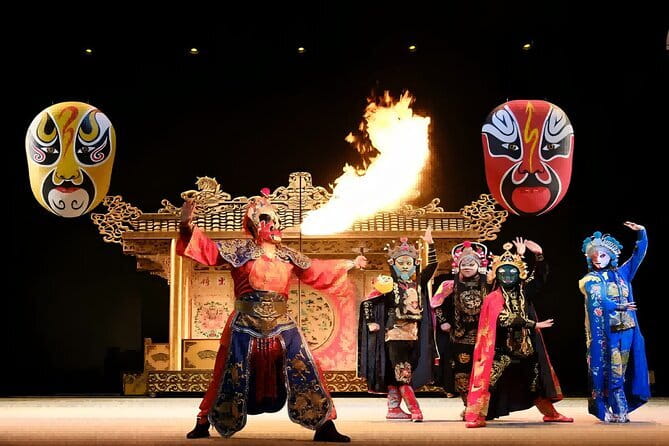
Sichuan opera is not just singing in elaborate costumes. Its performance language combines singing, recitation, stylized movement, martial arts, comedy, illusion, and highly controlled gestures. This show gives you a broad sample in one sitting, which is useful if you want an introduction without committing to a long opera production.
Jinjiang Theater is presented as one of Sichuan opera’s historic birthplaces. That setting matters. You are not simply watching a generic stage magic act with Chinese decoration around it. The program places face-changing beside opera excerpts, traditional dance, costume, puppetry, and stage movement, showing how the famous mask trick fits into a larger performing tradition.
I also like the running time. Seventy minutes is long enough to give the program shape, but short enough to keep the evening lively. You get a clear cultural experience without giving up an entire night in Chengdu.
The strongest appeal is visual. Even if you do not understand every sung line, you can follow the color, gesture, rhythm, costume, and physical skill. The spoken and sung sections may ask more patience from viewers who do not speak Chinese, while the acrobatics and specialty acts communicate immediately.
More Chinese Opera Shows around Chengdu:
- Chengdu: Sichuan Opera Shu Feng Yan Yun Evening Show Ticket
★ 4.7 · 185 reviews - Chengdu Sichuan Opera Show Ticket – Shu Feng Ya Yun
★ 4.4 · 73 reviews - Chengdu: Sichuan Opera Show Ticket – Shu Feng Ya Yun
★ 4.8 · 30 reviews
Little Sanqing and the Story Behind the Masks
The show follows Little Sanqing, whose path toward mastering face-changing is shaped by difficulty and persistence. The story builds toward his performance of the eight-face changing technique, giving the evening more structure than a simple parade of unrelated acts.
That narrative thread is useful because face-changing can otherwise feel like a quick trick surrounded by stage decoration. Here, it is tied to training, hardship, and artistic achievement. You do not need detailed knowledge of Sichuan opera to understand the basic idea: a performer works toward a difficult skill and finally presents it before an audience.
The story is not likely to be the main reason you book this experience. The masks, fire, costumes, and acrobatics are the big draws. Still, Little Sanqing gives the performance an emotional center and helps connect the spectacle to the tradition behind it.
The title references an eight-face changing technique, which is more specific than the usual promise of face-changing alone. The program also includes regular face-changing, so you can compare the familiar form with the featured specialty. Expect quick movement and close attention to the performer’s control rather than a long explanation of how the masks work.
Of course, the mystery is part of the fun. The production depends on surprise, so the details of the method are not explained. If you are hoping to learn the mechanics, you may leave curious rather than informed. If you want to preserve the magic, that is a benefit.
The Opening Acts: Opera, Shadows, and Acrobatics
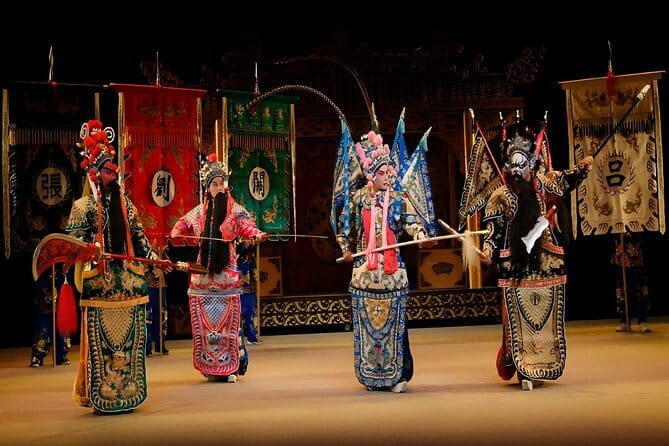
The program begins with the Sichuan opera excerpt The Three Heroes Fight Lü Bu. This places classic opera movement and combat onstage early, giving you a first look at the dramatic style before the more famous specialty acts arrive.
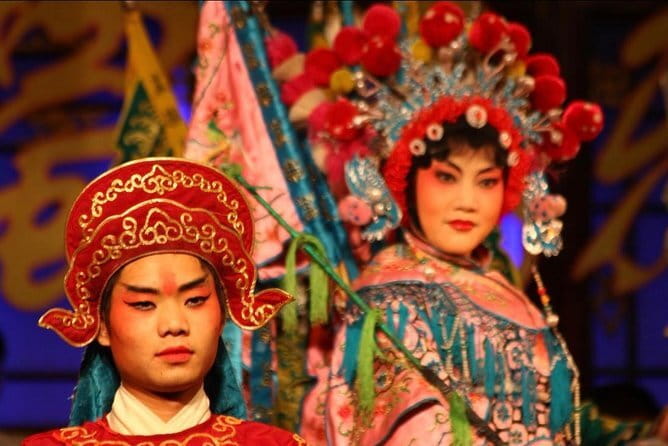
The performance includes singing, recitation, movement, and martial arts. These elements can look highly formal compared with Western theater, but the exaggerated gestures are deliberate. Hands, eyes, posture, and costume all help communicate character and mood.
Next comes hand shadow art. It is a quieter change of pace after the opera fighting, using hands and light to create recognizable forms. This section may appeal especially to families because the idea is easy to follow, while adults may appreciate the patience and precision required.
Umbrella kicking brings the first major acrobatic surprise. The prop is not there merely for decoration. It becomes part of a balancing and footwork routine that shows how ordinary objects can be turned into stage tools.
The hidden knife specialty follows. This is another moment built around concealment and reveal, a familiar feature of traditional opera performance. The act is theatrical rather than a lesson in practical knife handling, so you should expect stylized danger and tightly controlled movement.
These opening pieces are important because they prepare you for the show’s range. If you came only for face-changing, you still get a fuller picture of how Sichuan opera uses bodies, props, music, and suspense.
Fire Breathing and the Rolling Lantern
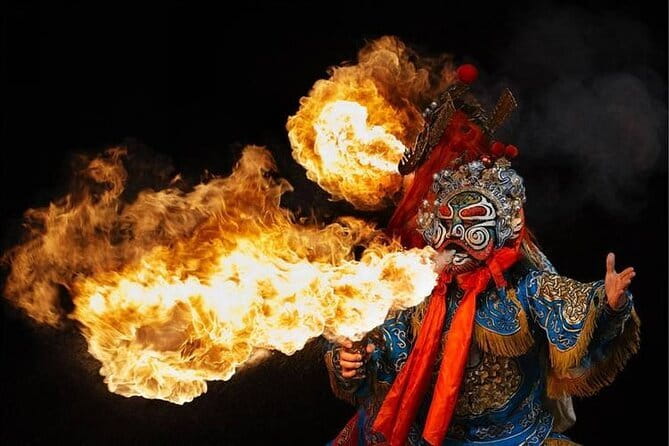
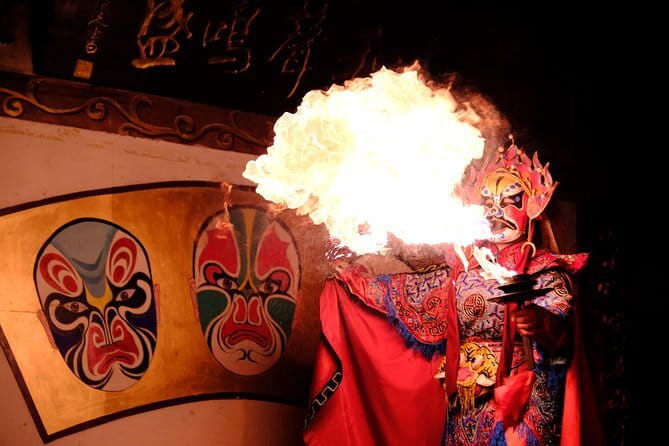
The excerpt Releasing Pei leads into fire breathing, one of the program’s most direct crowd-pleasers. Fire changes the mood at once. The audience can understand the risk and control even without knowing the opera story surrounding it.
This is likely to be one of the most memorable sections for children and adults alike, though people who dislike loud or intense stage effects may prefer the dance portions later in the evening. The performance information does not specify the exact distance from the audience, so do not assume you will be close to the flames.
The Rolling Lantern act offers a different kind of tension. It uses a lantern as part of a dramatic physical routine, combining balance, timing, and theatrical suspense. The act has been singled out as a highlight of the evening, and it is easy to see why: it is unusual, visually clear, and not something most visitors encounter in a standard theater program.
After this comes multi-person drum kicking. The name tells you the basic challenge. Several performers work with drums and coordinated footwork, turning percussion equipment into part of an acrobatic routine.
I like this middle section because the acts do not all chase the same effect. Fire breathing gives you heat and danger. The Rolling Lantern uses suspense and balance. Drum kicking relies on group timing. That variety helps the 70-minute show maintain its pace.
More Live Music around Chengdu:
- Sichuan Culture Opera Show in Chengdu
★ 4.5 · 69 reviews - Chengdu Sichuan Opera Evening Show Ticket-Shu Feng Yan Yun
★ 5.0 · 15 reviews - Chengdu: Sichuan Opera Show ShufengYayun & Covered Bowl Tea
★ 4.2 · 14 reviews - Shu Feng Ya Yun Sichuan Opera Ticket
★ 5.0 · 13 reviews
Puppetry, Face-Changing, and the Main Event
The puppet show The Beauty of Life softens the mood after the fire and acrobatics. Puppetry adds another traditional art form to the program and gives you a chance to watch character movement on a smaller, more delicate scale.
The change from large physical stunts to puppetry is welcome. It prevents the evening from becoming one long series of loud surprises. The title suggests a more graceful and reflective section, though the available details do not explain its story or puppet style.
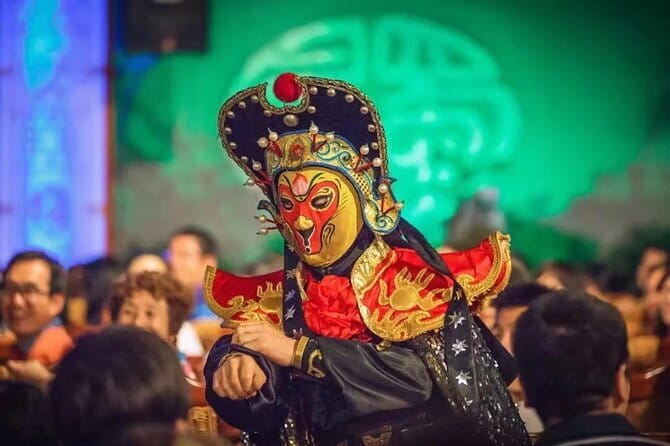
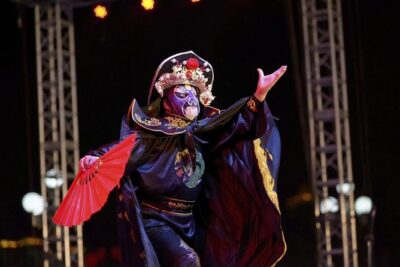
Then comes face-changing, the performance most associated with Sichuan opera outside China. The skill depends on speed, timing, posture, and the performer’s ability to hold your attention in the exact instant when the face shifts.
The show adds the special eight-face changing performance after the standard face-changing act. That ordering makes sense. You first see the better-known form, then the program raises the difficulty with its signature technique.
Do not expect an explanation of the secret. The pleasure lies in watching a new face appear with almost no visible pause. The best advice is simple: watch the performer’s face and hands closely, and do not let your attention wander during the reveal.
The presentation also includes three costume changes. Like the masks, costume changes rely on speed and concealment, but the effect is larger because the whole silhouette changes. The costumes help show the relationship between character, color, movement, and social role in traditional stage performance.
This is where the evening’s strongest praise is deserved. The rapid face changes, especially the eight-face version, are the show’s defining feature. If that is what brought you to the theater, you should leave satisfied. If you prefer a slow, explanatory cultural lecture, this is not that kind of experience.
Fashion and Dance Close the Curtain
A traditional fashion show follows the face-changing and costume sections. This may sound like a side attraction, but it adds useful context by giving you time to notice the clothing rather than watching it vanish in a split second.
The garments provide a calmer visual display after the high-speed specialty acts. You can pay attention to sleeves, shapes, colors, and the way performers walk and pose. The section also makes sense for anyone interested in Chinese clothing and stage presentation.
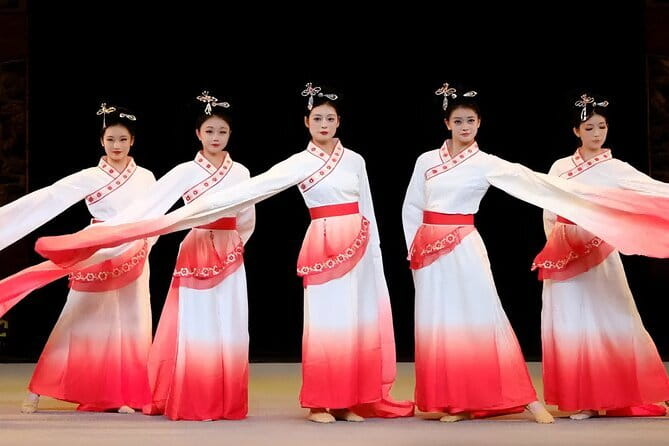
The final dance performances include a water sleeve dance and a ghost immortal dance. Water sleeve movement turns long fabric sleeves into flowing lines, requiring control in the arms, wrists, and torso. It is graceful, measured, and quite different from the fire breathing and martial arts earlier in the program.
The ghost immortal dance brings a more theatrical and otherworldly mood. Together, the two dances give the finale a sense of variety rather than ending on another stunt alone.
I appreciate that the show does not finish immediately after face-changing. The famous technique may be the headline, but the closing dances remind you that Sichuan opera also values elegance, character, costume, and symbolic movement.
Tea, Location, and the $18 Value
Your ticket includes a cup of traditional Sichuan gaiwan tea. A gaiwan is a lidded bowl used for brewing and drinking tea, and the tea service adds a local touch to what could otherwise feel like a staged attraction designed only for quick photos.
At $18, this is a strong value for a one-hour-and-ten-minute production. You receive admission to a full program, the tea, and access to several forms of traditional entertainment in one evening. Comparable theater experiences can cost much more, especially when they include a famous specialty such as face-changing.
The low price does come with a sensible expectation: this is a compact cultural showcase, not a full-length opera with extensive translation and historical explanation. You are paying for variety, technique, and atmosphere. You are not paying for a detailed course in Sichuan opera.
The location near Tianfu Square and public transportation makes the timing practical. You can spend the day sightseeing, have dinner, and reach the theater for the 8 p.m. start. The listed ticket redemption point is Jinjiang Theater, 54 Hua Xing Zheng Jie, Luomashi, Jin Jiang Qu, Chengdu, Sichuan, 610017.
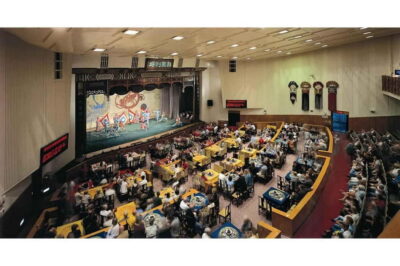
Allow time to identify the theater and redeem your ticket before the performance begins. The information provided does not specify seating arrangements, theater size, language support, or whether photos are permitted, so check those points when booking if they matter to you.
Who Will Enjoy This Show Most
I would recommend this performance to first-time visitors who want a quick introduction to Sichuan opera without spending several hours in a formal production. The mix of visual acts makes it approachable even if you do not understand spoken Chinese.
Families should find plenty to enjoy: hand shadows, puppets, umbrellas, drums, fire, masks, and costumes all offer clear visual hooks. The late 8 p.m. start is the main concern for younger children, not the length.
Solo visitors and couples can also fit it neatly into a Chengdu evening. It gives you a planned cultural activity without requiring a full-day tour or a large time commitment.
It suits people who enjoy stagecraft, illusion, acrobatics, and traditional costume. It may be less satisfying if you want a quiet, scholarly explanation of opera history or a complete translated drama. The program is built for movement and visual impact.
Most people can participate, and the theater is near public transportation. The experience is not described as requiring special fitness. If you have particular seating or access needs, confirm them before booking because those details are not provided.
Booking, Cancellation, and Practical Details
Confirmation is normally provided at booking. If you book within one day of the show, confirmation arrives as soon as possible and depends on availability.
Free cancellation is available when you cancel at least 24 hours before the 8 p.m. start time. Within 24 hours, you do not receive a refund, and changes are not accepted. The cut-off uses local Chengdu time.
The experience has a minimum number of participants. If that minimum is not met, you may be offered another date or experience, or receive a full refund. The stated policy also says the experience requires good weather, and a weather cancellation brings the same choice of another date or a full refund.
Those rules are worth noting even for an indoor theater show. If your Chengdu schedule is tight, avoid booking this as the only activity that can fill your evening unless you are comfortable with the cancellation terms.
Should You Book Jinjiang Theater?
Book it if you want a lively, affordable introduction to Sichuan opera with face-changing at the center. The eight-face technique, fire breathing, Rolling Lantern, acrobatics, puppetry, fashion, and dance create a varied night, while the tea and central location add practical value.
I would especially choose it for a first Chengdu visit, a family evening, or a short cultural stop between sightseeing days. The one real caution is the format: it is a fast showcase, not a slow, fully translated opera performance.
At $18, the balance is favorable. You get the famous face-changing skill, several less familiar traditional acts, and a strong sense of theatrical variety in only 70 minutes. If you can reach Jinjiang Theater for the 8 p.m. start, this is an easy and worthwhile addition to your Chengdu plans.
FAQ
Where is Jinjiang Theater located?
The ticket redemption point is Jinjiang Theater at 54 Hua Xing Zheng Jie, Luomashi, Jin Jiang Qu, Chengdu, Sichuan, China, 610017. The theater is near public transportation and Tianfu Square.
What time does the performance start?
The performance starts at 8:00 p.m.
How long does the show last?
The performance lasts approximately 1 hour and 10 minutes.
Is admission included?
Yes. The admission ticket to the Jinjiang Theater performance is included.
Is tea included with the experience?
Yes. The experience includes a complimentary cup of traditional Sichuan gaiwan tea.
Can I cancel for a full refund?
Yes, if you cancel at least 24 hours before the local start time. Cancellations or changes made within 24 hours are not accepted for a refund.
Just added around Chengdu
- Sichuan Opera Show with Hotel Pickup★ 5.0 · 3 reviews
- Skip the Line: Sichuan Opera Chengdu Ticket★ 4.0 · 8 reviews
- Classsic sichuan Opera at sichuan Provincial Theater★ 5.0 · 4 reviews
- Chengdu Signature Opera Face Changing and Tea★ 5.0 · 7 reviews
- Shu Feng Ya Yun Sichuan Opera Ticket★ 5.0 · 13 reviews
- Sichuan Opera with face-changing at Sichuan opera theater★ 4.5 · 6 reviews
- Chengdu Sichuan Opera Evening Show Ticket-Shu Feng Yan Yun★ 5.0 · 15 reviews
- Jinjiang Theater:Eight-Face Changing-Legendary Sichuan Opera★ 4.0 · 6 reviews
Chinese Opera Shows, compared.
Sichuan Opera Shu Feng Yan Yun Evening Show Ticket
Read our review →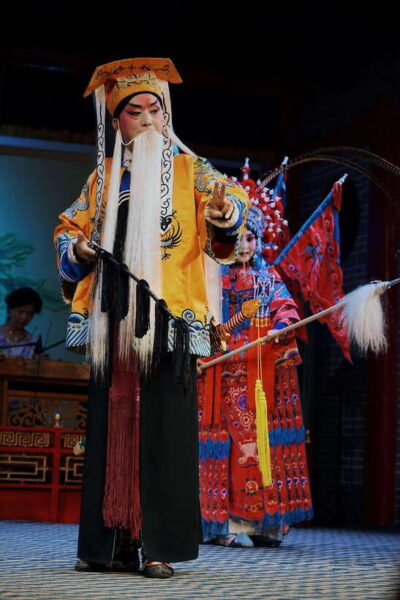
Chengdu Sichuan Opera Show Ticket – Shu Feng Ya Yun
Read our review →
Beijing LiYuan Theatre VIP Seats Opera Show with Private Transfer Service
Read our review →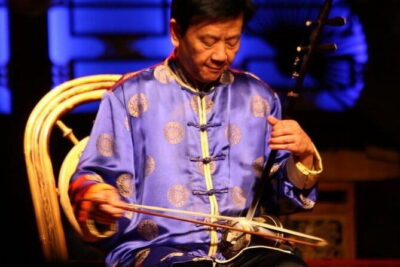
Chengdu Sichuan Opera Evening Show Ticket-Shu Feng Yan Yun
Read our review →Browse the lists this tour appears in