
REVIEW · FRANCE
Harlem in Paris : the Birth of Jazz in France (Small Group Walking Tour)
Jazz changed Paris forever. This tour follows that sound through Pigalle, where Black American performers built careers, clubs, and new lives. I like the mix of old photographs, recordings, and video with real streets, and I like that the stories reach beyond famous names to figures such as Valaida Snow and Eugene Bullard. The main consideration is that many clubs have closed, so you must use your imagination.
Guide Ellen brings strong research and real enthusiasm to the subject. The opening presentation adds useful context before the walk, and the route is easy enough for a stroller. At $107.84 per person, the price is high for a two-and-a-half-hour outing, but the private format and detailed audiovisual material make it a fair choice for serious jazz fans and curious visitors who want a different Paris.
Key points at a glance
- Josephine Baker’s Paris begins at Place Blanche: Learn how her 1925 arrival turned her into an instant French star.
- Louis Armstrong and Django Reinhardt cross paths: A Pigalle bistro links Armstrong’s meals with the birth of Gypsy Jazz.
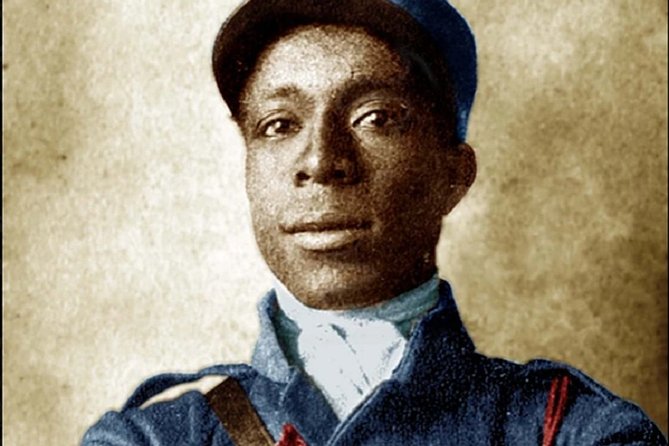
- Eugene Bullard’s story is extraordinary: Fighter pilot, drummer, club manager, and nightclub owner, all in one life.
- The tour brings music into the street: Ellen uses songs, images, and video while you stand outside former club sites.
- The walk covers about 2 kilometers: Expect an easy-paced route through Pigalle, ending at Place Pigalle.
- Closed clubs are part of the experience: Some sites now require imagination rather than a dramatic interior visit.
Why Pigalle became Paris’s jazz quarter
The tour starts at Artemisia Montmartre, 11 Rue Fromentin, at 2:00 p.m. The setting has an unusual connection to the neighborhood’s past. The venue is described as an old brothel and has a brothel-themed style, which helps set the mood for Pigalle’s nightlife story.
Before walking outside, Ellen gives an introductory presentation. This part can take close to an hour, depending on the pace of the group, and may include a drink, photographs, documents, music, and video on a tablet or similar device. Food and drinks are not included in the price, so plan accordingly.
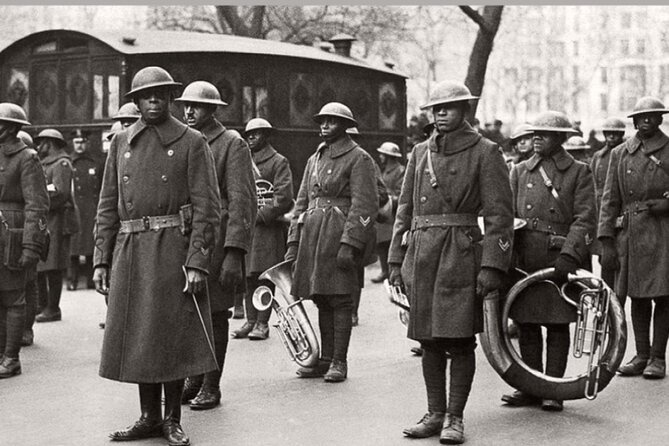
I find this opening useful because the street stops alone cannot explain the period. You are not simply looking at a doorway and hearing that a musician once performed there. You first learn how Black Americans came to France, why Paris offered unusual opportunities, and how jazz moved from Harlem and American vaudeville into French clubs.
The presentation also helps with a common problem on historic walking tours: the places have changed. Once you know what the clubs looked and sounded like, a modern building or empty site becomes easier to picture. The material is especially helpful for visitors who know jazz by sound but not by its Paris connections.
More Jazz Shows around Paris:
- New Orleans Steamboat Natchez Jazz Cruise with Dinner Option
★ 4.0 · 7,533 reviews - New Orleans Steamboat Natchez Jazz Cruise
★ 4.5 · 5,334 reviews - New Orleans: Evening Steamboat Jazz Cruise + Optional Dinner
★ 4.3 · 4,548 reviews
Place Blanche and Josephine Baker’s arrival
The first outdoor stop is Place Blanche, beside the former location of Josephine Baker’s club, Chez Josephine. Baker lived in France from 1925 until her death in 1975 and became a French citizen. She is the most famous figure on the route, but the tour presents her as part of a larger movement rather than as an isolated celebrity.
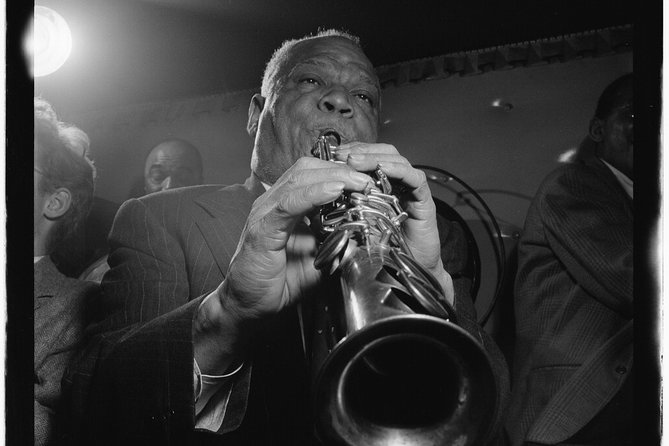
Baker arrived in France in 1925 with the New York Syncopated Orchestra. She was accompanied by a young clarinet player, Sidney Bechet, another major name in early jazz. She soon headlined the Revue Negre at the Theatre des Champs Elysées.
The show was bold by the standards of its time. It featured 13 dancers, 12 musicians, and an 18-year-old Baker in a costume made famous by its lack of fabric and abundance of feathers. Her dancing shocked and fascinated Paris audiences. The French press and public turned her into an instant sensation, later calling her the Black Venus of Paris.
This stop works best when you pay attention to the contrast. Baker’s success brought fame, money, and a French home, but it also came through an exotic image created for European audiences. The tour gives you a chance to consider both sides: her extraordinary talent and the way Paris consumed Black performance as something daring and new.
There is no admission ticket at the stop. You stand outside and listen while Ellen uses images and music to restore some of the atmosphere. Expect about 10 minutes here, though the full Baker story may receive more time during the earlier presentation.
Rue Mansart, Armstrong’s meal and Django Reinhardt
The next stop is Rue Mansart, at a bistro where Louis Armstrong reportedly ate after rehearsals at a nearby recording studio. The detail about his meal is wonderfully ordinary: he discovered choucroute, the Alsatian combination of sausage and cabbage.
That small food story gives the tour a human scale. Armstrong was not only a recording legend passing through a grand musical capital. He was also a working musician, eating after rehearsal and finding his way through local customs. Paris becomes less like a backdrop and more like a place where artists lived day by day.
The bistro also connects Armstrong with Django Reinhardt, the French Gypsy Jazz guitarist. Their meeting links American jazz with a local style that would become one of France’s most important musical contributions. You do not need to be a specialist to follow the point. Jazz in Paris was not simply imported and copied. French musicians adapted it, reshaped it, and made it their own.
This stop lasts about 10 minutes. It is a quick look rather than a meal or tasting, and food is not included in the tour price. If you want to try choucroute yourself, you will need to return later on your own.
Rue Pierre-Fontaine and the remarkable Eugene Bullard
At Rue Pierre-Fontaine, the group stops outside the former Zelli’s cabaret. In the 1920s, Zelli’s was one of Paris’s best-known clubs, helped by its adventurous jazz program.
The story here belongs to Eugene Jacques Bullard. Born to the son of a freed slave from Martinique, Bullard became the first African American fighter pilot in history. He fought for France during the First World War, flew 30 missions, and brought down two German aircraft. France promoted him to corporal and gave him the nickname Black Jacques.
After the war, Bullard learned drums and found work at Zelli’s. He eventually became the club’s manager. With support from Joe Zelli, he opened his own nightclub, the Grand Duc, which mixed hot jazz with soul food.
Bullard’s life makes this one of the strongest stops. It joins military service, migration, music, business, and race in a single story. You see how Black Americans in Paris were not only performers hired by clubs. Some became managers, owners, and creators of their own spaces.
The drawback is physical. Zelli’s is not presented as a working cabaret you can enter for a show. You are looking at the location and reconstructing its role through Ellen’s storytelling and audiovisual material. Still, the lack of a surviving club can sharpen your attention. You start noticing how much of nightlife disappears while the street remains.
More Live Music around Paris:
- Paris: 3-Course-Dinner Cruise on the Seine with live music
★ 4.7 · 7,248 reviews - Paris: 4-Course Dinner Cruise on Seine River with Live Music
★ 4.5 · 3,827 reviews - Paris: Gourmet Dinner Cruise on Seine River with Live Music
★ 4.5 · 2,531 reviews - Paris: Opera Garnier and Seine River Cruise Tickets
★ 4.5 · 957 reviews
Place Blanche and the women of Paris jazz
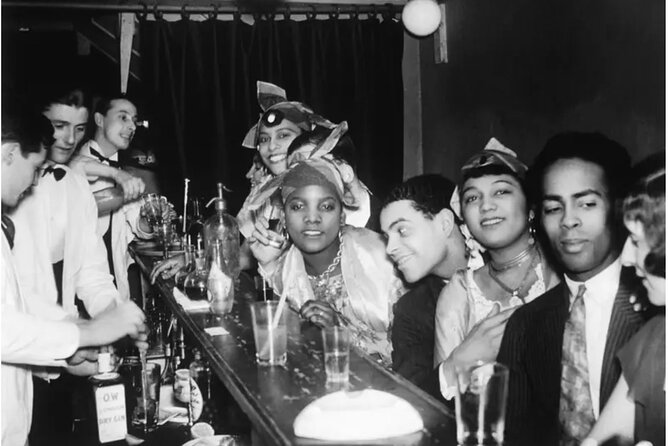
The second Place Blanche stop turns to women who built careers in a male-dominated music world. Ellen introduces Bricktop, known as the Queen of Pigalle, who arrived in Paris with only $24.
Bricktop’s story is one of survival and social skill. She established herself in Paris and went on to meet royalty and major celebrities. The tour uses her life to show how much work stood behind the glamour. Club fame was not simply a matter of stepping onto a stage. Performers had to build networks, command rooms, and turn attention into a lasting business.
You also meet Valaida Snow, whom Louis Armstrong called the second-best trumpet player in the world. Snow played eight instruments, sang, danced, and became a major European star during the 1930s.
Her story takes a darker turn. While performing in Denmark in 1940, she was arrested by the Nazis. A prisoner exchange brought her home, but she returned deeply damaged by the experience. She later recovered enough to continue her career in the United States.
This 20-minute stop is one of the tour’s most valuable sections because it corrects the usual picture of jazz history. Women such as Snow were not supporting figures around famous men. They were multi-talented performers with their own audiences, careers, and risks.
Rue Victor Massé and Alberta Hunter’s second act
The stop on Rue Victor Massé brings the group to a club that has closed, a reminder that Paris nightlife is always changing. The building itself cannot offer much of a show now, so the focus turns to Alberta Hunter.
Hunter lived through the Jazz Age in both Harlem and Paris. She was an exceptional blues singer, but in the 1940s she left music and worked as a nurse for two decades.
Her return is the remarkable part. At 83, she was persuaded to sing again. She restarted her music career and became a star once more, proving that a performer’s public life does not have to end when the clubs stop calling.
This story gives the walk a strong closing note. The tour is not only about the 1920s and 1930s. It is also about memory, retirement, and the possibility of beginning again. The former club on Rue Victor Massé may be closed, but Hunter’s career continues to give the location meaning.
A walk through places that have changed
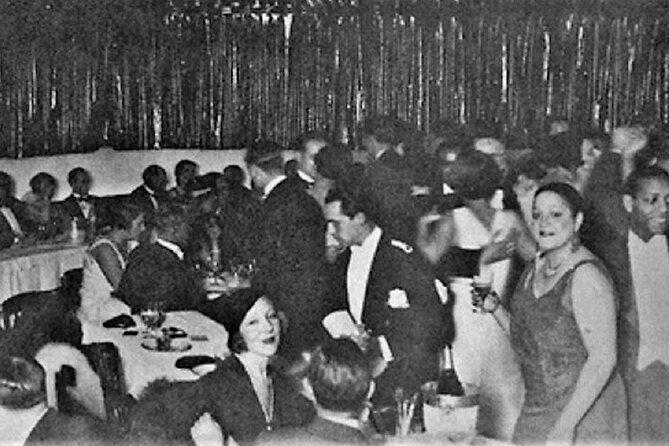
The outdoor route covers about 2 kilometers and ends at Place Pigalle. The listed stops are close enough for an easy pace, and the route has been described as manageable with a stroller. Most of the experience is on foot, but the opening presentation takes a sizeable portion of the total time.
That split matters. If you expect two and a half hours of continuous walking, this is not the right tour. If you like a seated introduction followed by a neighborhood walk, the format makes sense. You get the background first, then see where the stories took place.
The route is also more about former locations than active music venues. Clubs have closed, buildings have changed use, and some sites may be vacant. I would not book this expecting backstage access, live performances, or preserved interiors.
The reward is a different kind of sightseeing. Instead of racing between famous monuments, you follow a narrow cultural thread through Pigalle. Ellen’s tablet material helps bridge the gap between the present-day street and the club district of the jazz era.
What the $107.84 price includes
At $107.84 per person, this is not a bargain walking tour. You are paying for a private experience, the guide’s preparation, the audiovisual presentation, and a focused subject that is rarely covered by standard Paris tours.
The private format means only your group participates. That can be valuable if you have children, different walking speeds, or a strong interest in jazz. Ellen can explain names and events in more detail than a large group guide usually can.
The price is harder to justify if you already teach jazz history or expect advanced academic material. One participant with college-level knowledge found the content familiar. The tour is designed for the general public, not as a university seminar.
For most visitors, the value comes from the stories and presentation rather than admission fees. There are no museum tickets or meals included. You are paying for interpretation, research, and a carefully assembled link between people and places.
Who will enjoy this Pigalle tour
I would recommend it most strongly to:
- Jazz fans who want the Paris chapter of the music’s story
- Visitors interested in Black American life in France
- Families with older children who enjoy music, biography, and visual material
- People who have already seen the major Paris sights and want a more focused neighborhood experience
- Anyone curious about lesser-known figures such as Bullard, Snow, Bricktop, and Hunter
You do not need to know jazz theory. You only need some curiosity and the patience to listen. The tour explains the setting for a general audience, and the music makes the history easier to follow.
I would hesitate if you want a long, energetic walk, many preserved interiors, or a food-focused outing. I would also think twice if your interest is mainly in Parisian writers. The subject here is jazz and the Black performers who shaped nightlife, not literary Paris.
Practical details before you book
The meeting point is Artemisia Montmartre at 11 Rue Fromentin. The tour begins at 2:00 p.m. and ends at Place Pigalle, so you should plan your onward route from Pigalle rather than back at the starting point.
The experience is offered in English. Confirmation is provided when you book, and service animals are allowed. The meeting point is near public transportation, and most people can take part.
Free cancellation is available up to 24 hours before the start time. Changes or cancellations inside that window are not accepted for a refund. The tour requires good weather and a minimum number of participants. If poor weather or low enrollment cancels it, you can choose another date or receive a full refund.
Should you book Harlem in Paris?
Book it if you want a thoughtful, music-led walk through Pigalle and you enjoy hearing the stories behind places that no longer look the way they once did. Ellen’s strongest qualities are her preparation, clear storytelling, and use of photographs, recordings, and video.
The best reason to go is the range of people you meet. Baker and Armstrong are familiar names, but Bullard, Snow, Bricktop, and Hunter give the tour its real purpose. They show how many Black artists, entrepreneurs, soldiers, and performers helped shape Paris.
Skip it if you want a low-cost walk, active jazz clubs, or nearly three hours outside. At $107.84, this is a specialist tour. For the right audience, it offers a memorable look at a side of Paris that standard sightseeing leaves out.
FAQ
Where does the tour start?
It starts at Artemisia Montmartre, 11 Rue Fromentin, 75009 Paris, France.
What time does the tour begin?
The stated start time is 2:00 p.m.
Where does the tour end?
The walk ends at Place Pigalle.
How long does the experience last?
It lasts approximately 2 hours and 30 minutes.
How much does the tour cost?
The listed price is $107.84 per person.
Is the tour private?
Yes. Only your group participates in the activity.
What language is offered?
The tour is offered in English.
Is food included?
No. Food and beverages are not included.
Does the tour include audiovisual material?
Yes. Music, photographs, and videos are used during the experience.
Can I cancel for a full refund?
Yes, if you cancel at least 24 hours before the experience begins. Poor weather or failure to meet the minimum number of participants may also result in a different date or a full refund.
Just added around Paris
- Area ,Opera, Jewellery,Fashion,Palais Royal walking tour★ 5.0 · 47 reviews
- Sunset Picnic with View of Eiffel Tower and Live Music★ 5.0 · 15 reviews
- Create unique jewelry from top Parisian designer Bijoux Blues★ 4.0 · 2 reviews
- Paris Opera Garnier Private Tour★ 5.0 · 42 reviews
- Opera Garnier with private guide★ 4.5 · 21 reviews
- Private Opera Garnier Theater 2-Hour Tour in Paris★ 5.0 · 45 reviews
- 2 Hour Private Opera Garnier Guided Tour★ 5.0 · 11 reviews
- Exclusive Opera Garnier Private Guided Tour★ 5.0 · 4 reviews
Jazz Shows, compared.
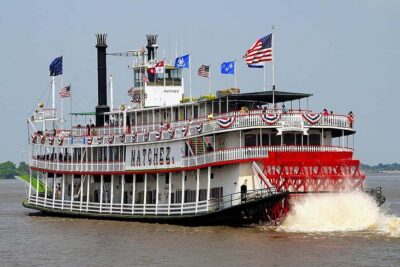
New Orleans Steamboat Natchez Jazz Cruise with Dinner Option
Read our review →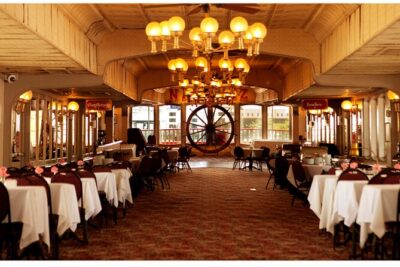

Evening Steamboat Jazz Cruise + Optional Dinner
Read our review →Daytime Steamboat Jazz Cruise + Optional Lunch
Read our review →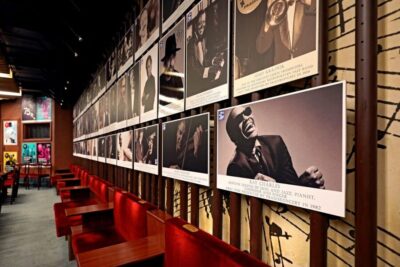

Catamaran Cruise with optional Live Jazz Music
Read our review →
Paddlewheeler Creole Queen Jazz Dinner Cruise in New Orleans
Read our review →Browse the lists this tour appears in