
REVIEW · HUNGARY
Budapest: Concert on the Oldest Working Organ in the City
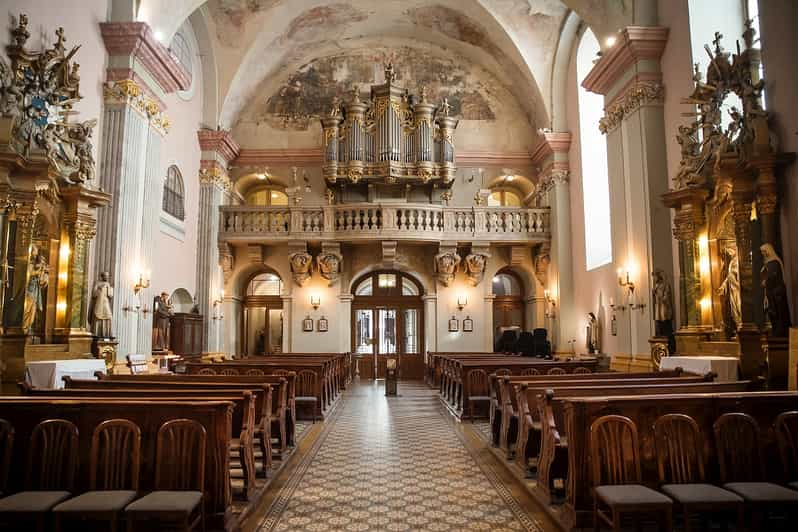
Let the organ do the sightseeing. This 70-minute concert brings you into St. Michael’s Church, a lovely Baroque building near the Danube, for solo organ or chamber music performed on Budapest’s oldest working organ. It is a simple idea, but a good one: sit still, listen closely, and let the music change the pace of your evening.
I especially like the intimate setting and the range of composers, from Bach and Vivaldi to Mozart, Liszt, Franck, and old Hungarian works. The printed program and short introduction in English and Hungarian also help you follow along. The main consideration is that the exact program depends on your date, so you should check the schedule before booking if you have your heart set on organ music rather than a chamber performance.
Key points to know before you book
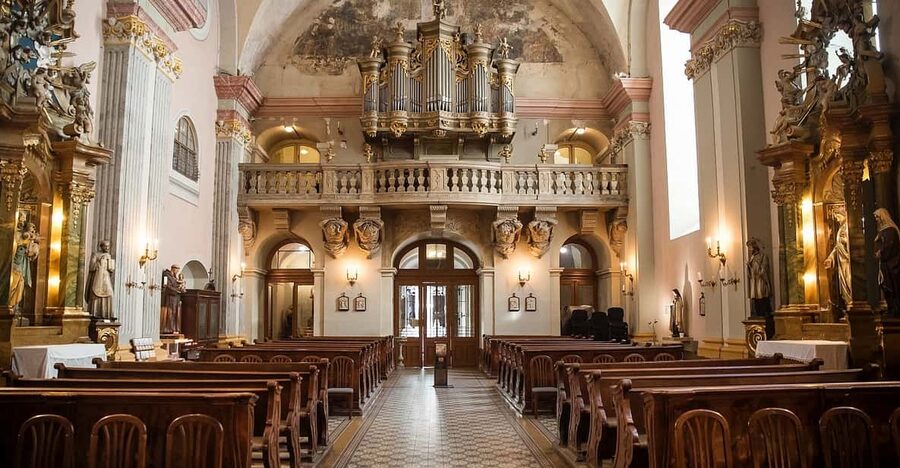
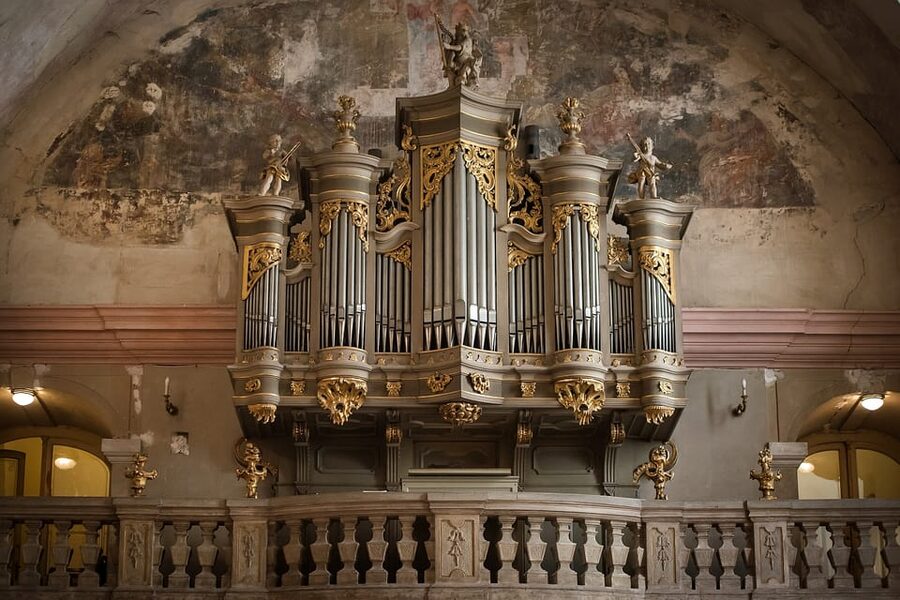
- A 25-pipe historic instrument: This is not a giant cathedral organ. Its smaller size gives the concert a more focused, personal character.
- A central location: St. Michael’s Church sits at the corner of Váci utca and Nyáry Pál utca in Budapest’s 5th District, close to the Danube.
- A changing program: Dates feature solo organ music or chamber music, with works by Bach, Mozart, Liszt, Vivaldi, Dubois, Handel, Mendelssohn, Purcell, Franck, and others.
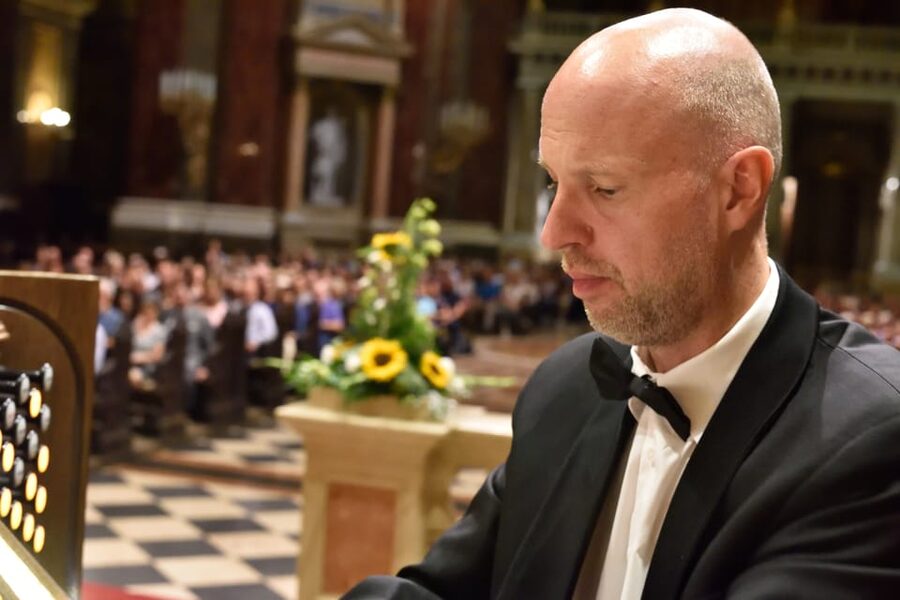
- Miklós Teleki is the main performer: The award-winning Hungarian organist gives about 120 organ and piano recitals each year and performs at most concerts in the series.
- A well-paced 70 minutes: You get a complete musical evening without giving up an entire night of sightseeing.
- A useful visual aid: A screen shows the organist playing, which makes the performance easier to follow from the church seating.
Entering St. Michael’s Church near the Danube
The concert begins at the white church building on the corner of Váci utca and Nyáry Pál utca, in postal district 1056. The location is in central Budapest’s 5th District and quite near the Danube, making this an easy addition to an evening walk through the city center.
You do not need transportation arranged as part of the experience. There is no tour bus and no sightseeing guide. You simply make your way to the church, where the entrance staff checks the ticket list. That makes arrival fairly direct, though I would still give yourself enough time to find the correct corner and enter without rushing.
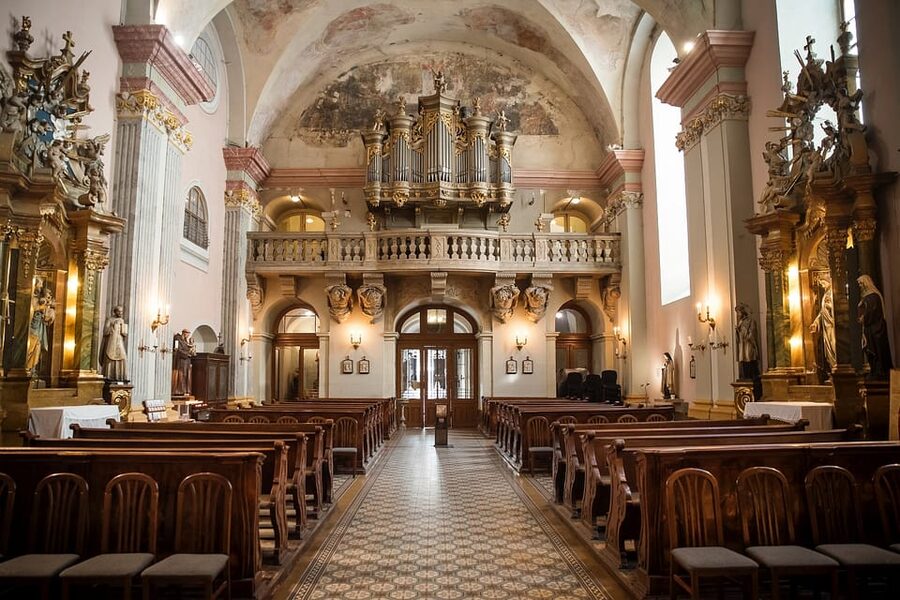
The building itself is part of the appeal. You are not walking into a concert hall designed only for sound. You are attending a performance in a Baroque church, where the architecture, quiet interior, and organ belong together. The setting gives the music a sense of place that a standard auditorium would not provide.
A short introduction comes before the music. It is given in English and Hungarian, and the program leaflet is available in both languages. The leaflet includes information about the organ, so you can learn a little about what you are hearing instead of treating the concert as background sound.
More Live Music around Budapest:
- Budapest Danube Cruise and Dinner Options, Live Music and Dance
★ 4.5 · 7,428 reviews - Budapest: Evening Cruise including Drinks and Live Music
★ 4.1 · 5,512 reviews - Budapest: Candlelit Dinner River Cruise with Live Music
★ 4.7 · 2,154 reviews
The 25-pipe organ and its unusual character
The central attraction is Budapest’s oldest working organ. It is important to set your expectations correctly: this is not a huge cathedral organ with hundreds of pipes filling a vast nave. The instrument has 25 pipes and is described as a small, beautiful instrument installed in a church where acoustics and appearance work together.
That smaller scale is not a weakness. It gives the concert a more concentrated feel. You are there to hear the instrument clearly and watch the player work, not simply to be surrounded by an enormous wall of sound.
The organist can be seen on a screen during the performance. This is especially helpful because organ playing often hides the most interesting physical action from the audience. You can follow the hands, watch the coordination, and get a better sense of the skill required to manage the keyboard and pedals.
The ban on audio and video recording is worth noting. You need to keep your phone and camera put away during the concert. That may seem restrictive if you like collecting clips from performances, but it also protects the quiet atmosphere and keeps the focus on the live sound.
A 70-minute program built around contrast
The concert lasts about 70 minutes. That is long enough for a serious program, but short enough to fit neatly into a Friday evening in Budapest. You get a complete cultural experience without committing to several hours in a formal concert venue.
The series uses different programs on different dates. Some evenings are devoted mainly to solo organ works. Others include chamber music, with soprano Nóra Ducza performing alongside Miklós Teleki on selected dates.
The chamber music dates listed are 30 May, 18 July, 29 August, 17 October, and 23 December. On those evenings, you should expect a different balance between voice, organ, and possibly other chamber elements described in the program. If you prefer a voice-centered concert, these dates deserve special attention.
The 2025 schedule also includes Tuesday concerts on 23 and 30 December. Most of the series is associated with Friday evenings, so these December dates offer an extra option during the holiday period.
The opening introduction helps you understand the shape of the evening. Then the music moves through several works, rather than offering one long piece with no explanation. You can follow the sequence on the printed leaflet, which makes it easier to notice shifts in style and mood.
What you may hear on a Bach program
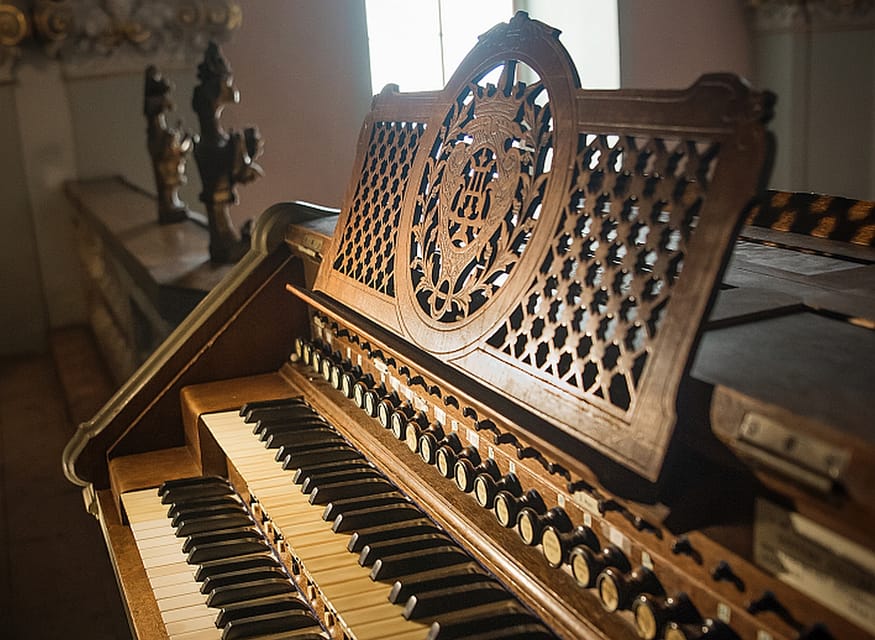
One sample Bach program includes the Prelude and Fugue in B minor, BWV 544, followed by the Trio Sonata in E-flat major, BWV 525. The trio sonata is a useful contrast because it asks the organist to create the feeling of several independent musical lines on one instrument.
The program also includes Bach’s arrangement of Vivaldi’s Concerto in A minor, BWV 593. This brings Italian concerto energy into the organ setting, with the bright movement between fast and slow sections that makes Vivaldi so recognizable.
Bach’s Pastorella, BWV 590, adds another change of mood. The work is presented in several sections, including a Prelude, Allemande, Air, and Gigue. The evening closes with the Prelude and Fugue in E-flat major, BWV 552, a substantial work that gives the concert a strong finish.
This kind of program suits you if you already enjoy Bach or want an organized introduction to his organ writing. It also helps to remember that a church concert is not a hit parade. Some pieces may be familiar, while others take more concentration. The leaflet and the short spoken introduction make that easier.
Same city, a different sound:
- Budapest: Danube River Cruise with Dinner and Prosecco
★ 4.3 · 2,471 reviews - Budapest: Dinner Cruise with Live Music and Folk Dance Show
★ 4.4 · 2,090 reviews - Budapest Danube River Candlelit Dinner Cruise with Live Music
★ 4.5 · 1,770 reviews - Budapest: Dinner Cruise with Live Music & Unlimited Drinks
★ 4.7 · 1,596 reviews
Mozart, Liszt, Dubois, and old Hungarian music
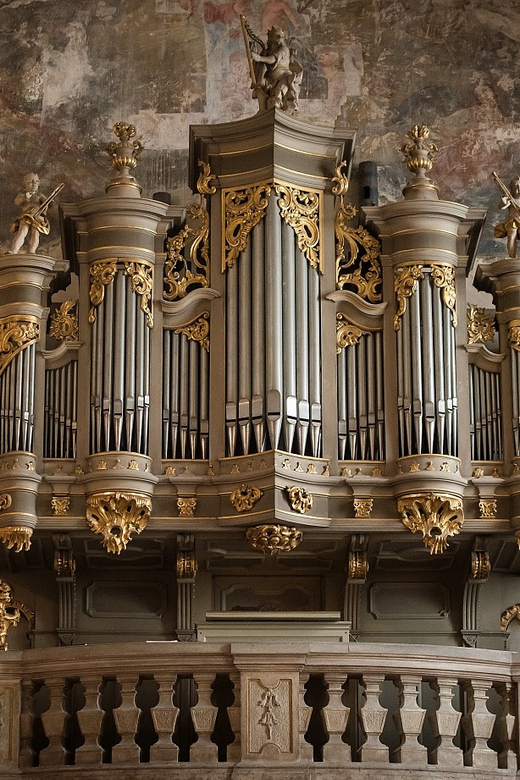
Another sample program opens with Mozart’s Fantasy in F minor. That is followed by six old Hungarian organ compositions from the collection of Kilián Szigeti, giving the evening a local connection beyond the church itself.
Franz Liszt appears with Consolation in D-flat major and the chorale Nun danket alle Gott. Théodore Dubois contributes In Paradisum and a Toccata in G major. The program ends with Bach’s Nun komm, der Heiden Heiland and the famous Toccata and Fugue in D minor, BWV 565.
This selection is a good choice if you want more variety than an all-Bach concert. You move from Mozart’s fantasy to Hungarian pieces, then through Liszt and Dubois before returning to Bach. The well-known Toccata and Fugue provides a familiar final flourish, while the less familiar works give you something new to listen for.
The series has also included works by Handel, Mendelssohn, Purcell, Franck, and Vivaldi. The result is a broad survey of organ music rather than a single composer’s portrait. Check your date carefully, since the composer list and the balance between solo organ and chamber music can change.
Miklós Teleki and the performance itself
Miklós Teleki is the creative director and main organist of the Majestic Sounds series. He is an award-winning Hungarian musician who gives about 120 organ and piano recitals each year and performs at almost all the concerts in the series.
A few dates feature other musicians. Estonian organist Andres Uibo performs on 4 July, while Hungarian organist Tamás Lozsányi performs on 31 October. These special appearances add variety to the calendar without changing the basic format.
The performance quality is one of the strongest reasons to book. The program is designed around demanding works, and the organist’s skill matters greatly on an instrument this size. One particularly enthusiastic assessment praised Teleki’s range, control, and emotional reading of famous organ pieces. That is useful context: you are not paying simply to sit inside an old church while recorded music plays.
The screen showing the performer adds another layer. You can watch the technique rather than hearing an unseen instrument from somewhere above or behind you. For first-time concertgoers, that visual connection can make the performance feel more immediate.
Is $24 a fair price?
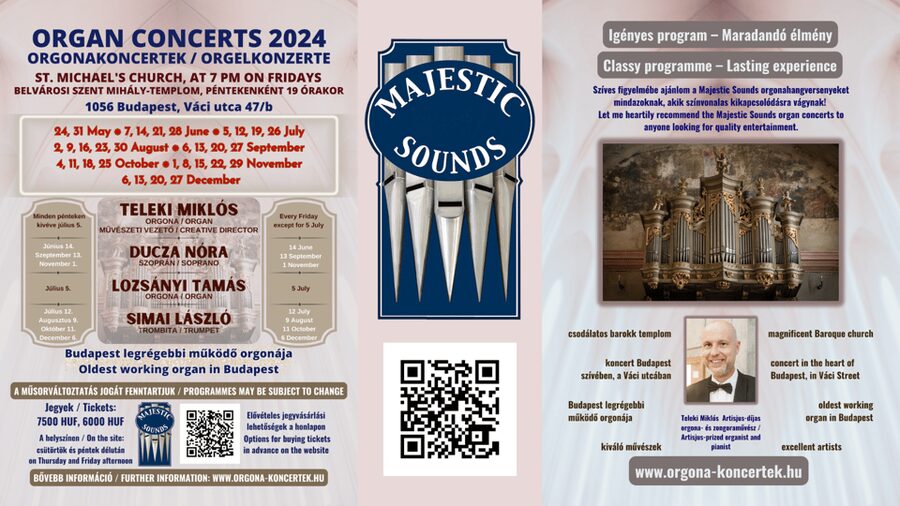
At $24 per person, this is a reasonable cultural experience for central Budapest. The ticket includes entry to the church, the concert, the printed program, and the English and Hungarian introduction. You are paying for a live performance by professional musicians in a historic religious setting, not just admission to a building.
Value depends on how much you enjoy classical music. If you are looking for a quick landmark visit with lots of movement, this may feel too quiet. If you want a focused evening activity that fits around dinner or a walk by the Danube, 70 minutes is a practical length.
The price also compares well with the time commitment. You do not need to arrange transport, join a long guided visit, or spend half a day away from other plans. You arrive at one central location, listen, and finish back at the same place.
The main value question is the program. I would check the date before paying, especially if you prefer Bach, want the chamber music with Nóra Ducza, or hope to hear a particular composer. The concert series offers choice, but that also means one date may appeal to you much more than another.
Who will enjoy this concert most?
I would recommend it to several kinds of visitors:
- You enjoy classical music but want a manageable concert length.
- You like historic churches and want to hear the building used for its original musical purpose.
- You want a calm Friday evening activity near central Budapest.
- You are curious about organ music and would appreciate a short introduction and program leaflet.
- You value live performance more than recording a souvenir.
- You want something that works for a solo evening, a couple, or a small group.
Families or first-time classical listeners may also appreciate the clear structure and visual screen. Still, the event requires quiet attention, so it is best for anyone comfortable sitting through a formal 70-minute performance.
The concert is wheelchair accessible, which makes it a practical option for visitors who need an accessible cultural activity. Since transportation is not included, you will need to arrange your own route to the church.
Booking details that matter
You can cancel up to 24 hours before the concert for a full refund. The reserve-now, pay-later option also gives you some flexibility while your Budapest plans are still taking shape.
The activity begins and ends at St. Michael’s Church. There is no separate drop-off point and no transport segment to account for. Check availability for the exact starting time, since the time can vary by date.
A full ticket line is not part of the experience, and entry is handled at the church. Bring your ticket details, arrive at the white church building, and look for the entrance staff checking names.
Remember that recording video or audio is not allowed. Put your phone away and use the program leaflet instead. The concert is meant to be heard live, and the room is quiet enough that a glowing screen or recording device would be a distraction.
Should you book Budapest’s organ concert?
Book it if you want a thoughtful, low-pressure evening with excellent classical music in a memorable setting. The strongest features are the central Baroque church, the chance to hear Budapest’s oldest working organ, the skilled playing led by Miklós Teleki, and the well-chosen programs.
I would not book it blindly if the exact type of performance matters to you. Check the date first, because some evenings are solo organ concerts and others include chamber music with soprano Nóra Ducza. At $24 for 70 minutes, it is a solid choice for music lovers, culture seekers, and anyone who wants to slow down for an hour in central Budapest.
FAQ
Where does the concert take place?
The concert takes place at St. Michael’s Church in Budapest’s 5th District. The white church building is at the corner of Váci utca and Nyáry Pál utca, postal code 1056, near the Danube.
How long does the concert last?
The concert lasts 70 minutes. Check availability for the starting time on your chosen date.
What is included in the ticket?
The ticket includes entry, the organ concert, the program leaflet, and a short introduction in English and Hungarian. It also includes the opportunity to hear Budapest’s oldest working organ.
Is every concert a solo organ performance?
No. The series offers varied solo organ and chamber music concerts, depending on the date.
Who is the main organist?
Miklós Teleki is the creative director and main organist of the Majestic Sounds series. He performs at almost all recitals.
Which dates feature chamber music with Nóra Ducza?
The chamber music dates listed are 30 May, 18 July, 29 August, 17 October, and 23 December.
Will I be able to see the organist perform?
Yes. The organist’s playing can be seen on a screen during the concert.
Is a program provided?
Yes. A printed program leaflet is available in English and Hungarian, and it includes information about the organ.
Can I record the concert?
No. Video and audio recording are not allowed.
Is the venue wheelchair accessible?
Yes. The activity is listed as wheelchair accessible.
Can I cancel my booking?
Yes. You can cancel up to 24 hours in advance for a full refund. A reserve-now, pay-later option is also available.
Just added around Budapest
- St.Stephen’s Basilica: Grand Organ Concert & Ticket★ 4.5 · 18 reviews
- Budapest: Hungarian Folklore Dance Performance & Concert Ticket★ 4.5 · 129 reviews
- Concert on the Oldest Working Organ in Budapest★ 5.0 · 8 reviews
- Budapest: St.Stephen’s Basilica Grand Organ Concert Tickets★ 4.9 · 25 reviews
- Budapest: Organ Concert in St. Stephen’s Basilica1,299 reviews
- Budapest: BBQ Dinner Cruise w/ Live Music & Unlimited Drinks★ 4.7 · 29 reviews
- St. Stephen’s Basilica: VIP Concert & After Hours Dome Visit★ 5.0 · 4 reviews
- Budapest Classical Music Concert with Champagne★ 5.0 · 2 reviews