
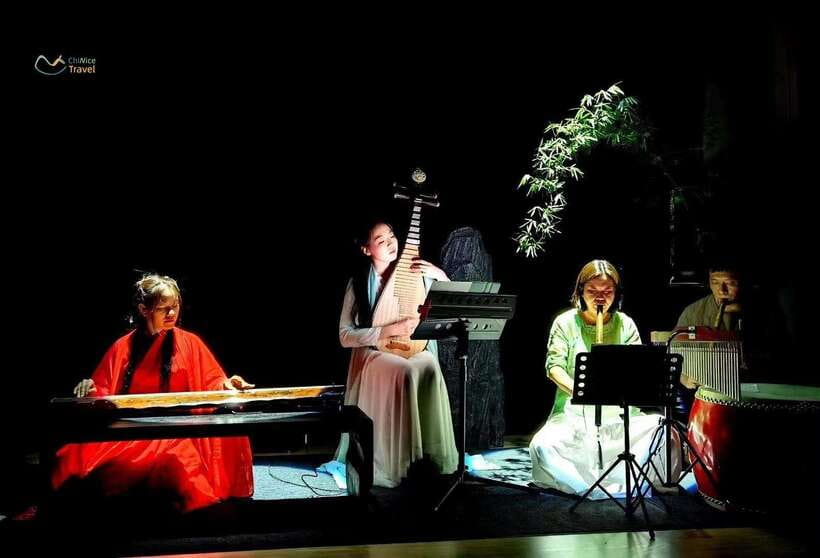
REVIEW · CHINA
Beijing Culture Event: Tea Ceremony, Music Show, Calligraphy
Ancient arts come alive in a small room. This 2.5-hour Beijing cultural experience brings together a tea ceremony, Guqin music, calligraphy, traditional clothing, and hands-on lessons at certified cultural venues. I like the small group of eight, which gives you time to ask questions and try each activity without being rushed. I also like the serious teaching behind it, especially the bilingual guide with academic training in history and sociology.
The main drawback is the location. You must make your own way to Hua Gong Station, Exit C, on Line 7, then return to the same meeting point. That is manageable, but it takes planning. At $79 per person, the price is fair if you want active cultural learning rather than a short stage show. It may feel expensive if you only want to watch a performance.
Six traditional arts in one compact visit
- A six-part cultural program: Tea brewing, Guqin performance, Guqin practice, calligraphy, Hanfu and teacher-honoring ritual, plus historical and social context.
- A 40-year Guqin master: Hear an accomplished performer play the ancient seven-string instrument, then try a simple melody yourself.
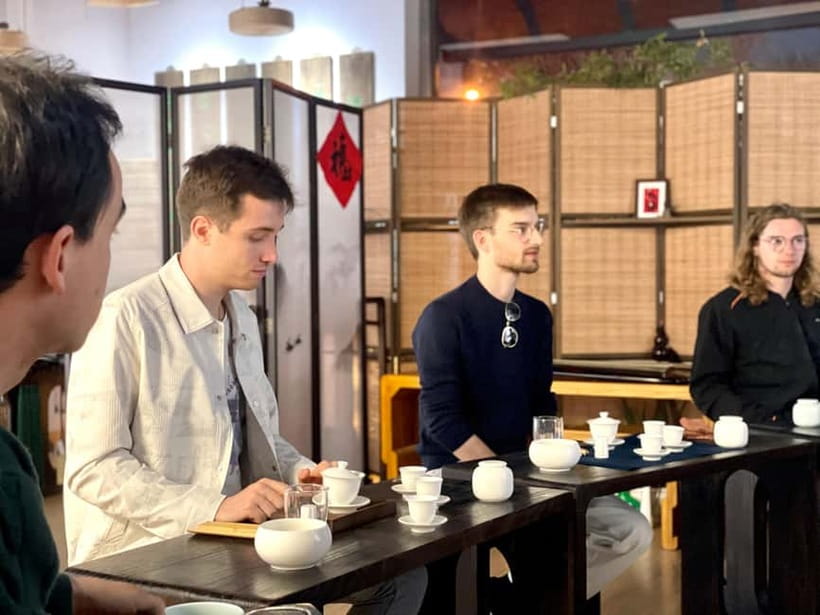
- Traditional tea preparation: Learn a Six-Step Tea Art method with porcelain teaware and several types of tea.
- Your own Chinese character: Use brush and ink to write a meaningful symbol, your name, or a word such as blessing.
- A private setting: The program takes place at a certified Guqin Art Center and a high-end Tea Culture Base rather than a standard sightseeing venue.
- Photos and souvenirs included: Hanfu rental, a photo session, and original souvenirs are part of the package.
What the 2.5-hour schedule feels like
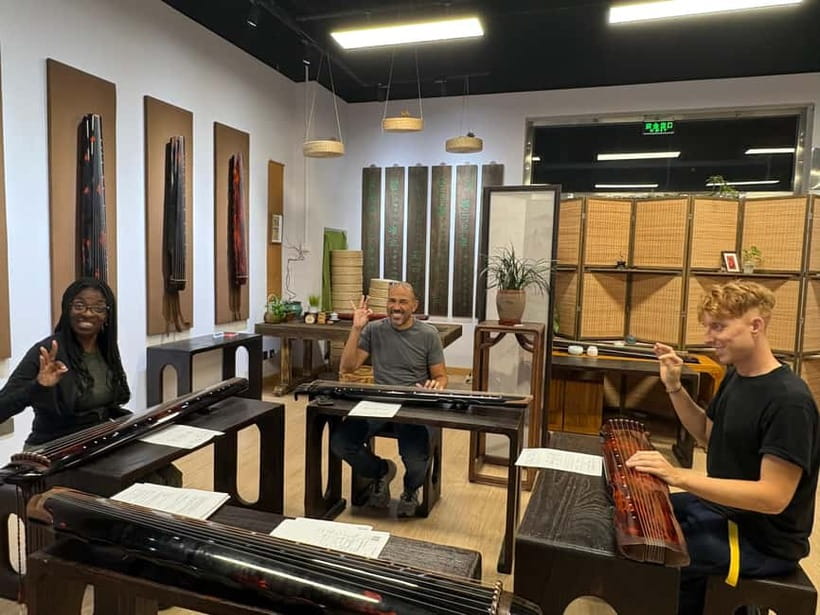
This is not a long city tour with several unrelated stops. It is a focused cultural session in one area, built around demonstrations followed by your own attempts. That format matters. You get enough explanation to understand what you are doing, then enough practice to make the tradition feel personal.
The program has six connected parts, though the exact order can vary. Expect a professional guide or tutor to move between explanation, performance, and participation. English and Chinese support are available, and the group is limited to eight people.
Arrive 10 minutes early. You will need time to get ready, particularly if you are taking part in the Hanfu dressing session. Comfortable clothes are the sensible choice, since traditional clothing can involve layers and adjustment.
More Live Music around Beijing:
- Beijing: Traditional Cultural Show Peking Opera Tickets
★ 4.4 · 66 reviews - Liyuan Theatre Beijing Opera Show Tickets
★ 4.4 · 60 reviews - Beijing LiYuan Theatre VIP Seats Opera Show with Private Transfer Service
★ 5.0 · 43 reviews
Tea ceremony with porcelain and careful movement
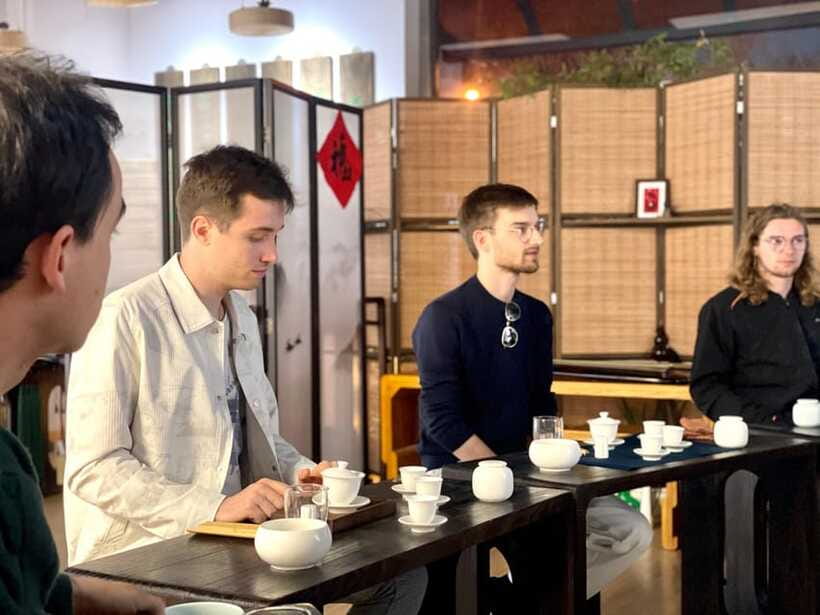
The tea session opens the door in a quiet, practical way. A tea master demonstrates the traditional Six-Step Tea Art process, then guides you through brewing. The emphasis is not simply on drinking tea. You learn how the same basic ritual uses timing, water, teaware, and controlled movement to shape the final cup.
You are introduced to red, green, and floral teas. Each has a different aroma, color, and lingering taste. That comparison gives the lesson a useful purpose. Instead of hearing general claims about Chinese tea, you can notice the differences yourself.
The porcelain tea set is part of the experience, too. Tea culture in China is tied to the objects used to prepare and serve it, and the small details of handling the cups and pot help explain why the ceremony is measured and deliberate.
I would not expect a full tea-tasting meal. Water and tea are included, but meals and other drinks are not. If you need a substantial breakfast or lunch, eat before or after the session.
Guqin music, from listening to playing
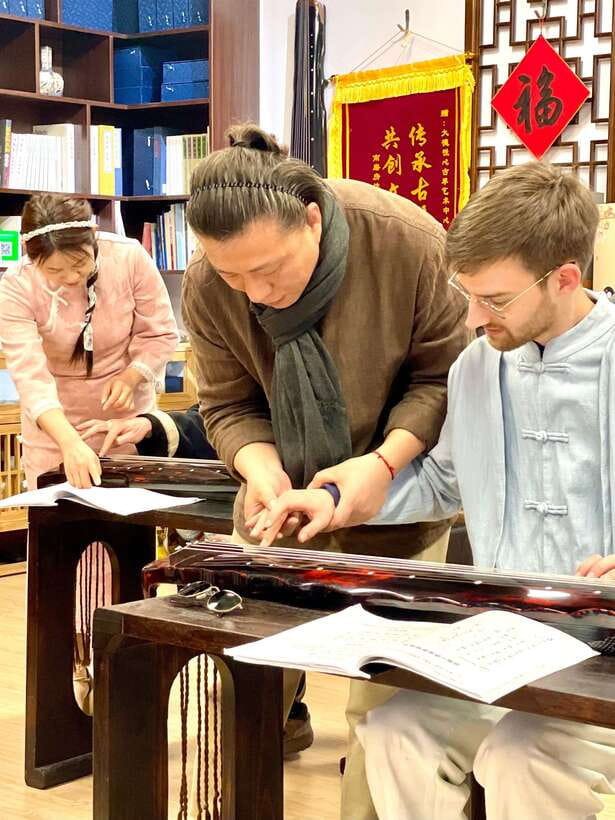
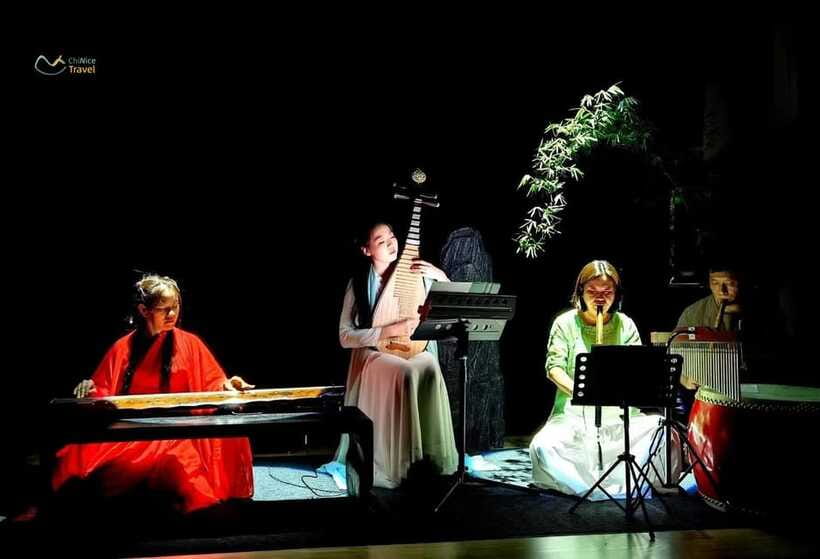
The Guqin performance is likely to be the most unusual part of the visit. This ancient Chinese instrument has seven strings and a restrained, meditative sound. It is associated with scholars and formal cultural traditions, and it has been used in important diplomatic settings, including occasions involving foreign dignitaries.
A national-level heritage master performs during the program. The instructor is described as having 40 years of experience, so you are not receiving a casual introduction from a general entertainer. You get to hear the instrument in the hands of someone who has spent decades refining touch, rhythm, and tone.
The explanation also connects Guqin music with Chinese writing and thought. That link helps explain why the instrument is treated as more than a musical tool. Its value is tied to education, character, patience, and self-cultivation.
Then you get to try it. The Guqin lesson is designed for beginners, with patient instruction and a simple melody. Do not expect to become a musician in one sitting. The point is to feel the instrument under your fingers and understand why its playing style requires control rather than force.
This part works best if you are willing to make a few awkward sounds. The experience is not a polished concert only. Your participation is part of the charm.
Calligraphy with brush, ink, and meaning
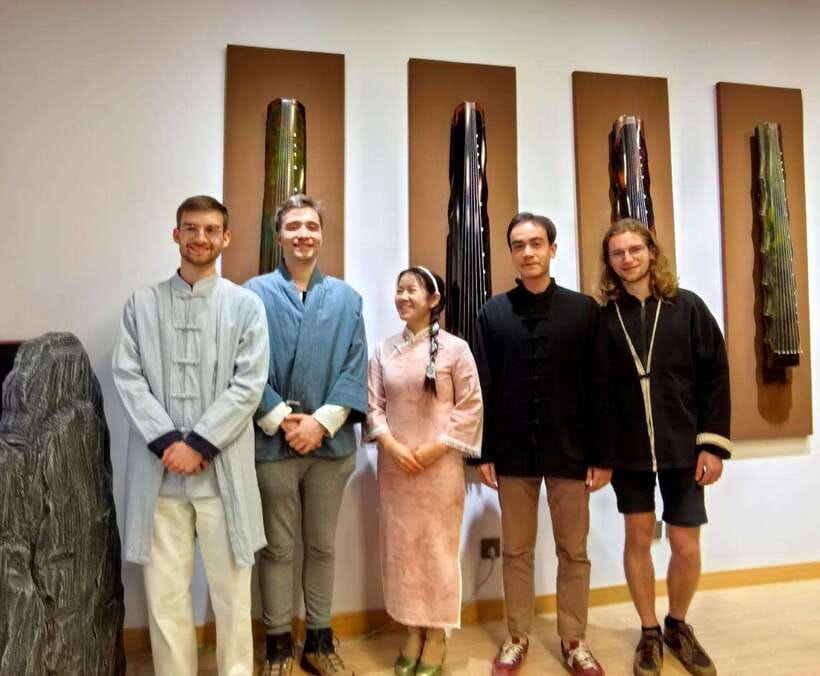
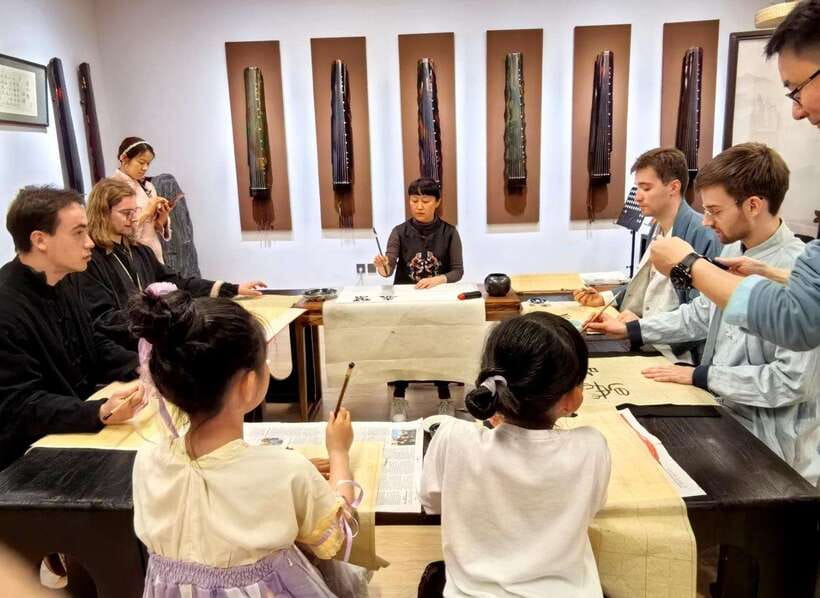
After the Guqin lesson, the program shifts from sound to writing. You learn about the development of Chinese calligraphy, from early pictographic forms to the five major traditional styles.
That historical step is useful because it shows that Chinese characters are not just symbols to copy. Their shape, balance, and movement have changed over time. A brushstroke can suggest an object, an idea, or a personal wish.
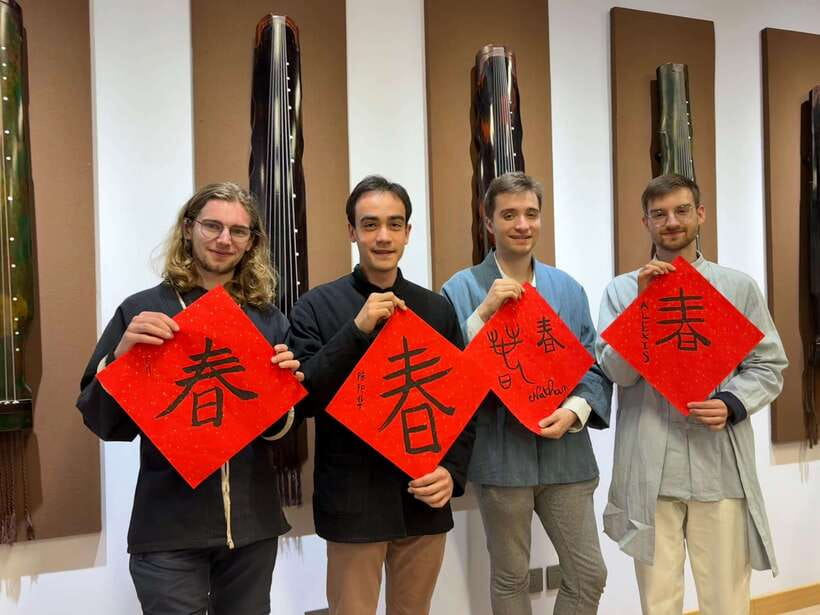
You then practice with a traditional brush and ink. You may write your name or a meaningful character such as blessing. The goal is not perfect penmanship. It is to understand the pressure, direction, and rhythm involved in making each stroke.
I like this activity for families because it gives children a clear task and a souvenir they create themselves. One family with children ranging from 11 to 40 found that even the initially reluctant members became involved. That makes sense: calligraphy feels less like a lecture once the brush is in your hand.
The main limitation is that calligraphy takes years to master. Your finished piece may look more like a first attempt than a museum scroll. That is fine. The value is in learning how the writing works and taking home something personal.
Same city, a different sound:
- Liyuan Theatre Peking Opera Ticket
★ 5.0 · 26 reviews - Mutianyu Great Wall Tickets with Chairlift and Toboggan
★ 5.0 · 24 reviews - Beijing: Must-See Peking Opera at Liyuan Theatre Ticket
★ 4.1 · 9 reviews - Beijing Liyuan Theater Peking Opera Ticket Booking
★ 4.5 · 7 reviews
Hanfu, ritual, and the photo session
The Hanfu portion adds a visual and ceremonial side to the visit. You receive a traditional outfit, take part in a teacher-honoring ceremony, and have time for photographs.
Wear comfortable clothes underneath the costume. You should also bring your camera, even though photoshooting is included. The outfit and setting give you a chance to record the occasion, but the photographs are a bonus rather than the core reason to book.
The teacher-honoring ritual gives the clothing more purpose. You are not simply dressing up for a picture. The ceremony introduces ideas of respect, learning, and the relationship between student and teacher.
If you prefer a very informal cultural activity, this portion may feel more structured than expected. If you enjoy symbols, etiquette, and traditional dress, it adds welcome variety to the tea and music lessons.
The guide makes the difference
The bilingual cultural expert is important here. You are not only translating words from Chinese into English. You are being shown why a gesture, object, sound, or character matters.
The guide has a master’s degree in history and sociology, which suits this program well. Tea, Guqin music, calligraphy, and ceremony can seem like separate subjects when explained without context. A guide with training in history and society can connect them to older ideas about education, respect, artistic discipline, and daily life.
English support is provided, but you should still expect some cultural terms to remain specific to Chinese tradition. That is not a problem. In fact, it is part of the point. You are being introduced to practices that do not always have a simple English equivalent.
The personal attention also appears to extend beyond the formal session. One family was met at the metro entrance by Sylvia, who helped them find the Art Center after they had sorted out their train tickets. If your booking includes this kind of assistance, it can make the first arrival much easier, especially if Hua Gong Station is unfamiliar to you.
Getting to Hua Gong Station
The meeting point is Hua Gong Station, Exit C, on Line 7. The activity is about 30 minutes from the Temple of Heaven by metro, though your actual journey will depend on where you stay.
Give yourself extra time. You need to arrive 10 minutes early, and a first visit to a Beijing metro station can take longer if you need to locate the correct exit. Do not cut this close.
The experience ends back at the meeting point. Transportation is not included, so you pay for your own metro or other transfer. That arrangement keeps the $79 price focused on the instruction, venue, equipment, costume, and activities, but you should include transport in your day’s budget.
For a smoother visit, save the Chinese name or meeting-point details on your phone. Check the route before leaving your hotel, and allow room for ticket machines, station corridors, and finding Exit C.
Is $79 good value?
At $79, this is not the cheapest way to drink tea in Beijing. It is also not comparable to a basic museum ticket. You are paying for a private cultural program with several teachers or masters, a bilingual guide, equipment, tea, Hanfu rental, photographs, Guqin instruction, and souvenirs.
The value is strongest if you would otherwise book several separate activities. A tea demonstration, a music performance, a beginner Guqin lesson, calligraphy practice, and traditional dress can easily become a full day of planning. Here, those elements are grouped into a single 2.5-hour visit.
The small group improves the value. With up to eight participants, you have a better chance of receiving direct help with the brush, instrument, tea preparation, and costume. A large stage presentation could offer more spectacle, but it would not give you the same chance to handle the materials.
The price is less convincing if you dislike participation or have little interest in traditional arts. You may get more from a simple concert or museum visit. This program earns its fee through access and interaction, not through length.
Who should book this experience?
I would recommend it to first-time visitors who want cultural background with their sightseeing. It is also a strong choice for families, since the activities change often enough to keep different ages engaged.
Couples and solo visitors can enjoy it as well, especially if you like crafts, music, photography, or history. The small group gives solo participants a better setting for asking questions than a large tour.
It suits visitors who want something beyond major Beijing sights. You will not see a famous palace or landmark during the program, but you will spend time with practices that are harder to encounter in a normal sightseeing schedule.
I would be cautious about booking it for very young children, only because the activities require listening, careful handling, and patience. The family experience involving children as young as 11 suggests that school-age children can take part successfully, but the program is not designed as a free-play session.
The wheelchair-accessible format is a useful plus. Since exact venue arrangements can affect comfort, confirm any personal access needs before booking.
Practical details before you go
A few simple preparations will make the session easier:
- Wear comfortable clothing for changing into Hanfu.
- Arrive 10 minutes before the start.
- Bring a camera or phone for the photo session.
- Eat beforehand if you need a meal, since food is not included.
- Allow for metro navigation and the walk from Exit C.
- Tell the provider about allergies in advance. Sylvia asked one family about allergies so arrangements could be made.
- Check the available starting times when booking, since the schedule can vary.
Cancellation is flexible: you can cancel up to 24 hours before the activity for a full refund. You can also reserve now and pay later, which helps if your Beijing schedule is still changing.
Should you book it?
Book this experience if you want to do more than watch Chinese culture from a distance. The strongest parts are the Guqin performance, the chance to play the instrument, the calligraphy practice, and the thoughtful guidance that connects each activity to Chinese traditions.
The program is especially good for families, couples, and curious first-time visitors who value personal instruction. Skip it if you want a major landmark, a full meal, or a low-cost entertainment show. For everyone else, $79 buys a focused and unusually hands-on afternoon, with enough variety to keep the 2.5 hours moving.
FAQ
How long does the Beijing cultural experience last?
The experience lasts 2.5 hours.
Where does the activity begin?
The meeting point is Hua Gong Station, Exit C, on Line 7.
Where does the activity end?
The activity ends back at the meeting point.
Is transportation included?
No. Transportation to and from the venue is not included.
What languages are available?
The experience is offered in Chinese and English.
How many people are in the group?
The group is limited to eight participants.
Is the experience wheelchair accessible?
Yes, the activity is described as wheelchair accessible.
What activities are included?
The program includes tea brewing, a Guqin performance, a Guqin class, calligraphy, Hanfu rental and ritual, cultural guidance, photographs, tea or water, and original souvenirs.
Are meals included?
No. Meals and drinks beyond the included water and tea are not included.
Can I cancel for a refund?
Yes. You can cancel up to 24 hours in advance for a full refund.
What should I wear?
Wear comfortable clothing for the Hanfu dressing session. Arrive 10 minutes early to prepare.
Just added around Beijing
- Peking Opera at Liyuan Theater Tickets★ 5.0 · 4 reviews
- Private Tour: Shichahai, Nanluoguxiang and Peking Opera&dinner★ 4.5 · 2 reviews
- Liyuan Theatre Peking Opera Ticket★ 5.0 · 3 reviews
- Beijing Liyuan Theater Peking Opera Ticket Booking★ 4.5 · 7 reviews
- Beijing Opera Ticket★ 5.0 · 3 reviews
- Mutianyu Great Wall Tickets with Chairlift and Toboggan★ 5.0 · 24 reviews
- Liyuan Theater Beijing Opera Show Tickets★ 5.0 · 3 reviews
- Beijing: Night Tour Of Peking Opera Show / Transfer★ 4.3 · 5 reviews