
REVIEW · FRANCE
Paris Walk: Opera to Montmartre with Pastry & Chocolate
Paris rewards a good pair of walking shoes. This three-hour route links the Palais Garnier, old shopping arcades, and Montmartre’s cobbled lanes with tastings of pastries, chocolates, and macarons. I especially like the change of mood, from grand city streets to village-like Montmartre, and the chance to see several famous sights without spending the day indoors. The guide also takes photos, which is a small but useful touch when you are traveling alone or with a group.
I love the story-led guiding style praised in the feedback, with history explained through memorable people and local stories rather than a stream of dates. I also like the mix of major sights and less obvious stops, including Notre-Dame-de-Lorette and the old arcades. The main drawback is physical: you will walk, climb stairs, and tackle Montmartre’s hill, so this is not a good choice if mobility is limited or if you want a gentle sightseeing day.
What makes this Paris walk worth your time
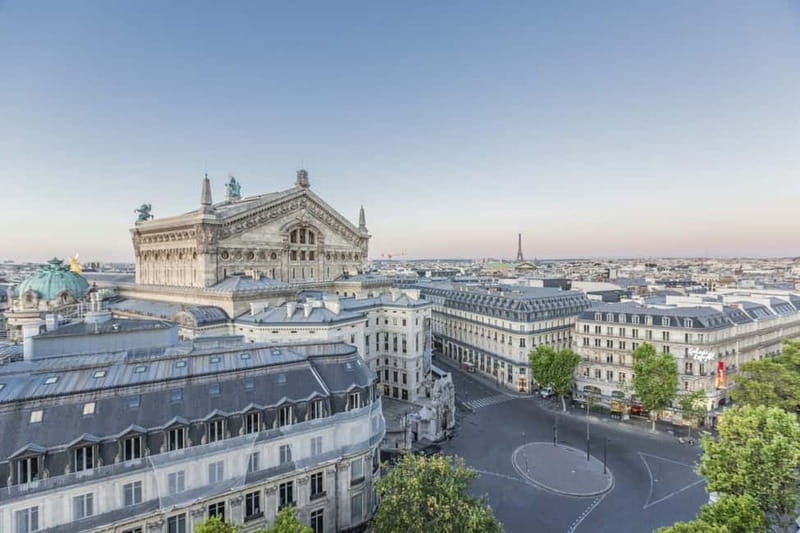
- A strong city-to-village route: Begin beside the grand Opéra Garnier and finish near Sacré-Cœur, watching Paris change character along the way.
- Three classic Paris treats: The pastry, chocolate, and macaron tastings give the walk a delicious local focus, not just a series of photo stops.
- Arcades with old-world character: Passage Jouffroy and Passage Verdeau offer covered passages, small shops, and a quieter look at 19th-century Paris.
- Montmartre’s artistic landmarks: See the Moulin Rouge, Wall of Love, Bateau-Lavoir, Moulin de la Galette, and Place du Tertre.
- A useful short metro ride: The metro connects the first half of the route with Montmartre, saving time and avoiding an overly long walk across central Paris.
- A flexible format: You can book a private experience or join a small group, with English guiding and free cancellation up to 24 hours before the start.
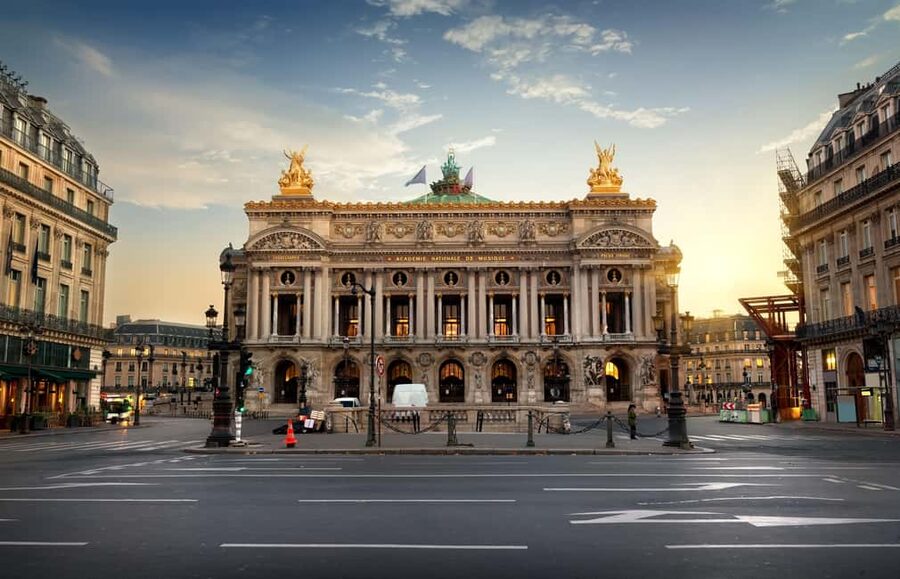
Starting beneath the Palais Garnier
The meeting point is in front of the main staircase of the Palais Garnier, with the steps facing the opera square. Look for the guide holding an umbrella. This is a practical meeting place because the Opéra station is right outside the main entrance, served by Lines 3, 7, and 8. Chaussée d’Antin, served by Lines 7 and 9, is about a three-minute walk away.
The Palais Garnier gives the tour a grand opening. Even if you do not enter the opera house, its exterior sets the tone with its monumental scale and elaborate decoration. You are starting in the polished, formal heart of Paris before moving toward streets that feel much more informal.
I like this opening because it helps you get your bearings. You are not dropped into an anonymous street corner. You meet beside one of Paris’s clearest landmarks, then move through the city on foot with a guide who can explain how the surrounding streets fit together.
More Dessert Tours around Paris:
Galeries Lafayette and a free rooftop view
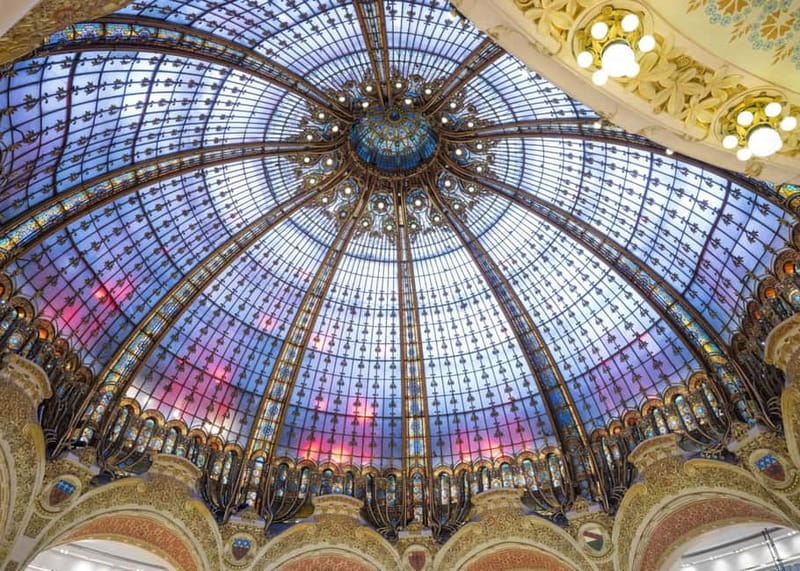
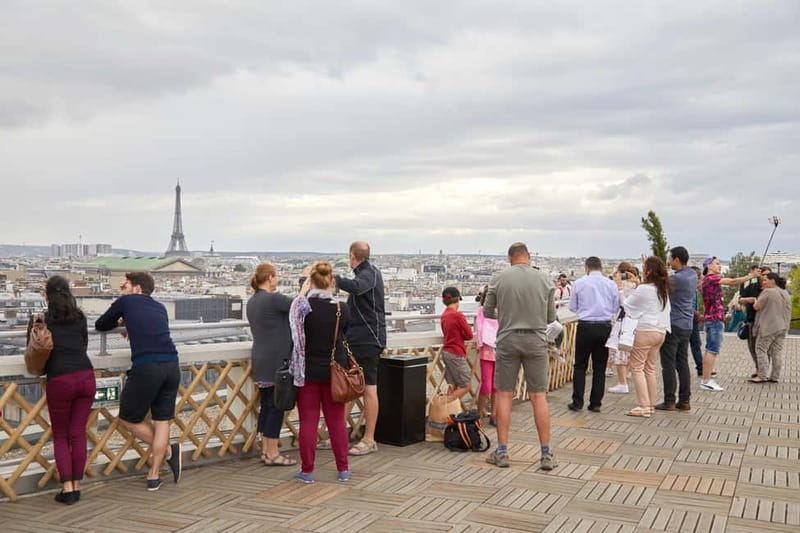
The first extended stop is around Galeries Lafayette, with about 30 minutes for sightseeing, photos, and a possible rooftop visit. The department store is known for its grand coupole dome, and the optional rooftop terrace gives you a skyline view without an extra admission charge.
There is an important condition here. The rooftop visit is not affiliated with the tour provider, Galeries Lafayette, or Printemps. Access depends on store hours, crowd levels, and weather. Treat it as a useful possibility rather than a guaranteed part of the experience.
That flexibility is sensible. On a clear day, the terrace can add a fine visual introduction to Paris, helping you see the city spread out before the route heads uphill later. On a busy shopping day, though, you may have limited time or no access at all. The tour still works without it, since the dome, surrounding streets, and pastry tasting remain part of the first section.
Passage Jouffroy and Passage Verdeau

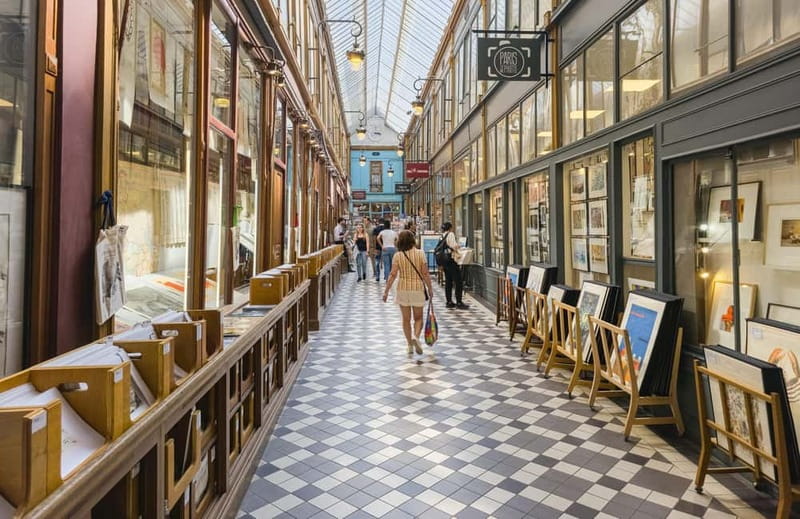
The route then enters Passage Jouffroy, followed by Passage Verdeau. These covered arcades are among the most enjoyable parts of the walk for anyone who likes Paris away from the biggest monuments.
Passage Jouffroy has a graceful, old-fashioned feel. It is a good place to slow down and notice details that are easy to miss on a regular street walk. Passage Verdeau continues the same mood, with covered walkways and a more intimate scale than the wide avenues near the opera house.
You spend about 10 minutes at each passage, so do not expect a long shopping break. The value is in seeing how Paris once organized elegant commerce under glass and iron roofs. The guide can give the arcades a clear place in the city’s story, rather than leaving you to see them as pretty corridors with no context.
These stops also offer a welcome change from the traffic and open streets outside. If weather is poor, the covered passages make the middle of the walk more comfortable, though you should still bring water and wear shoes with good grip.
Notre-Dame-de-Lorette and the metro connection

Notre-Dame-de-Lorette is one of the route’s quieter stops. The church is described as a neoclassical architectural highlight, and the visit lasts around 10 minutes. It is not as instantly famous as the Palais Garnier or Sacré-Cœur, which is exactly why it adds variety.
A guide can help you notice the building’s design and explain why it matters, giving you a short pause before the route shifts toward Montmartre. This stop is best for people who enjoy seeing a less obvious part of Paris rather than rushing from one famous landmark to the next.
The tour then uses the metro for about 10 minutes. This is a smart choice. Walking from the opera district all the way to Montmartre would make the route longer and more tiring, leaving less energy for the hill itself. The metro ticket is included, so you do not need to arrange that part separately.
You should still expect the day to feel active. The train ride saves distance, not all of the walking. Montmartre includes slopes, stairs, and uneven cobblestones.
More Live Music around Paris:
- Paris: 3-Course-Dinner Cruise on the Seine with live music
★ 4.7 · 7,248 reviews - Paris: 4-Course Dinner Cruise on Seine River with Live Music
★ 4.5 · 3,827 reviews - Paris: Gourmet Dinner Cruise on Seine River with Live Music
★ 4.5 · 2,531 reviews - Paris: Opera Garnier and Seine River Cruise Tickets
★ 4.5 · 957 reviews
Moulin Rouge and the first Montmartre landmarks
The Montmartre section begins near the Moulin Rouge, with roughly 15 minutes for a photo stop and guided explanation. The famous red windmill is one of Paris’s most recognizable nightlife symbols, and the stop gives you a quick look at the neighborhood’s theatrical side.
From there, the route continues to the Wall of Love. This outdoor artwork is a popular photo point, but the guide adds more value than a simple picture stop. You can pause, take photographs, and then move on without losing the pace of the walk.
The next stop is Le Bateau-Lavoir, connected with Montmartre’s artistic past. You then see the Moulin de la Galette, another landmark tied to the hill’s old dance-hall and village character. These places help explain why Montmartre became associated with artists, painters, and informal neighborhood life.
The schedule allows about 10 to 15 minutes at each location. That is enough for an introduction and photographs, but not for a long independent visit. If you want to study every plaque or spend time inside attractions, this tour may feel brisk. It is designed to connect many points in one continuous walk.
Cobblestones, paintings, and La Maison Rose
Montmartre becomes more atmospheric as the route climbs. At Le Passe-Muraille, you see the sculpture of a man appearing to walk through a wall. It is a playful stop that breaks up the historical material and gives you another unusual photo opportunity.
La Maison Rose follows, with about 10 minutes for photographs. Its bright exterior is one of the hill’s most familiar views, especially for first-time visitors. The stop is brief, so you should think of it as part of the neighborhood walk rather than a meal or café visit.
The route then reaches Place du Tertre. This square is closely linked with local artists, and you can watch artists at work while taking in the compact, village-like setting. It is one of the best places on the tour to pause and feel how different Montmartre is from the grand avenues near the opera house.
Place du Tertre can be crowded. That is not a flaw unique to this tour, but it does affect the experience. Keep your belongings secure, stay close enough to hear the guide, and do not expect a quiet square. The upside is the human activity: painters, easels, cafés, and pedestrians all share the same small space.
Sacré-Cœur and the final vineyard stop

The walk finishes at Sacré-Cœur Basilica, with about 15 minutes for a visit and photographs. The basilica’s bright white exterior and high position make it one of Paris’s strongest viewpoints, and reaching it after the climb gives the stop a clear sense of arrival.
You should be ready for stairs and uphill streets before you get there. The route is not suitable for people with mobility impairments, and the cobblestones can be tiring even for fit walkers. Comfortable shoes are essential. A hat, sunglasses, water, and a camera are also sensible choices.
The Vigne du Clos Montmartre comes near the end, with another 15-minute stop. This small vineyard is a reminder that Montmartre was once a village-like area with working plots and a more rural character. It gives the final section a different feel from the tourist crowds around the basilica.
The tour ends at the Basilica of the Sacred Heart of Paris. That makes the finish convenient if you want to continue exploring Montmartre on your own, though the exact end point is not the same as the starting point. Plan your next move from the hill rather than expecting to return to the Opéra area with the group.
The pastry, chocolate, and macaron tasting
The tasting is one of the tour’s strongest features. You receive pastry, chocolate, and macaron samples, including products described as award-winning. This turns the walk into more than a sightseeing route and gives you a small introduction to the pleasures of French baking and confectionery.
The tasting also breaks up the walking. Three hours is a short time for this many places, and a food stop gives you a chance to pause while still learning about Paris. If you have a serious sweet tooth, this may be the detail that makes the price feel worthwhile.
Do not book this as a full food tour. The tasting is part of a broader sightseeing experience, not a meal or a long series of bakery visits. If you need a full lunch, you will need to arrange it separately.
Guide quality and group format
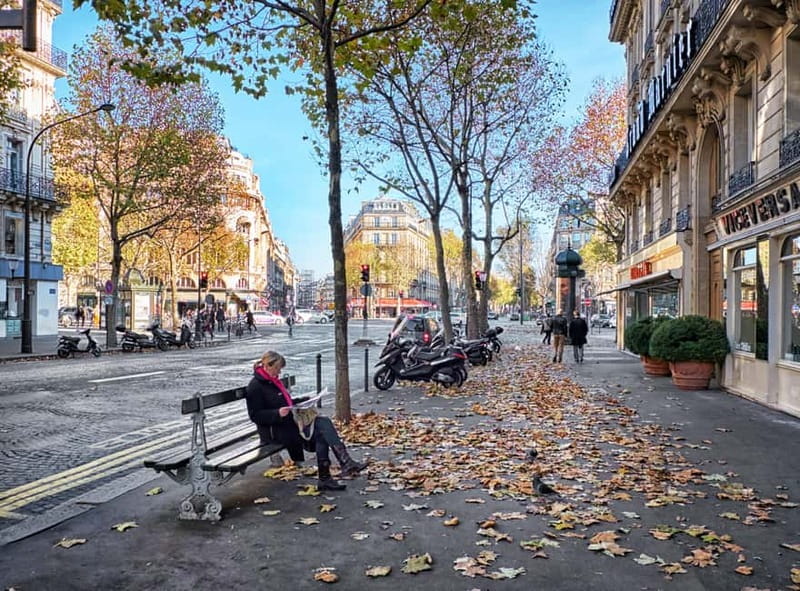
The strongest praise focuses on the guide’s manner. The feedback describes explanations that make the places feel real instead of presenting only dates and names. One comment also notes that the guide adapted the walk to personal interests and took time to explain details calmly.
That matters on a route with many short stops. Without good narration, the Moulin de la Galette, Bateau-Lavoir, and Wall of Love could blur into a list of names. A guide who can connect the sights with stories gives the walk a stronger shape.
The experience is available as a private tour or in a small group. Private touring usually makes it easier to ask questions and adjust the pace, while a small group can offer a more social outing. The available information does not specify a fixed maximum group size, so check the option shown when you book.
The language is English. No individual guide names are provided, but the feedback repeatedly praises the guides for kindness, patience, and clear explanations.
Is $117 a fair price?
At $117 per person, this is not the cheapest way to see Montmartre. You are paying for a live English-speaking guide, the metro ticket, the food tasting, a surprise gift, photo help, and a route that joins two separate Paris districts in three hours.
The price makes the most sense if you value structure. You do not need to plan the sequence between the opera district, the arcades, Notre-Dame-de-Lorette, and Montmartre. You also avoid spending time figuring out the metro connection and deciding which landmarks can fit into one half-day.
For a solo visitor, the guide’s photo assistance may add real value. For a couple or family, the private option could make the cost feel high, but it may be worthwhile if you want a personal pace and tailored explanations.
I would not choose this tour solely for the rooftop view, since that stop depends on conditions and is not guaranteed. I would choose it for the full combination of guided storytelling, Montmartre landmarks, metro transport, and sweet tastings.
Who should book this walk?
This experience suits a first visit to Paris when you want a fast introduction to several districts. It is also a good fit if you enjoy history told through local stories, prefer walking to sitting on a sightseeing bus, and want a guide to handle the route.
You will get the most from it if you can manage stairs, slopes, and cobbled streets. Bring water, dress comfortably, and allow for a lively pace. A camera is useful, but keep your attention on the guide during the short explanations.
I would be more cautious if you dislike crowds, need frequent rest stops, or want long visits inside each landmark. The route covers a lot in three hours, so it favors range and context over slow, detailed exploration.
Practical details before you book
The tour lasts three hours, and starting times vary, so check availability for your date. Free cancellation is available up to 24 hours in advance, and you can reserve now and pay later.
Meet in front of the main staircase of the Palais Garnier, facing the opera square. The guide will be holding an umbrella. Comfortable shoes are not optional here, especially for the climb through Montmartre.
Should you book it?
Book this walk if you want a well-shaped introduction to Paris that moves from grand architecture to artistic Montmartre, with a few sweets along the way. The praised guide style, included metro ticket, photo help, and varied route give it solid value for a half-day outing.
Skip it if you want a slow museum visit, a full food tour, or an easy route without stairs. For most active first-time visitors, though, this is a lively and practical way to connect the Palais Garnier with Sacré-Cœur while seeing much more than the usual postcard stops.
FAQ
How long does the Paris walk last?
The experience lasts three hours.
What language is the tour conducted in?
The live tour guide speaks English.
Where does the tour begin?
It begins in front of the main staircase of the Palais Garnier, with the steps facing the opera square. The guide will be holding an umbrella.
Where does the tour finish?
The walk finishes at the Basilica of the Sacred Heart of Paris, also known as Sacré-Cœur.
Is the metro ticket included?
Yes. A metro ticket is included for the approximately 10-minute connection between the first part of the route and Montmartre.
Is the rooftop visit guaranteed?
No. The optional free rooftop terrace visit depends on store hours, crowd levels, and weather. The tour provider is not affiliated with or endorsed by Galeries Lafayette or Printemps.
Is the tour suitable for people with mobility impairments?
No. The route includes walking, stairs, uphill sections, and cobbled streets, and it is not suitable for people with mobility impairments.
Just added around Paris
- Area ,Opera, Jewellery,Fashion,Palais Royal walking tour★ 5.0 · 47 reviews
- Sunset Picnic with View of Eiffel Tower and Live Music★ 5.0 · 15 reviews
- Create unique jewelry from top Parisian designer Bijoux Blues★ 4.0 · 2 reviews
- Paris Opera Garnier Private Tour★ 5.0 · 42 reviews
- 2 Hour Private Opera Garnier Guided Tour★ 5.0 · 11 reviews
- Opera Garnier with private guide★ 4.5 · 21 reviews
- Private Opera Garnier Theater 2-Hour Tour in Paris★ 5.0 · 45 reviews
- Exclusive Opera Garnier Private Guided Tour★ 5.0 · 4 reviews