
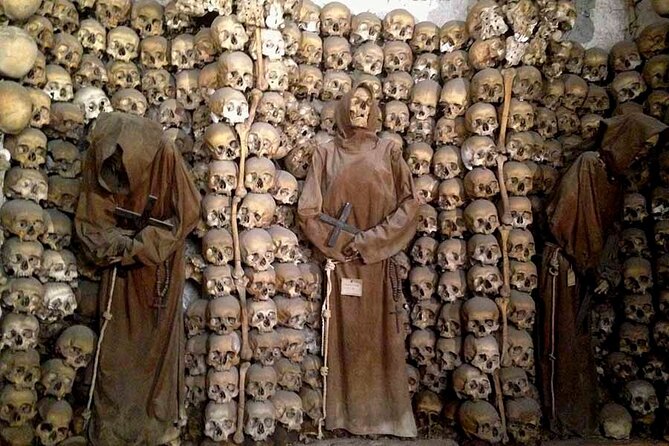
REVIEW · ITALY
Capuchin Crypt Christmas Baroque Concert in Rome
Sacred music meets a remarkable crypt. This 90-minute Rome evening pairs an a cappella Christmas concert by the Schola Romana Ensemble with a visit to the Capuchin Museum and Crypt, making it a strong choice for anyone who wants something quieter and more unusual than Rome’s usual grand sights. I especially like the intimate four-part singing and the chance to see Caravaggio’s Meditation of Saint Francis alongside the famous bone-decorated crypt.
I also like the setting near Piazza Barberini and Via Veneto, a central part of Rome with plenty of places to continue your evening. The main drawback is practical rather than artistic: the meeting-point information has caused confusion, and the concert may feel short if you want a full Christmas program or modern holiday songs.
Key points to know before booking
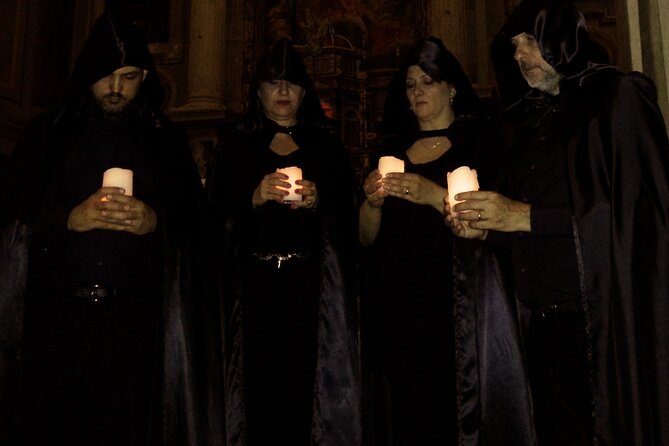
- Four voices, no instruments: The Schola Romana Ensemble performs music by Palestrina, Arcadelt, Morales, Victoria, Pitoni, and Agazzari, along with Gregorian chant.
- The crypt is unforgettable: Around 4,000 friars’ bones decorate the Capuchin Crypt in a setting that is striking, solemn, and not suitable for every visitor.
- You get more than a concert: The package includes the Capuchin Museum and Crypt, an introduction to the program, and an audio guide in 13 languages.
- An art historian option is available: Choose the upgrade if you want more explanation than the standard audio visit provides.
- Dinner is optional: You can add a traditional Roman meal, but transport to the restaurant is not included.
- Plan your arrival carefully: The start time is 4:45 pm at the Capuchin Convent entrance on Via Veneto 21, and the group is limited to 25 people.
Why this Rome Christmas evening feels different
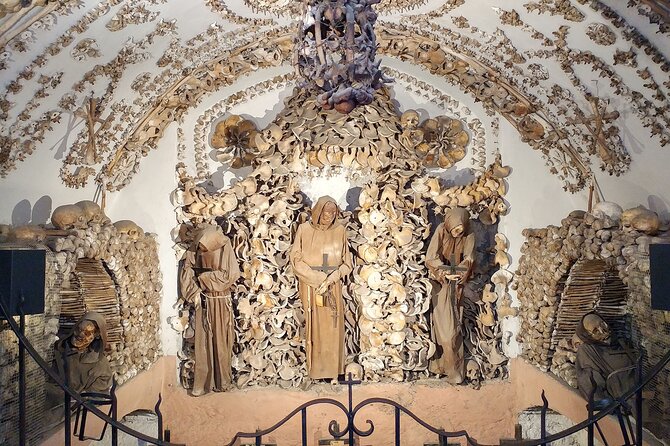
Rome has no shortage of churches, concerts, and evening activities. This one works because it joins two very different experiences: polished sacred music in a convent hall and a stark visit to a crypt decorated with human bones.
That contrast gives the evening its character. The concert offers calm, beauty, and a sense of Christmas worship. The crypt is more confronting. It asks you to think about mortality, religious devotion, and the Capuchin friars who were laid to rest there. This is not a light holiday show with familiar carols and decorations.
I would choose it if you want culture with an edge. You should also know what you are buying. The music is Baroque and Renaissance sacred music, not a general Christmas singalong. The program includes composers connected with the music of the Sistine Chapel, plus Gregorian chant. If you enjoy choral sound and old church music, that is a major strength. If you want popular Christmas songs, you may find the selection too formal.
The total duration is about one hour and 30 minutes. That makes this easy to fit into a Rome evening, especially if you are planning dinner afterward. The performance itself is not described as a long concert, and one attendee wished it lasted longer. Think of it as a compact cultural program rather than a full night at the opera.
More Classical Concerts around Rome:
- Rome: “Chopin & Italian Friends” Piano Concert
★ 4.2 · 98 reviews - Rome: Chopin Piano Concert by Candle Glow
★ 4.6 · 42 reviews - Musical masterpieces: The best of the Baroque concert
★ 5.0 · 17 reviews
Arriving at Via Veneto 21
The meeting point is the entrance to the Capuchins Convent at Via Vittorio Veneto 21. Staff wait at the entrance from Casa per Ferie I Cappuccini, and the activity finishes back at the same meeting point.
This location is close to Piazza Barberini and sits on Via Veneto, one of Rome’s best-known streets. The area is also linked with La Dolce Vita, Federico Fellini’s famous film. That gives your walk to the event a little cinematic flavor, though the real attraction begins inside the convent.
The meeting instructions deserve care. Two people specifically had trouble because the address supplied through Viator was incorrect or unclear, with one person walking roughly half a mile from the stated point. The provider said the error had been reported to Viator. I would not rely on a last-minute map search. Check the exact entrance before leaving your hotel, allow time to find Via Veneto 21, and look for the Capuchin Convent entrance rather than assuming any nearby museum door is correct.
The 4:45 pm start is useful for winter sightseeing. You can spend the afternoon in central Rome, then make your way toward Via Veneto before dusk. The group maximum is 25, which is small enough to keep the gathering manageable without promising a private experience.
The Capuchin church and its art
The church is Santa Maria Immacolata, built in the 17th century by Pope Urban VIII Barberini. It sits close to Piazza Barberini and forms part of the Capuchin complex.
The church contains works connected with Guido Reni, Domenichino, Pietro da Cortona, Gherardo delle Notti, and Antonio Sacchi. The piece most art lovers will want to note is Caravaggio’s Meditation of Saint Francis. That painting gives the visit added weight. You are not entering only to see a strange crypt. You are also visiting a church with serious Roman art.
The package includes an introduction to the musical program. That is helpful because the names on the program may not be familiar to everyone. Palestrina, Arcadelt, Morales, Victoria, Pitoni, and Agazzari belong to a tradition of sacred music built for voices, church acoustics, and careful harmony. A short explanation can help you listen for more than simply a beautiful sound.
The music is performed by the Schola Romana Ensemble, described as a historically informed resident group. The listed lineup is soprano, alto, tenor, bass, and conductor. Four singers can produce a surprisingly full sound, but this is not a large choir. The small format is one of the evening’s strongest features. You hear the clarity of individual voices rather than a wall of sound.
The a cappella concert in the convent hall
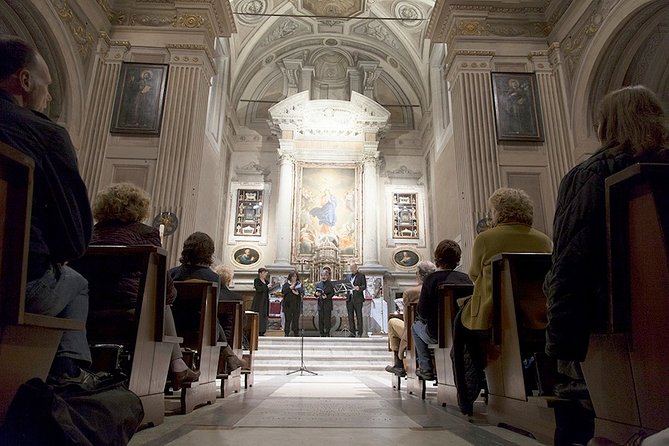
The concert takes place in a specially reserved hall in the Capuchins Convent. It is an a cappella program, so there are no instruments carrying the melody or filling out the harmony. The sound depends entirely on the singers.
That can make sacred music feel unusually direct. The absence of instruments leaves room for the separate vocal lines to show through. The program includes music associated with the Sistine Chapel, as well as Gregorian chants. Expect an old, formal sound rather than a theatrical Christmas performance.
The strongest praise has focused on the singers. The four voices have been described as soothing and almost heavenly, with the performance reminding one listener of the religious meaning of Christmas. That is a fair guide to the mood. This part of the evening is designed to quiet the mind, not whip up a festive crowd.
I would recommend arriving ready to listen. You may not recognize every piece, and the concert does not aim to deliver familiar seasonal hits. One person enjoyed the performance but wished the program included modern songs and lasted longer. That is the key tradeoff: the music has character and focus, but the format is limited.
If you like Renaissance polyphony, Gregorian chant, or church music, you are likely to value the concert more than someone hoping for a broad holiday playlist. The program also suits couples, solo visitors, and anyone who wants a calm break from Rome’s crowded evening streets.
More Christmas and New Year Concerts around Rome:
- Rome: St. Paul’s Within the Walls New Year’s Concert Ticket
★ 4.4 · 35 reviews - Capuchins Crypt: Christmas Baroque Concert
★ 4.8 · 15 reviews - Rome: New Year’s Concert at Palazzo Doria Pamphilj with Tour
★ 4.0 · 3 reviews - New Year’s Baroque Concert at Doria Pamphilj Palace
★ 5.0 · 2 reviews
Entering the Capuchin Crypt
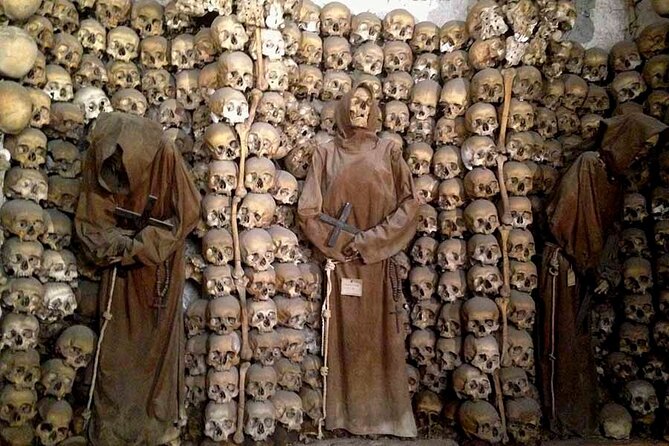
After the music, you visit the Capuchin Museum and Crypt. The crypt is decorated with the bones of approximately 4,000 friars. It is famous, unusual, and genuinely shocking.
The display is not a standard tomb with a few memorial plaques. Human bones form part of the decoration, creating a visual experience that can feel macabre. At the same time, the space has a religious purpose. The remains belong to Capuchin friars, and the setting reflects the order’s meditation on death and the temporary nature of life.
You should decide in advance if this is the kind of sight you want to see. Some people find it moving or thought-provoking. Others may find the bone displays uncomfortable. The experience is best for adults and older children who can handle serious religious imagery. The supplied information says most people can participate, but it does not promise that the crypt will suit every visitor emotionally.
The standard experience includes an audio guide in 13 languages. That gives you flexibility. You can move through the museum and crypt while listening in a language you understand, rather than depending entirely on a guide speaking to the group. The audio format may also suit you if you prefer a quiet visit.
An upgrade provides an art historian-led visit. I would consider that option if the church art matters as much to you as the crypt. An art historian can help connect the paintings, the Capuchin order, the church, and the music. The standard option makes sense if you mainly want the concert and the famous crypt, while the guided choice is better if you want more context.
Adding a traditional Roman dinner
A traditional Roman dinner is available as an optional upgrade. This can turn the concert and crypt visit into a complete evening plan, especially if you do not want to search for a restaurant afterward.
The dinner option received strong praise from one attendee, who especially enjoyed Piccolo Vicolo and called it the best meal of a Rome visit. That recommendation makes the add-on worth considering, but you should keep one practical detail in mind: transportation to the restaurant is not included.
You will need to check how the meal fits your plans and how you will get there. The activity ends back at the meeting point, so do not assume a vehicle will take you from the convent to the restaurant. If you are comfortable making your own way, the dinner can add a pleasant Roman finish. If you already have a favorite restaurant booked, skip the upgrade and keep control of your evening.
The meal is an add-on, not the heart of the experience. The main value is the combination of music and the Capuchin complex. Dinner works best for someone who wants convenience and a fixed plan, not necessarily for someone who wants to compare Rome’s many independent dining choices.
Is the $90.29 price fair?
At $90.29 per person, this is not a bargain concert ticket. The price needs to be judged as a package that includes admission to the Capuchin Museum and Crypt, the music program, the reserved convent hall, the introduction, and the multilingual audio guide.
I think the value is reasonable if you already want to see the crypt and would otherwise pay separately for an evening concert or guided visit. You are getting two distinct activities in one short appointment, and the small group limit helps keep the experience from feeling like a large tour production.
The value is weaker if your main goal is a long Christmas concert. The performance is compact, and the music is specialized. You may also feel the cost is high if you are not interested in the crypt or if you would rather attend a larger seasonal concert.
The art historian upgrade changes the calculation. It is worth more to you if you want the paintings and religious setting explained in detail. The dinner upgrade should be judged separately, since it adds convenience but does not include transport to the restaurant.
This experience is booked about 82 days ahead on average. That suggests you should not wait until the last moment if your Rome dates are fixed, especially for a holiday visit. Confirmation is provided at booking, and free cancellation is available up to 24 hours before the start time. If the minimum number is not reached and the activity is canceled, you are offered another date or experience, or a full refund.
Who should book this experience?
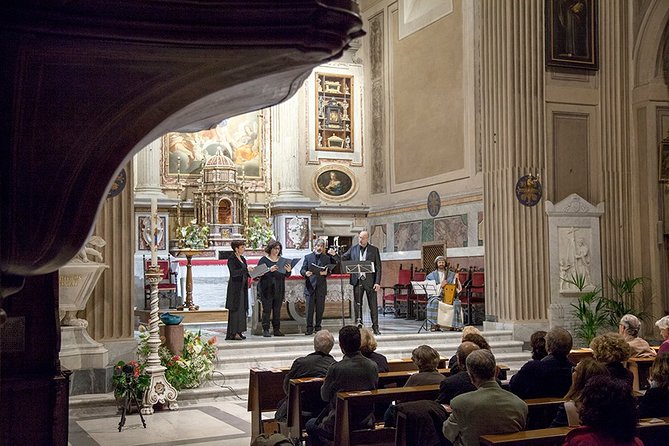
I would choose this for someone who wants a quieter Rome evening with strong religious and artistic content. It is especially suitable if you enjoy vocal music, old church traditions, Caravaggio, or unusual historic sites.
It also works well for a repeat visitor who has already seen the Colosseum, Vatican Museums, and Trevi Fountain. The Capuchin Crypt offers a very different kind of Roman sight. You are not simply checking off another monument. You are entering a place built around reflection and death.
I would be cautious about booking it for young children, anyone uncomfortable with human remains, or anyone hoping for familiar Christmas carols. The short concert may also disappoint you if you expect a full-length performance.
Should you book the Capuchin Crypt concert?
Book it if the idea of four trained voices singing sacred Baroque music in a convent hall appeals to you, and if a bone-decorated crypt sounds fascinating rather than disturbing. The combination is unusual, the central location is practical, and the optional art historian visit gives you a way to add more substance.
Skip it if you want a broad Christmas show, modern songs, or a long concert. Also take the meeting-point issue seriously. Confirm the Via Veneto 21 entrance before setting out, arrive early, and treat the dinner as a separate plan unless you are comfortable arranging your own transport.
For the right audience, this is a memorable hour and a half: quiet music, serious art, and one of Rome’s strangest religious spaces.
FAQ
Where does the Capuchin Crypt Christmas concert start?
The experience starts at the entrance to the Capuchins Convent, from Casa per Ferie I Cappuccini at Via Vittorio Veneto 21, 00187 Rome.
What time does the experience begin?
The scheduled start time is 4:45 pm.
How long does the experience last?
The activity lasts approximately one hour and 30 minutes.
What music is performed?
The Schola Romana Ensemble performs a cappella music by Palestrina, Arcadelt, Morales, Victoria, Pitoni, and Agazzari, along with Gregorian chants.
Is the Capuchin Museum and Crypt included?
Yes. The experience includes a visit to the Capuchin Museum and Crypt, with an audio guide available in 13 languages.
Can I choose an art historian-led visit?
Yes. An upgrade is available for an exclusive art historian-guided tour instead of the standard audio-focused option.
Is dinner included?
Dinner is available as an optional upgrade. Transportation to the restaurant is not included.
Just added around Rome
- Rome: OPERA’S GREATEST HITS (Concert + Aperitif)★ 5.0 · 28 reviews
- The Three Tenors Concert in St. Paul’s Within the Walls★ 4.5 · 49 reviews
- Opera Serenades in Palazzo Doria Pamphilj, Rome★ 5.0 · 27 reviews
- Rome: Rooftop Gourmet Dinner & Opera Performance★ 5.0 · 4 reviews
- Rooftop Bar Opera Show: The Great Beauty of Rome★ 5.0 · 92 reviews
- New Year’s Baroque Concert at Doria Pamphilj Palace★ 5.0 · 2 reviews
- Opera Concert Ticket in Rome with Dinner★ 4.0 · 52 reviews
- Freddie Mercury Opera Show in Rome★ 4.0 · 37 reviews
Classical Concerts, compared.
Vivaldi’s Four Seasons Concert in Karlskirche
Read our review →
Classical Concert in the World-Famous Musikverein
Read our review →
Mozart Concert at the Musikverein – Golden Hall
Read our review →
Entry Ticket Classical Concert at the Mirror Chapel
Read our review →
Classical Concert in St. Anne’s Church (Annakirche)
Read our review →
Browse the lists this tour appears in